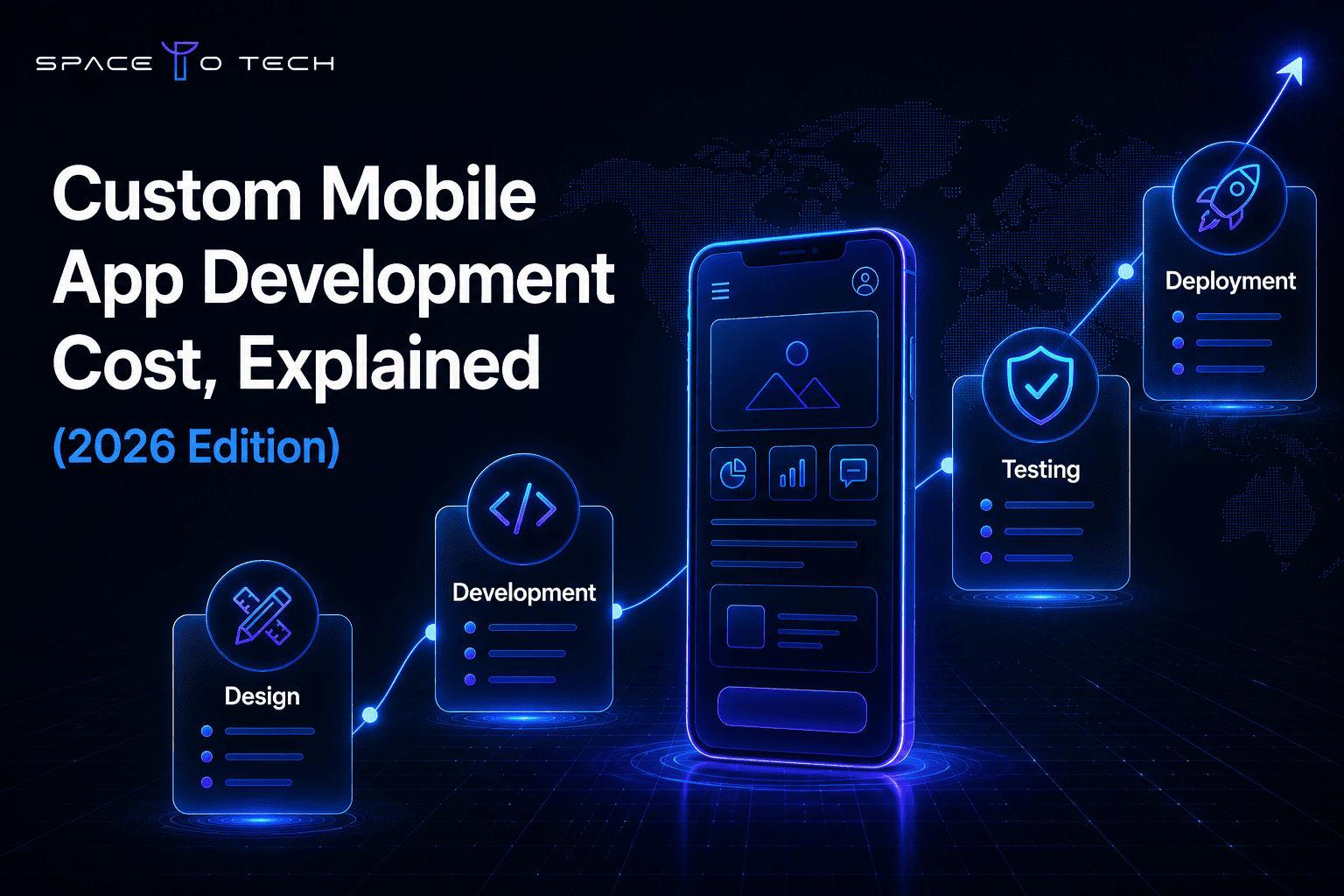
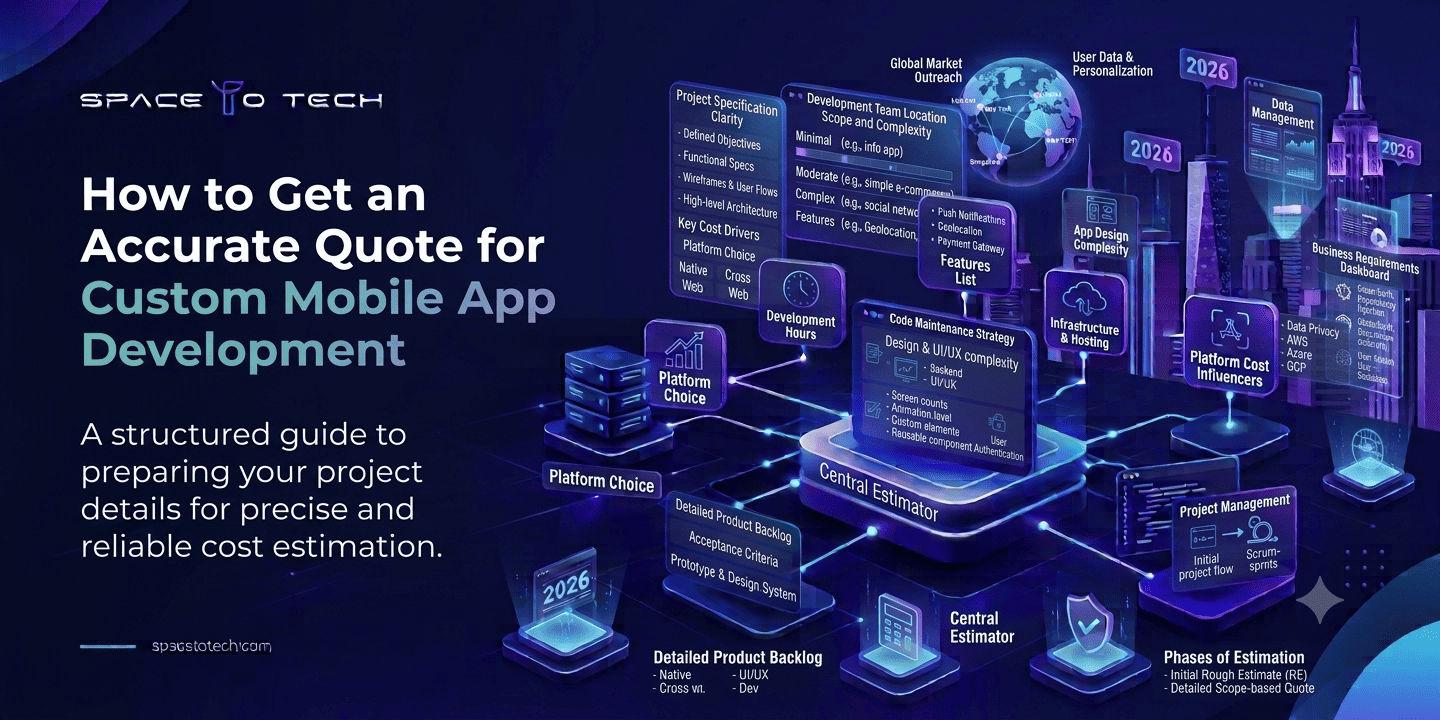
Business owners often start with one practical question: can an agency tell me what a custom mobile app will cost? The honest answer is yes, but only when the request contains enough detail. A custom mobile app development quote is an estimate built on your scope, platforms, integrations, and timeline, so vague briefs produce vague numbers. This guide explains what a quote should include, what to prepare before contacting a mobile development agency, which factors move the price, and how to compare proposals so the figure you accept reflects what your business will actually need.
What a Custom Mobile App Development Quote Includes
A quote is a written estimate of the work, time, and cost required to build your app. A credible one is more than a single number: it shows what is being built, how the work is phased, and what is deliberately left out. A one-line figure with no breakdown is a starting conversation, not a quote.
It also helps to know the vocabulary. A rough estimate is a ballpark range given early, often after one call. A formal quote is a detailed price tied to a defined scope. A proposal usually wraps the quote together with timelines, team, and terms. Asking which of the three you are receiving prevents you from treating an early ballpark as a binding commitment, or the reverse.
Fixed-Price vs Time-and-Materials Estimates
Under a fixed-price model, scope and price are agreed upfront. This suits projects with stable, well-documented requirements, and changes are handled through formal change requests. Under time-and-materials, you pay for the effort actually spent, usually against an estimated range or monthly cap. This suits products whose requirements will shift after user feedback. Many agencies blend the two: a fixed-price discovery phase, followed by milestone-based or time-and-materials delivery.
Line Items to Expect in a Mobile App Development Quote
Information to Prepare Before Requesting a Quote
Agencies can only estimate what they understand. The more specific your brief, the narrower the range you receive and the fewer surprises appear later in the project.
Defining Scope, Features, and Target Platforms
- The problem the app solves and who will use it.
- Must-have features separated from nice-to-have ones.
- Target platforms: iOS, Android, or both, and whether cross-platform is acceptable.
- User roles, including any admin or back-office needs.
- Two or three reference apps that show the experience you have in mind.
You do not need technical documents to begin. A short written description, a few hand-drawn sketches, or a list of user stories in the form "as a customer, I want to track my order" is enough for an agency to ask the right follow-up questions. What matters is clarity about outcomes, not polished specifications.
Sharing Budget, Timeline, and Integration Needs
Share a budget range. It lets the agency propose a scope that fits rather than guess, and it exposes mismatches early. Note any fixed launch dates, existing systems the app must connect to, and compliance obligations such as data protection, payments, or health data. Each of these changes the estimate materially.
Factors That Shape the Cost of Developing a Custom Mobile App
Two apps with similar screens can differ widely in cost, because most of the effort sits behind the interface.
Complexity, Platforms, and Technology Stack
Complexity comes from the number of user roles, real-time features, offline mode, payments, and any AI-driven functionality. Platform choice matters too. Building native apps for iOS and Android means two codebases. Cross-platform frameworks such as Flutter or React Native share much of the code and can reduce effort, although hardware-heavy or performance-critical features may still need native work. Your mobile app development approach also affects long-term hiring and maintenance, so ask the agency to explain why it recommends a given stack.
Design, Backend, Integrations, and Ongoing Maintenance
Custom visual design costs more than standard components but can differentiate the product. The backend, including servers, databases, and an admin panel, is often a substantial share of the work and is easy to overlook. Every integration adds build time and an ongoing dependency on someone else's service. Finally, budget for life after launch: operating system updates, bug fixes, hosting, and security patches continue for as long as the app is live. Ask the agency how it prices maintenance so it does not appear as a surprise later.
Two further variables are worth raising. The first is the discovery phase: a short, paid investigation of requirements often reduces total cost by exposing hidden complexity before development begins. The second is team structure and location. Hourly rates, seniority mix, and time-zone overlap all influence price and communication, so a lower rate does not always mean a lower total once rework and coordination are included.
Choosing a Mobile Development Agency to Provide Your Quote
What to Check in an App Development Agency's Portfolio and Process
- Shipped apps of similar complexity or in your industry, with live store listings you can download and test.
- A transparent process: discovery, sprints, regular demos, and a named point of contact.
- Team composition, including who actually builds your app.
- Client references you can speak to directly.
- Written terms on intellectual property and source code handover.
During an initial call, ask how the agency handles scope changes, how often you will see working builds, who owns the source code on completion, and what happens if a key team member leaves. Clear, specific answers are a stronger sign of maturity than any sales presentation.
If you are still building a shortlist, our guide to the best custom software development companies compares providers on these criteria.
Comparing Quotes from Several Agencies Side by Side
Give every agency the same brief, then compare scope line by line rather than by total. Check the assumptions behind each figure: number of screens, revision rounds, platforms covered, and whether testing, store fees, and maintenance are included. Ask each agency to list its assumptions in writing. The lowest quote is not automatically the weakest and the highest is not automatically the best; the clearest signal is how well a proposal explains itself. Also be wary of agencies that never tell you when a project is too small to justify custom development. For a simple internal tool, a template or no-code option may serve you better.
Already holding a quote you are unsure about? Send it to our team for a plain-language review of scope and assumptions. [Insert contact/landing page URL]
Matching Your Quote to Your Business Goals
Starting with an MVP to Control Cost and Risk
Begin with what the app must prove for your business: a new revenue stream, lower support load, or faster operations. Then scope a minimum viable product around that outcome, release it to real users, and expand based on evidence. Ask agencies to quote the MVP separately and give a rough range for later phases, so you can see the full picture without committing to it all at once.
Payment structure deserves the same attention as price. Milestone-based payments tied to delivered, testable work protect both sides, while large upfront payments with no deliverables attached shift risk onto you. Define in advance how you will judge success, such as user adoption, task completion time, or support tickets avoided, so the quote can be weighed against the value the app is expected to create rather than cost alone.
Warning Signs in Vague or Unusually Low Quotes
- No breakdown of work, only a single total.
- A price given before anyone asked about your business or users.
- A fixed price promised without any discovery phase.
- No mention of testing, security, or post-launch support.
- Pressure to sign quickly, or unclear code ownership.
Conclusion
An accurate quote comes from a clear brief, a realistic view of cost drivers, and a disciplined comparison of proposals. Prepare your scope, share your constraints, and judge each quote on transparency as much as price. A well-prepared request saves weeks of back-and-forth, attracts more serious responses, and gives you a firmer basis for budgeting. Treat the quoting stage as the first real test of how an agency will work with you, because clear questions and honest answers now usually predict a smoother build later.
Ready to request a quote for your custom mobile app? Tell our team about your project and we will respond with a clear, itemized estimate.