UIUX
Design Services USA for Web, Mobile and SaaS Products

Research, UX and UI design, and developer-ready handoff from a team that has delivered 150+ digital projects in 5 years. Space to Tech provides UI UX design services in the USA for startups, SaaS companies and enterprise teams. We handle user research, wireframes, UI design and developer handoff, and our designers work in Figma and the tools your developers already use, so design and code stay in sync. Our team has delivered 150+ digital projects in 5 years. Start with a UX audit or a fixed-scope design sprint, and you speak to a designer before you sign anything.

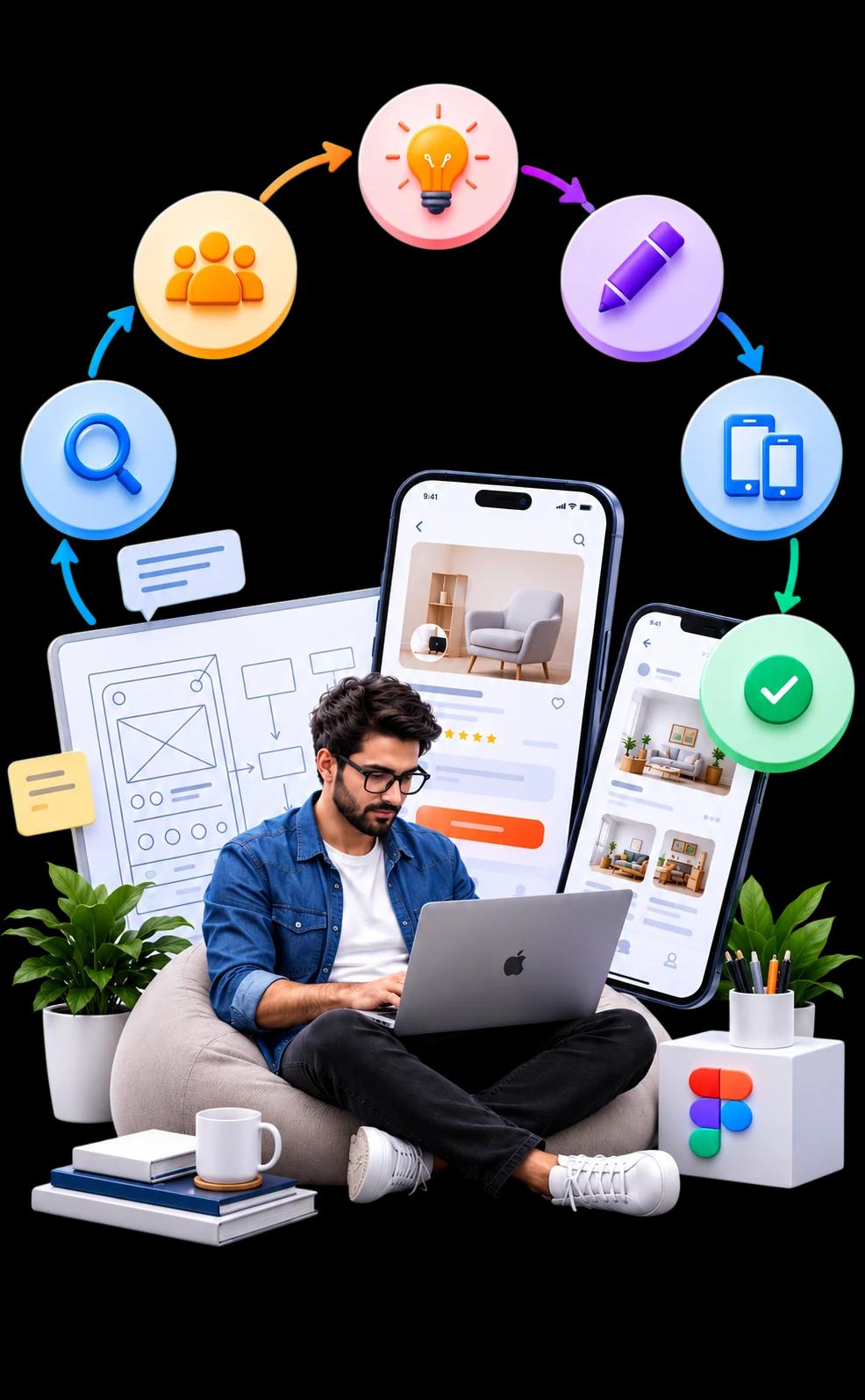
UI UX design workspace with laptop, mobile screens and Figma-style design tools
Trusted by global brands
150+Projects
Delivered
Projects Delivered
Rated5.0on ClutchFrom 16 Client Reviews
Rated 5.0 on Clutch
ISO 9001:2015ISO 20000-1:2018ISO 27001:2022
Certified
ISO Certified
The USA,India AndUAE
Teams Serving
The USA, India And UAE Teams Serving

UI UX Design Services We Offer

Our UI UX design services cover everything between a rough idea and a screen your developers can build. You can buy one service on its own, such as a UX audit, or combine several into one project. Every package ends with files your team can use straight away.

UX audit

Review of your live site or app, ranked fix list, walkthrough call

Timeline

1 to 2 weeks

Best For

Live products where users drop off

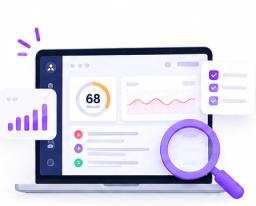
UX audit illustration of a laptop review with a magnifying glass

A UX audit shows you where users get stuck before you spend money on a redesign. We review your live site or app against usability heuristics, check your analytics and session recordings, and test the main flows ourselves. You get a ranked list of fixes with the quick wins marked, and a call to walk through it. If you would like a first look before committing, we also offer a of your key screens.

UX Research Services

Interviews, personas, journey map, competitor review

Timeline

2 to 3 weeks

Best For

New products and repositioning

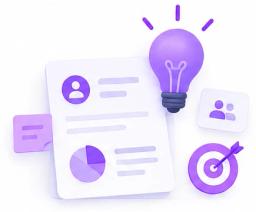
UX research illustration with lightbulb and research notes

Good design starts with knowing who you are designing for. We run stakeholder workshops and user interviews, review your analytics, and study three to five competitors in your market. The output is plain: personas, a journey map and a short list of problems to solve first, so every later design choice has a reason behind it.

Information Architecture and User Flows

Sitemap, task flows, navigation model

Timeline

1 to 2 weeks

Best For

Products with many features

Information architecture sitemap and user flow illustration

People leave when they cannot find things. We organize your content and features into a clear structure, then map the paths users take to finish key tasks such as signing up, paying or booking. Fewer steps and clearer labels usually mean fewer drop-offs at the screens that matter most.

Wireframing and Prototyping

Wireframes and a clickable prototype

Timeline

2 to 4 weeks

Best For

Testing an idea before build

Wireframing and prototyping illustration with phone screens

We start with low-fidelity wireframes so you can judge structure before colors and fonts get in the way. Then we turn the approved flows into a clickable prototype. You and your users can tap through it, which catches expensive mistakes before a developer writes any code.

UI design

Finished screens, UI kit, component states

Timeline

3 to 6 weeks

Best For

Brand-aligned web and mobile screens

UI design illustration of finished mobile screens

Our UI designers turn approved wireframes into finished screens for web and mobile. You receive a UI kit with colors, type, icons and states for every component, built to your brand and checked for color contrast. Nothing is left as a loose image, so developers can copy the specs directly.

Design system

Components, design tokens, usage rules

Timeline

3 to 5 weeks

Best For

Teams shipping several products

Design system illustration with components and tokens

A design system keeps every screen consistent as your product grows. We build a library of reusable components, design tokens and usage rules, and document them so new designers and developers work from the same building blocks. It saves the most time for teams that ship several products or release often.

Usability testing

Test plan, sessions with real users, findings report

Timeline

1 to 2 weeks

Best For

Checking designs before launch

We watch real people use your prototype or live product and note where they hesitate or fail. Sessions run remotely, moderated or unmoderated, and you get a short report with clips, the problems found and what to fix first. Then we update the design and test again where it is needed.

Usability testing session with a facilitator and a participant

What Is the Difference Between UI and UX Design?

UI design is how a product looks and responds: layout, color, type and buttons. UX design is how the whole experience works: whether people can find things, finish tasks and come back. UI is what users see. UX is what they feel while using it. A product needs both to succeed.

UI design

Focus
How screens look and respond
Question it answers
Is this clear and pleasant to use?
Typical deliverables
UI kit, finished screens, icons, component states
Common tools
Figma, Sketch, Adobe Illustrator

UX design

Focus
How the whole journey works
Question it answers
Can people reach their goal without friction?
Typical deliverables
Research, personas, user flows, wireframes, test findings
Common tools
Figma, FigJam, Miro, Maze, UserTesting

UI UX Design for Web, Mobile, SaaS and Enterprise Products

The right design depends on where people use your product. Here is how we approach each type.

Web App UX Design
01

Web App UX Design

Web apps live or die on clarity. We design dashboards, forms and onboarding flows that keep people moving, with clear screens for empty, loading and error states. We also design for the keyboard and for smaller laptop screens, not just a wide desktop. Every layout is responsive, from phone to large monitor.

Mobile App UI UX Design
02

Mobile App UI UX Design

Mobile screens are small and used with one thumb. We design for iOS and Android patterns, reachable controls and slow connections. If you plan to build with React Native or Flutter, we design with those component libraries in mind so the finished app matches the design.

SaaS UX Design
03

SaaS UX Design

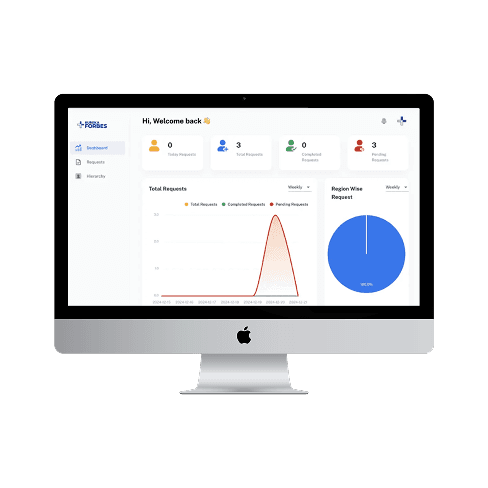
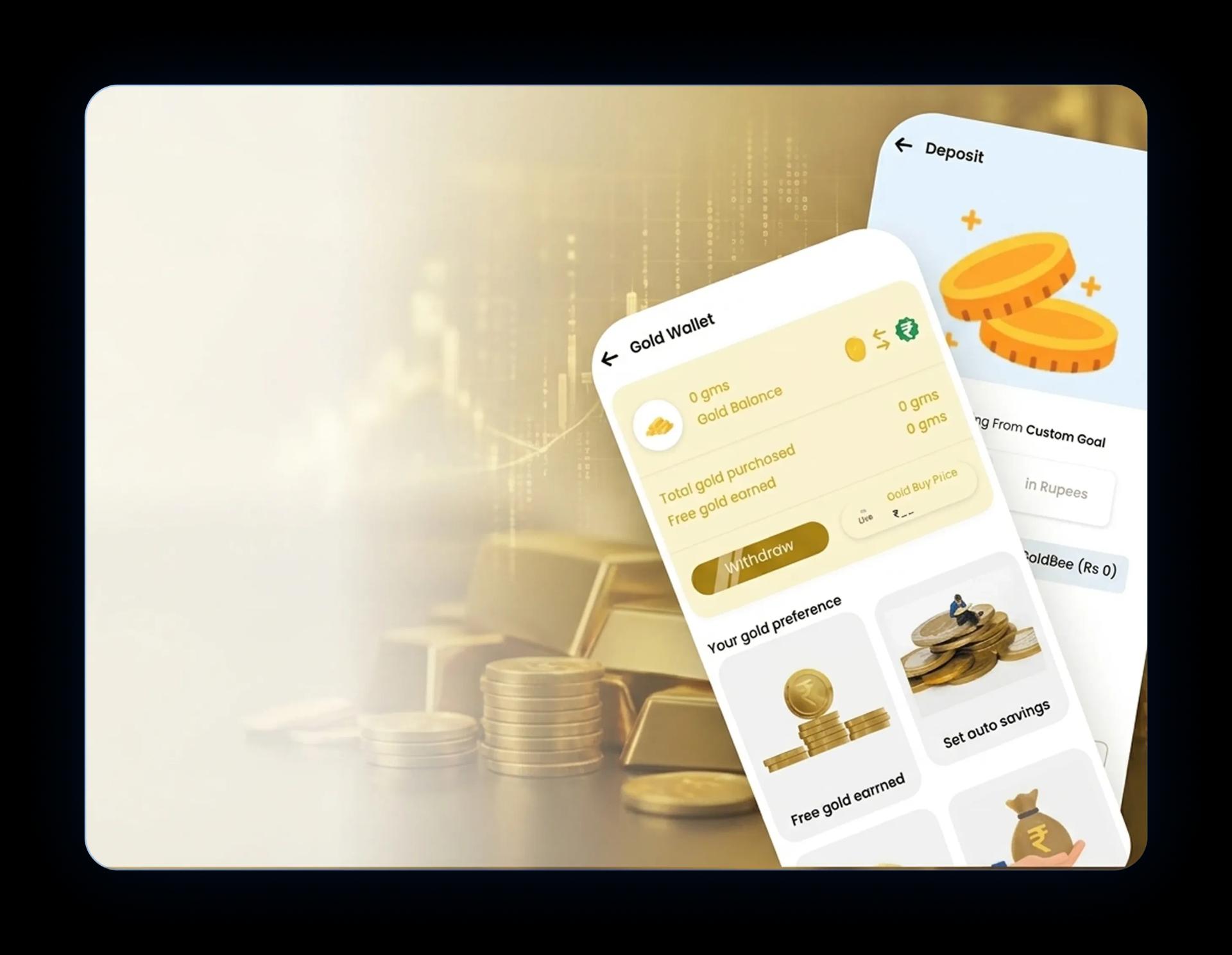
SaaS users judge you in their first session. We design onboarding, settings, permissions and admin screens so new users reach their first result fast and account owners can manage a team without a manual. We took this approach on the Eureka Forbes SaaS platform, a centralized system for product, employee and sales management.

Ecommerce UX Design
04

Ecommerce UX Design

Shoppers leave when product pages are unclear or checkout asks too much. We design listings, filters, carts and checkout flows that cut steps and show costs early, then test them on a phone first.

Enterprise UX Design
05

Enterprise UX Design

Enterprise software has many user roles, dense data and long workflows. We simplify them with role-based views, readable data tables and clear navigation, then record the patterns in a design system so large teams stay consistent. Fintech and crypto products add their own trust problems, so our designers plan wallets, confirmations and error states together with the team behind our blockchain app development services in the USA.

UX Design for AI-Powered Products
06

UX Design for AI-Powered Products

AI features raise new design questions: how to show confidence, what to do when the answer is wrong and how to keep users in control. We design prompts, result screens and feedback loops so people understand what the AI did and can correct it. For support products we also design chatbot UI and conversation flows. Space to Tech is also an AI development company in the USA, so the models behind these features can be built by the same team.

Web App UX Design

Web apps live or die on clarity. We design dashboards, forms and onboarding flows that keep people moving, with clear screens for empty, loading and error states. We also design for the keyboard and for smaller laptop screens, not just a wide desktop. Every layout is responsive, from phone to large monitor.

Mobile App UI UX Design

Mobile screens are small and used with one thumb. We design for iOS and Android patterns, reachable controls and slow connections. If you plan to build with React Native or Flutter, we design with those component libraries in mind so the finished app matches the design.

SaaS UX Design

SaaS users judge you in their first session. We design onboarding, settings, permissions and admin screens so new users reach their first result fast and account owners can manage a team without a manual. We took this approach on the Eureka Forbes SaaS platform, a centralized system for product, employee and sales management.

Ecommerce UX Design

Shoppers leave when product pages are unclear or checkout asks too much. We design listings, filters, carts and checkout flows that cut steps and show costs early, then test them on a phone first.

Enterprise UX Design

Enterprise software has many user roles, dense data and long workflows. We simplify them with role-based views, readable data tables and clear navigation, then record the patterns in a design system so large teams stay consistent. Fintech and crypto products add their own trust problems, so our designers plan wallets, confirmations and error states together with the team behind our blockchain app development services in the USA.

UX Design for AI-Powered Products

AI features raise new design questions: how to show confidence, what to do when the answer is wrong and how to keep users in control. We design prompts, result screens and feedback loops so people understand what the AI did and can correct it. For support products we also design chatbot UI and conversation flows. Space to Tech is also an AI development company in the USA, so the models behind these features can be built by the same team.

Industries We Design For

Each industry has its own users, rules and risks, so we start by learning yours. These are the kinds of products we have designed.

Working on something technical, such as a telecom dashboard, an IoT control panel or an energy monitoring tool? These products need interfaces that make complex data readable. Tell us about yours on a call and we will share the closest examples.

Great Products Start With Great Design

We combine user research, thoughtful interfaces, and seamless interactions to transform complex ideas into intuitive digital experiences.

UI UX Design

Pricing and Engagement Models

Most UI UX design projects with us cost between $1,500 and $60,000, depending on scope. These are typical ranges in US dollars, last reviewed October 2026. You get a fixed quote after a short scoping call.

START

UX audit

Heuristic & usability evaluation

$1,500TO$3,000

Typical audit

WHAT IS INCLUDED

Review of a live site or app, ranked fix list, walkthrough call

Timeline1 to 2 weeks
LAUNCH

MVP design

Core product design

$4,000TO$10,000

Typical sprint

WHAT IS INCLUDED

Research basics, user flows, up to about 20 screens, clickable prototype

Timeline4 to 6 weeks
MOST POPULAR

Full product design

Complete end-to-end design

$9,000TO$25,000

Typical end-to-end

WHAT IS INCLUDED

Research, UX, UI, prototype, usability testing, UI kit

Timeline8 to 12 weeks
ENTERPRISE

Enterprise or complex platform

High-scale, multi-role systems

$25,000TO$60,000+

Typical enterprise

WHAT IS INCLUDED

Several user roles, data-heavy screens, full design system

Timeline12 to 20 weeks
KEEP A DESIGNER ON

Dedicated designer

Embedded in your workflow

$2,800TO$4,500

per month (USD)

WHAT IS INCLUDED

One full-time designer who works inside your team, minimum 3 months

Time to startStarts in about 1 week
ON DEMAND

Hourly work

Flexible consultation & sprints

$20TO$45

per hour (USD)

WHAT IS INCLUDED

Ad hoc design, reviews and advice

TimelineFlexible

What Changes the Price

Key scope dimensions and technical requirements that define your project investment.

  • The number of screens and platforms (web, iOS, Android)
  • How much research you need and how many rounds of usability testing
  • The number of user roles and how complex the workflows are
  • Whether a design system is included
  • Your deadline

Ways to Work With Us

Flexible partnership models tailored to your roadmap, organizational structure, and velocity.

Fixed-scope project

Agreed deliverables, timeline and price. Best when the scope is clear.

Predictable investment & timeline

Dedicated designer

A designer joins your team by the month and works inside your tools and schedule.

Full integration on a daily basis

Hourly or support

Pay for the time used. Best for reviews, small updates and advice.

Maximum agility on demand

Ready to start your design project?

Get a clear breakdown of deliverables and a transparent, fixed quote tailored to your product goals after a short scoping call.

Our UI UX Design Process

Here is how a typical project runs. Times are for a mid-size product and change with scope. You review the work at the end of each step, so nothing arrives as a surprise.

Designer mapping a UI UX process around research, ideation, wireframes and testing
  1. 1. Discovery

    Stakeholder workshop, goals, analytics review, user interviews

    You receive → Research summary and project brief

    Weeks 1 to 2

  2. 2. Strategy and structure

    Personas, user journey map, user flows, sitemap

    You receive → Journey map, flows, sitemap

    Weeks 2 to 3

  3. 3. Wireframes

    Low-fidelity layouts for the key screens

    You receive → Wireframes

    Weeks 3 to 4

  4. 4. Prototype and test

    Clickable prototype and usability sessions with real users

    You receive → Prototype and findings report

    Weeks 4 to 5

  5. 5. UI design

    Visual design, UI kit and components

    You receive → Design files and design system

    Weeks 5 to 8

  6. 6. Handoff and support

    Specs, developer walkthrough, review of built screens

    You receive → Developer-ready specs and QA notes

    Ongoing

  7. 7. QA and Visual Verification

    Staging design QA, cross-device responsiveness inspection, WCAG accessibility audit

    You receive → QA bug reports and UI alignment sign-off

    Pre-launch (Weeks 8 to 9)

  8. 8. Post-Launch Usability & Telemetry

    Live analytics review, user session recording audits, funnel drop-off analysis

    You receive → Post-launch audit report and optimization roadmap

    Month 1 post-launch

  9. 9. Design System Governance & Scaling

    Token versioning, multi-platform component updates, pattern library governance

    You receive → Updated design tokens and design system documentation

    Ongoing retainer

1 / 9

Hire a Dedicated UI UX Designer

Need a designer inside your team without a long hiring cycle? Our designers work as part of your team. They join your Slack and stand-ups, use your design files, and report to your product lead. You get steady design capacity without recruiting costs or a long notice period.

Need developers as well? You can add engineers to the same team through our IT staff augmentation services.

UI UX Design and Development Services: From Figma to Production

A good design still fails if it is built wrong. That is why our designers stay involved until the screens are live.

STAGE 01: SYNTHESIS

Design to Development Handoff

We prepare every screen with spacing, states, assets and component names. Then we walk your developers through it and review the built screens against the design. Questions get answered quickly, so small gaps do not turn into rework.

KEY HANDOFF ARTIFACTS

  • Spacing & States
  • Asset Export
  • Component Specs
  • Dev Walkthrough
  • Screen Review

STAGE 02: EXECUTION

Build With Our Developers

If you want one team from first sketch to release, our developers build in React Native, Flutter and modern web front-end. Our React Native app development services in the USA and Flutter app development services USA teams work with the designers from day one. We are also a custom software and mobile app development company, so you do not have to change vendors between design and build.

FULL-STACK IMPLEMENTATION

  • React Native
  • Flutter
  • Modern Web Front-end
  • Custom Software

Design Tools We Use

Our design tools depend on your team's setup. If you have no preference, we choose the best tool for the job, which is Figma for most projects, and the UI/UX design tools and technologies we work with are listed in the table below.

Design tools by category used by Space to Tech
Design and prototyping
FigmaSketchAdobe XDFramerProtoPieAxure RP
Workshops and whiteboarding
FigJamMiroMural
Research and testing
MazeUserTestingLookbackOptimal WorkshopHotjarMicrosoft ClarityGoogle Analytics
Handoff and documentation
Figma Dev ModeZeplinStorybookNotionConfluence
Graphics and motion
Adobe IllustratorAdobe PhotoshopAfter EffectsLottie
Team collaboration
SlackJiraTrelloAsana

UI/UX Design Tools and Deliverables

Depending on the package, you receive

  • User personas and journey maps
  • Sitemap and user flows
  • Low and high-fidelity wireframes
  • A clickable prototype
  • A UI kit with all component states
  • A design system (if included in your scope)
  • Developer-ready specs and assets
  • A usability test report (if included in your scope)

Why Choose Space to Tech for UI UX Design Services

As a UI UX design company with 5 years of experience and a portfolio of 150+ delivered projects, we focus on three things: a clear scope, honest pricing and steady communication.

Space to Tech UI UX designer standing beside the company mark
  • Designers and Developers in One Team

    Our designers bring backgrounds in psychology, visual arts and interaction design, and they sit beside our developers. That is why handoff is smooth and designs get built the way they were drawn.

  • You Review Every Step

    You see the work at the end of each phase and can comment directly on the files. There is no big reveal at the end.

  • Short Feedback Loops

    We work in short cycles with testing in between, so changes stay cheap and the direction stays clear.

  • Clear Prices for Startups and Growing Teams

    Prices are in US dollars, quotes are fixed after scoping, and packages start at $1,500. See the pricing table above.

  • Built for Working With US Teams

    We work remotely with teams across the USA. We hold review calls during your working hours and keep a shared channel open for quick questions.

How to Get Started

  1. 01

    Tell us about your product

    Share two or three lines about your product through the form or on a call. That is enough to start.

  2. 02

    Scoping call

    A designer asks about your users, goals, deadline and budget.

  3. 03

    Fixed quote

    You receive a scoped plan, timeline and fixed price. No obligation.

Accessible Design
WCAG 2.2, ADA and Section 508

Accessible design is good design, and for many US organizations it is also a legal concern. We design to WCAG 2.2 AA: enough color contrast, clear focus states, keyboard-friendly flows, labeled form fields and error messages that tell people what to fix. Public-sector and healthcare projects often bring Section 508 or HIPAA requirements, so we raise them in discovery.

Our work is design, not a legal certificate. If you need a formal audit, we will work with your auditor. Our guide to website development for regulated industries explains how to choose a partner in regulated fields.

Benefits of Professional UI UX Design

Happier Users, Fewer Drop-Offs

When people can finish a task without help, they stay, as in the Max Life Insurance calculator app we designed. Clear navigation, readable screens and honest error messages remove the points where users give up, such as sign-up and checkout.

Better Conversion Rates

Every extra field or unclear button costs you sign-ups and sales. We fix the steps between a visitor and your goal, then measure the change with your own analytics.

Lower Development Costs

Fixing a flow in a prototype takes hours. Fixing it after launch takes a sprint. Testing designs before the build keeps rework out of your developers' backlog.

Designer reviewing UI screens on a tablet in a studio

Get a Free UX Audit or a Project Quote

Tell us what you are building. A senior designer will reply with questions, a rough price range and next steps. No sales script and no long contract.

We work remotely with clients across the United States.

Clutch 5.0 rating

Recognized. Trusted. Preferred

Awards & Recognition

We are proud to be recognized by leading platforms and industry experts for our innovation, impact, and excellence

TopDevelopers

TopDevelopers

Top Mobile App Developers

Freelancer

Freelancer

Top Mobile App Developers

AppFutura

AppFutura

Top Mobile App Developers

GoodFirms

GoodFirms

Top Mobile App Development

Clutch

Clutch

Top Mobile App Developers

Excellence isn't claimed.It's recognized

These achievements reflect our commitment to
delivering world-class AI solutions that help
businesses grow and lead

UI UX Design Services FAQs

Don't find the answer? We can help

What is the difference between UI and UX design?
UI design covers how a product looks and responds: layout, color, type and buttons. UX design covers how the whole experience works, from finding a feature to finishing a task. UI is what people see. UX is how it feels to use. Good products need both. See the comparison table above.
How much do UI/UX design services cost in the USA?
US agencies commonly charge $100 to $250 an hour, and projects often run from $15,000 into six figures. Our packages start at $1,500 for a UX audit and reach $60,000 for large platforms, with hourly work from $20 to $45. Scope, screen count and research depth set the price, and you receive a fixed quote after a short scoping call.
How long does a UI/UX design project take?
A UX audit takes 1 to 2 weeks and an MVP design takes 4 to 6. A full product usually takes 8 to 12 weeks, and a large enterprise platform 12 to 20. Research depth, screen count and how fast your team gives feedback change the timeline. The process table above shows each step.
Do you offer UI/UX design services in the USA?
Yes. We work remotely with US startups and enterprises, quote in US dollars and schedule calls during your working hours. Our design team is based in India, which is how we keep prices below most US agencies. You get the same files, reviews and handoff you would get from a local studio.
Can you redesign my existing app or website?
Yes. We start with a UX audit to find what is hurting your results, then redesign the flows and screens that matter most. You do not have to rebuild everything at once. We can redesign in phases while your developers keep shipping.
What industries do you design for?
We have designed for fintech and insurance, SaaS, mobility, booking and consumer brands. Each project starts with research into your users and the rules of your market. If your industry is not listed, tell us on a call and we will share the closest examples.
What deliverables will I receive?
You receive personas, journey maps, wireframes, a clickable prototype, a UI kit, a design system if it is in scope, and developer-ready specs in Figma or the tool you prefer.
Do you design to WCAG and ADA standards?
We design to WCAG 2.2 AA: color contrast, keyboard navigation, focus states and clear labels. This supports ADA and Section 508 goals, but design alone does not make a product legally compliant. If you need a formal audit, we can work with your auditor.
Can your team build the product after the design?
Yes. The same company builds in React Native, Flutter and web front-end, so nothing is lost between design and code. Many clients start with design and continue with development.
What do you need from me to get started?
Share your goals, who your users are, access to your current product and analytics, brand files, a few competitors you admire, your budget range and your deadline. A short is enough to begin. We then send a scoped quote.
Do you offer a free UX audit?
Yes. A is a short review of your key screens, with the top issues we see, shared on a call. A full paid audit covers every main flow and gives you a ranked fix list.
Can startups with small budgets work with you?
Yes. Our MVP design package starts at $4,000 and covers about 20 screens with a clickable prototype. Startups can also hire a dedicated designer by the month. We will tell you honestly if a feature should wait to protect your budget.

Related Reading

Top AI Implementation Companies
Blogs06/11/2026

Top AI Implementation Companies: How to Choose a Partner That Ships to Production

Most AI pilots impress in a demo and then stall before they reach a real user. That is why choosing among the top AI implementation companies is less about who builds the smartest model and more about who can run it inside your systems, on your data, under your security rules. This guide explains what implementation covers, why pilots fail, how leading providers compare and how to test a partner’s claims. You will also find an honest look at SpaceToTech, a vendor checklist, a phase-by-phase engagement plan and realistic cost drivers. Each section is written for decision-makers, not data scientists. What Are AI Implementation Services and What Do They Cover? AI implementation services take an approved use case from design to live operation inside your real business systems. The output is working software, not a slide deck. A complete engagement usually covers: Use-case scoping, success metrics and a baseline Data pipelines, cleaning and access controls Model choice, fine-tuning or retrieval-augmented generation (RAG) design Integration with your CRM, ERP, helpdesk and internal APIs MLOps: deployment, monitoring, evaluation and retraining Security review, user training and handover Common examples include a support AI chatbot connected to your helpdesk, a forecasting model feeding inventory planning, or an agent that reads and routes invoices. Each needs engineering far beyond the model itself, which is why serious providers name an owner for production support after launch. A model without monitoring decays quietly. For founders, that is the difference between buying a prototype and buying a dependable business capability. Scope should include launch and support, not only the build. AI Implementation vs AI Consulting: Why the Difference Matters AI consulting answers what to build and why. AI implementation builds it, connects it and keeps it running. Many firms sell both, but their strengths usually lean one way, so check which side actually staffs your project. Deliverable: a roadmap and governance model versus a deployed, monitored system. Team: strategists versus data, ML, integration and DevOps engineers. Success measure: a signed-off strategy versus live accuracy, latency and adoption targets. This matters when you compare top AI implementation companies IT consulting teams offer, because a polished strategy deck says little about delivery skill. Ask who writes the code and whether those engineers join your calls. If you are still at the roadmap stage, our guide to top AI consulting companies covers that side in depth. Expert tip: Ask each shortlisted firm for one example where they declined to build something, and why. Honest providers sometimes say no. Why AI Pilots Fail to Reach Production A pilot proves possibility; production must prove reliability. Gartner predicted that at least 30% of generative AI projects would be abandoned after proof of concept by the end of 2025, citing poor data quality, inadequate risk controls, escalating costs and unclear business value. The pattern behind most stalled pilots is consistent: Curated data: the demo used clean samples; real data is messy, siloed and access-restricted. No integration owner: the model works, but nobody connects it to the CRM or ERP. Late security review: compliance objections surface after the build. No business owner: nobody is accountable for adoption or return on investment. Fixing these early costs far less than rebuilding after launch, and budget overruns follow the same pattern. Expert tip: Treat the pilot as a production rehearsal: real data, one live integration and a small group of actual users from week one. Top AI Implementation Companies at a Glance The table groups well-known providers by delivery model. It reflects public positioning, not a paid ranking, so confirm current capabilities and reviews before shortlisting. Company Delivery model  Best fit Accenture Global consultancy  Large, multi-country enterprise programmes IBM Consulting Global consultancy Hybrid cloud estates and regulated sectors Deloitte Global consultancy Strategy-led transformation with a risk focus PwC Global consultancy Governance-heavy, audit-adjacent AI programmes LeewayHertz AI engineering firm Custom AI products and enterprise builds DataToBiz Data and AI specialist Analytics-led AI and data modernisation Markovate AI engineering firm Practical AI for customer experience SpaceToTech  Delhi NCR AI and app studio  Startups and mid-market teams building AI into apps and support workflows How to read it: consultancies lead on scale and risk assurance, engineering firms on build speed, and specialists on data work. No row wins for everyone. Shortlist two or three, then run the checklist later in this guide. Top AI Implementation Companies for Tech Consulting and Enterprise IT Needs Buyers researching top AI implementation companies tech consulting practices are usually shopping for scale: ERP and cloud estates, multi-region rollouts and formal risk sign-off. Large consultancies such as Accenture, IBM Consulting, Deloitte and PwC are built for that. Where they win: programme management, industry accelerators, vendor partnerships and global delivery capacity. Trade-offs: premium rates, longer procurement and delivery teams that may be junior to the pitch team. Where mid-sized firms win: faster starts, senior engineers on the work and lower overhead for one product or workflow. Match the provider to the problem. A single support-automation build rarely needs a 500-person programme office, while a bank-wide model-risk framework rarely suits a ten-person studio. Budget, regulatory exposure and existing infrastructure should decide the shortlist, not brand recognition alone. Expert tip: Ask any large firm to name the delivery lead and engineers who would actually staff your project before you sign. Where SpaceToTech Fits Among AI Implementation Providers (Honest Take) SpaceToTech is a Delhi NCR technology company that builds mobile apps, AI chatbots and related digital products. That shapes where it fits well, and where it does not. Strong fit: startups and mid-market teams that want AI built into a product or support workflow, with one team handling the app, web and AI layers. Our AI development services are built around that model. Practical advantages: direct access to engineers and India-based delivery costs. Weaker fit: global multi-country programmes, very large teams, or sectors where on-site presence and formal industry accreditation are mandatory. A larger consultancy is the safer choice there. Hold us to the checklist in the next section, exactly as you would any other vendor. Planning an AI build? Book a scoping call with SpaceToTech for a candid view on fit, scope and risk, even if the answer is that another provider suits you better. Data Readiness, Integration and MLOps: What a Partner Must Handle Three capabilities decide whether a model survives contact with reality. Data readiness: an audit of quality, lineage, ownership, access rights and personal data, plus pipelines that keep inputs fresh. Integration: secure connections to legacy systems and APIs, authentication, latency budgets and fallback behaviour when the AI is unsure or unavailable. MLOps: versioned models and prompts, automated evaluation sets, drift and cost monitoring, rollback plans and clear on-call ownership. If a proposal spends pages on model selection but a single line on these three, expect surprises later. Our guide to AI in custom software development shows how these layers wrap around an existing product. Example: a retail chatbot trained on last year’s catalogue will quote discontinued products unless pipelines refresh its data and monitoring flags stale answers. Each layer needs an owner. Expert tip: Ask to see a sample monitoring dashboard and evaluation report from a past project. Security, Compliance and Governance in AI Implementation Security and governance should shape the design, not arrive as a final checkbox. A capable partner covers: Data protection: encryption, role-based access, data residency and retention aligned with GDPR, India’s DPDP Act or HIPAA, depending on your market. LLM-specific risks: prompt injection, data leakage and insecure output handling, catalogued in the OWASP Top 10 for LLM Applications. Governance: audit logs, human review for high-impact decisions and documented model limits, guided by NIST AI RMF and ISO/IEC 42001. Regulation: awareness of risk-based rules such as the EU AI Act if you serve European users. Expert tip: Request the partner’s security questionnaire answers and incident-response process before kickoff, not after. Also ask how the partner handles sensitive inputs in practice: whether prompts are logged, whether customer data ever trains a third-party model, and who can access production data. Clear, specific answers signal maturity. How to Judge a “Proven” AI Implementation Partner: A Checklist Proven AI implementation services companies share evidence, not adjectives. Use this table on every vendor call. Check Ask for Walk away if Production references Live systems and a reference call Only demos or pilots Data approach A sample data-audit report “We will clean it later” MLOps Monitoring and rollback examples No post-launch plan Security Questionnaire and access model Vague data-handling answers Team Named engineers and roles Bait-and-switch staffing Outcomes  Metrics tied to business results  Only technical accuracy Ownership Code and IP handover terms Lock-in with no exit Score each vendor from zero to two on every row and compare totals. A low score on production references or security is a stronger warning than a high score elsewhere, because those gaps are hardest to fix mid-project. Want a second opinion on a proposal? Send it to SpaceToTech for a no-obligation review. What a Typical AI Implementation Engagement Looks Like, Phase by Phase Timelines vary, but a well-run engagement tends to follow five phases: Discovery and data audit (1–3 weeks): confirm the use case, baseline metrics, data access and risks. Pilot or proof of value (4–8 weeks): test on real data with a small user group and agreed success criteria. Production build and integration (8–16 weeks): harden pipelines, connect systems, add monitoring and evaluation. Security review, testing and launch (2–4 weeks): penetration checks, load testing, training and staged rollout. Operate and improve (ongoing): monitor drift and cost, retrain, and expand to the next use case. Gate each phase with a go or no-go decision tied to the metrics set in discovery. Stopping a weak pilot early is a success, not a failure. Expert tip: Ask the partner to put exit criteria for each phase in writing, including who signs off and what evidence they review. Vague gates are how pilots drift for months. Cost, Timeline and Engagement Models for AI Implementation No honest provider can quote a price without scoping, because cost follows data complexity, integration count, security needs and usage volume. Treat these planning ranges as illustrative, not quotes: Pilot or proof of value: roughly $15,000–$50,000 Single use case in production: roughly $50,000–$200,000 Multi-system enterprise rollout: $250,000 and above One well-scoped use case typically takes four to seven months from kickoff to production. Budget separately for run costs: cloud inference, monitoring, retraining and support recur after launch. Common models are fixed-price pilots, time-and-materials builds, dedicated teams and retainers for the operate phase. For a wider view, see how to estimate software development cost . Expert tip: Ask every vendor to separate build cost from monthly run cost in writing, and to state assumptions about usage volume, data size and integration count. Hidden assumptions cause most budget overruns. Conclusion Choosing among the top AI implementation companies comes down to evidence. Look past brand names and ask who has shipped, monitored and secured systems like yours, and who will still answer the phone after launch. Match the partner’s size to your project, test claims with the checklist and insist on a phased plan with clear go or no-go gates. Start with one use case, one measurable outcome and one honest pilot; the rest of your roadmap gets easier once the first system is live. Shortlist with the table, interrogate with the checklist and validate with a small, real pilot before committing to a larger programme. That sequence protects your budget and surfaces weak partners early.

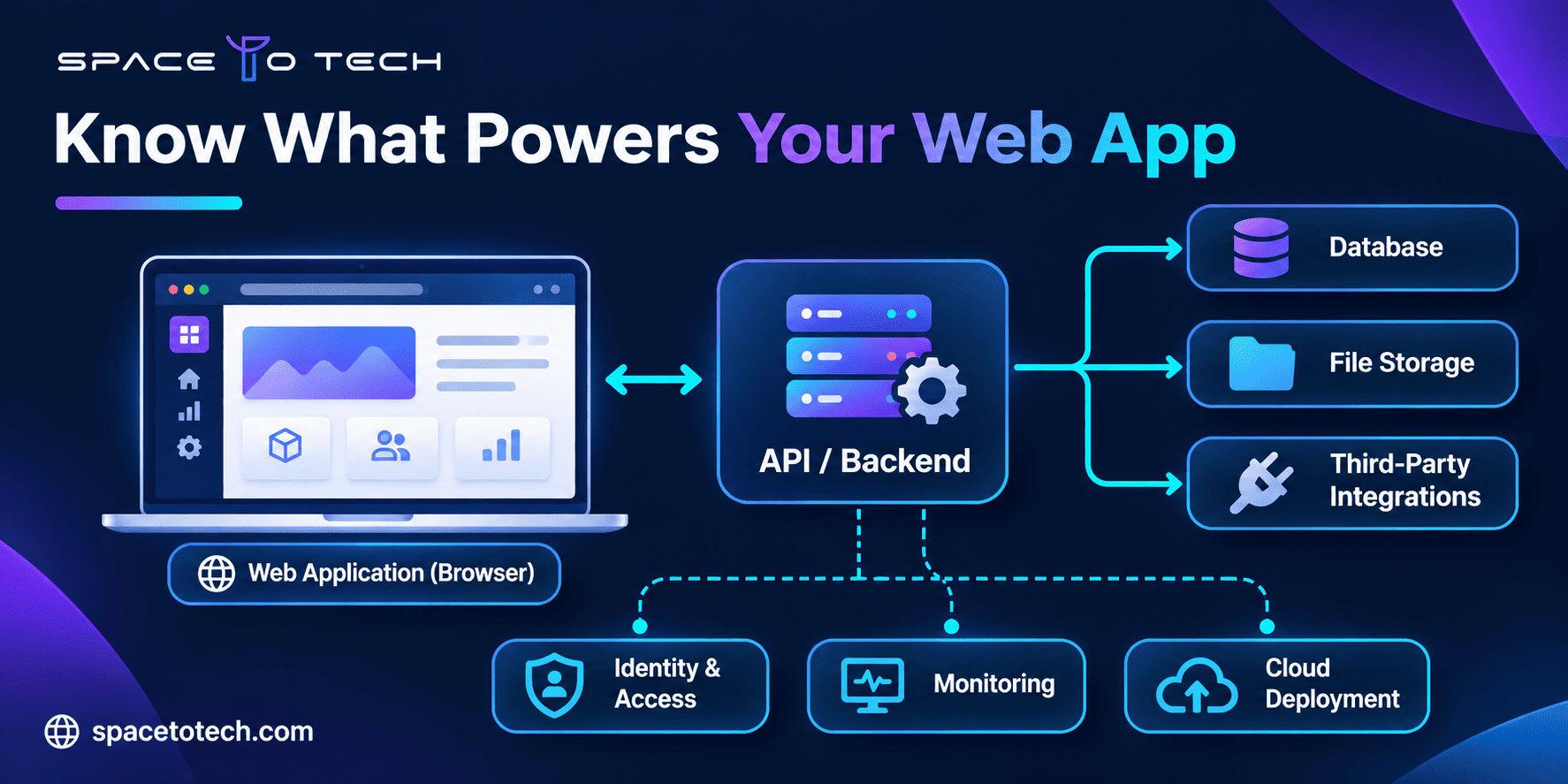
Simplified web application architecture graphic connecting a browser, backend, database, APIs, cloud operations and security controls.
Blogs05/11/2026

Web Application Architecture Explained for Non-Technical Founders

Imagine a founder launching a B2B client portal. Customers need to log in, upload contracts, track approval status and receive updates. The demo looks polished. Yet the proposal says very little about who can see each file, where data lives, or what happens when the CRM connection stops working. Those omissions are architecture questions, not design details. Web application architecture explains how the moving parts of a product are structured and connected. For a founder, that knowledge makes agency proposals easier to evaluate, exposes expensive assumptions early and helps prevent a promising product from becoming difficult to maintain. The broader web development planning process covers requirements, design and delivery; here, we focus on the system decisions that sit underneath them. You will learn how a real request travels through a web application, what the main components do, when common architectural patterns fit, and which questions to ask before approving a build. What Is Web Application Architecture? Web application architecture is the blueprint for how a web product’s components are separated, connected, deployed and operated. It answers questions such as where business rules run, how data is stored, how users are authenticated, how external systems connect and what happens during failures. It is not the same as the visual design. A clean user interface tells you what customers see; architecture determines which systems make the interface work and how safely they exchange information. Architecture vs. tech stack vs. product scope Decision Question it answers Example Product scope What must the first release do? Customers upload documents and review approvals. Architecture How are components separated and connected? Browser calls a backend that checks permissions, stores metadata and saves files in object storage. Tech stack Which technologies implement the architecture? A frontend framework, server runtime, relational database and cloud platform. UI/UX design How will the user navigate and interact? Upload screen, status timeline, accessible error messages. A proposed stack is not a complete architecture. An agency can name React, Python and AWS without explaining role permissions, integration boundaries, audit logs or deployment ownership. Ask for the responsibilities and connections between components, not only a logo list. Why founders and CTOs should care before development Architecture affects change cost. If a client-specific rule is tangled with shared workflows, adding a new customer may break existing behavior. If every service makes synchronous requests to a fragile third-party API, one outage may halt the entire product. If the cloud accounts belong to an agency without agreed transfer terms, vendor switching becomes harder. Good design does not mean predicting every future feature. It means isolating important responsibilities, making assumptions visible and keeping likely changes manageable. How Does a Web Application Work? A B2B Portal Example Consider a client manager who submits a contract for approval. Here is a simplified flow. Real implementations differ, but the sequence shows which questions an architecture must answer. The user signs in. The browser sends credentials through a secure connection, and the identity system establishes a session or token. The user uploads a document. The backend validates the request, checks their company and role permissions, and applies file restrictions. The application stores the file in appropriate storage and records its metadata and approval state in a database. The application creates an approval task. A notification job may run asynchronously so a slow email provider does not delay the upload response. A reviewer opens the task. The backend checks authorization again, retrieves permitted data and records the decision. The portal updates the customer-facing status and writes an audit record. Monitoring reports errors or unusual delays to the operations team. The key insight: the interface is only one part of the journey. Permission checks, asynchronous jobs, stored records, observability and third-party dependencies affect whether the workflow is trustworthy. Simplified architecture diagram, explained in words Component What passes through it Question for the buyer Browser / frontend Pages, forms, dashboards, user actions Can people complete the core workflow on relevant devices? Authentication / API boundary Identity, request validation, access checks How are tenant and role permissions enforced? Backend / business logic Rules, workflow states, processing Which system owns each business decision? Database and file storage Records, metadata, documents Where is data stored, backed up and retained? Integrations / background jobs CRM, email, billing, queues What happens if an external service is unavailable? Operations layer Deployment, logs, monitoring and alerts Who detects incidents and restores service? This is an educational simplification rather than a production blueprint. Caches, load balancers, CDNs, secrets management and other services may be necessary depending on the product. The Main Components of Web Application Architecture Frontend: the interface users operate The frontend renders pages and handles user interaction. It may contain form validation and presentation logic, but security-sensitive business rules must be enforced on trusted systems as well. A button hidden from an unauthorized user is not a substitute for a backend authorization check. For a B2B portal, assess accessible form interactions, table navigation, account switching, error handling and responsiveness. A slow or confusing interface can interrupt sales onboarding and customer self-service even when the backend is functioning. Backend: the rules that protect the workflow The backend applies the rules: who can access a contract, when an invoice can be approved, and which actions should trigger notifications or integration updates. This is where responsibilities should have clear boundaries so that changing one workflow does not unexpectedly alter another. Before commissioning custom web application development , ask the team to describe the business rules in plain language and identify the components that enforce them. Database and storage: the system of record Databases typically manage structured entities such as organizations, users, approvals and transactions. File storage may hold large uploaded documents. These systems need permissions, retention policies, backups and restoration tests suited to the business requirements. Not every application needs multiple databases, a data warehouse or a complicated caching layer. More infrastructure adds deployment and operational responsibility. Start with the information the product must store, how it will be queried and how accuracy will be maintained. APIs and integrations: connecting the business An API is an agreed interface between systems. For example, a portal may fetch customer details from a CRM and send approved invoices to an accounting platform. The architecture must specify authentication, error handling, retry behavior, data mapping and which system is authoritative for each record. Integrations often become more difficult than the screens themselves. A contract should clarify whether external API access is available, who pays for the service, how rate limits work and what the product does when the external provider is down. Infrastructure, deployment and monitoring Infrastructure includes the environment where the application runs, how releases are deployed, how secrets are protected and how the team monitors failures. A staging environment, automated tests, health checks and a rollback procedure are often more useful early on than a complex container platform that no one can maintain. A proposal should identify the owner of the cloud account, repositories, domains, databases and monitoring tools. Clear access and handover arrangements reduce lock-in. Common Types of Web Application Architecture Architecture labels often mix several concepts. Monolith and microservices describe deployment and service boundaries; three-tier describes logical separation; serverless describes an execution and operating model. They can coexist in the same product. Approach How it works Good fit when… Main trade-off Layered / three-tier Presentation, application logic and data are separated by responsibility. You need a clear baseline structure for a portal or internal app. Layer boundaries still need good enforcement and testing. Monolith A substantial part of the application deploys as one unit. The team is small and release workflows are tightly connected. Large deployments may grow harder to coordinate if responsibilities become tangled. Modular monolith One deployment with intentionally separated internal modules. You want rapid initial delivery with room to evolve modules. Requires discipline to prevent modules from bypassing boundaries. Microservices Distinct services can deploy and scale separately. Teams own stable domains with genuine independent-release requirements. Higher network, monitoring, consistency and deployment complexity. Serverless components Managed services execute selected functions or jobs. Workloads are event-driven or variable and the platform constraints fit. Provider limits, integration complexity and usage variability need scrutiny. Monolith vs. microservices: what matters for a founder? A monolith is not automatically obsolete, and microservices are not automatically scalable. A well-designed monolith may serve a substantial user base. Poorly partitioned microservices can create a distributed system that is harder to debug, secure and deploy than the original application. Independent scaling becomes valuable when workloads truly differ. For example, an image-processing pipeline might need separate compute capacity from a customer portal. That is a concrete reason to separate a component. “We might grow rapidly” is not, by itself, a complete architectural justification. Why modularity matters more than trendiness A modular architecture creates clear boundaries around areas such as accounts, billing, approvals and reporting. Those boundaries improve testability and help a team change one feature without having to understand every line of the product. If future needs justify splitting a module into an independent service, good boundaries can make that transition easier, although it still requires work. Microsoft’s guidance on common web application architectures discusses trade-offs between deployment structures. The decision should follow the workload and team, not an assumed hierarchy of sophistication. Which Architecture Fits Your Business? A startup testing an MVP For an early-stage product, learning speed, a complete core workflow and manageable operating costs usually matter more than supporting hypothetical millions of users. A simple layered design or modular monolith is often worth evaluating. Document the data model, auth model and integration boundaries, then delay complexity until requirements justify it. A multi-tenant SaaS application SaaS introduces questions about tenant isolation, permission models, billing, account administration, usage limits, data retention and regional requirements. The biggest risk may be incorrect separation of customer data rather than raw traffic volume. Ask whether tenant context is checked consistently across APIs, background jobs, exports, logs and storage access. If the system grows, modules with distinct operational needs can be evaluated for independent scaling. An enterprise client portal or operations platform Enterprise buyers may require SSO, existing ERP/CRM connections, audit trails, approval chains and integration with legacy systems. Architecture should begin with a map of the current systems and their data ownership. A new application that duplicates critical customer records without synchronization rules can increase operational work instead of reducing it. A marketing website with interactive features Not every business needs a complex application backend. A content-led site with a form and a few integrations may suit a simpler platform. The distinction between a website and web application helps clarify whether the proposed architecture is proportional to the required functionality. How Architecture Affects Cost, Security, Performance and Scale Development cost and total cost of ownership The cheapest initial build is not necessarily the least expensive to maintain. Architecture affects how many services the team deploys, how many environments it maintains, how many integrations need testing and how incidents are investigated. Assess cost across discovery, development, quality assurance, hosting, monitoring, licensing, support and future changes. Avoid estimates based only on the number of screens. Two applications with the same screen count can have radically different security, integration and operational needs. Security, privacy and role boundaries Security should be designed into the application’s identity, data and integration boundaries. Discuss least-privilege access, encryption where appropriate, secure configuration, dependency updates, audit logging, incident response and recovery expectations. A cloud vendor or framework alone does not make the software secure. Security planning must include the people who administer accounts and deployments. Owners should know who can access production data, who approves configuration changes and how credentials are rotated. Performance, accessibility and reliability Performance depends on how requests flow, database queries, caching and network latency. Reliability depends on failure isolation, monitoring, redundancy when justified and recovery procedures. Both need measurable acceptance targets rather than statements such as “fast” or “enterprise-grade.” Accessibility also belongs in product acceptance criteria. The WCAG 2.2 accessibility requirements cluster explains user-interaction standards in greater depth; architecture and component design should allow teams to test those requirements throughout delivery. A practical risk-and-response table Business risk Architecture question Reasonable mitigation to evaluate CRM outage blocks order submission Does the portal depend synchronously on every CRM call? Queue non-critical updates and define retry / reconciliation rules. One client sees another client’s file Where is tenant authorization enforced? Centralized checks, tenant-aware queries and permission tests. Slow reports degrade normal usage Are analytical workloads isolated from transaction requests? Background jobs, workload separation or read replicas when justified. A release causes downtime How is a failed deployment detected and reversed? Staging tests, progressive release where suitable and a rollback plan. Agency relationship ends Who owns code, accounts, documentation and operational access? Contractual ownership and a documented handover checklist. How to Evaluate a Web Application Architecture Proposal Before an agency commits to an implementation, it should have enough information to explain the main components, assumptions, risks and trade-offs. A giant technical diagram is not necessary for every project. A clear one-page system view and a list of open decisions can be more useful. Begin with written requirements, not vendor preferences Write down the users, top workflows, permissions, required integrations, expected activity, security expectations and launch priorities. A structured web application requirements document lets teams compare proposals against the same business needs. A founder-friendly architecture review scorecard Review area What a useful proposal should explain Red flag Core workflow Where each critical user action is handled Only framework names; no request flow Data ownership System of record, retention, access and backups No clear owner for customer records Security Authentication, authorization, secrets and test scope “Cloud hosting makes it secure” Integrations Failure handling, API dependencies and rate limits Assumes every external API always works Delivery Environments, releases, testing and rollback No deployment or QA plan Changeability Component boundaries and likely extension points Every new feature requires broad rewrites Operations Alerts, logs, recovery and maintenance responsibilities No defined support or incident owner Handover Code, accounts, documentation and IP terms Critical accounts held exclusively by vendor Questions to ask your software development partner Which business requirement drove the most important architecture choice? Can you show the end-to-end flow for our highest-value user action? Which components are custom built and which use managed services? How will customers, user roles and company data be kept separate? What happens if the payment, CRM, identity or email provider becomes unavailable? What is deliberately out of scope for launch, and what would trigger redesign? How will we test, monitor and recover this system after release? What documentation, accounts and source code will we own at handover? If comparing web development companies in India , ask each prospective partner these same questions. The comparison is useful only when vendors respond against the same project requirements and acceptance criteria. Common Architecture Mistakes That Create Rework Overengineering before a product has evidence An early-stage portal rarely benefits from operating a complex network of independently deployed services solely because microservices appear modern. Operational sophistication should solve a demonstrated problem. Start with explicit boundaries, tests and monitoring that match the team’s capacity. Underestimating integration and data migration Existing systems rarely expose perfectly clean data or stable interfaces. Verify API access, data schemas, identity matching, rate limits and migration volume before approving timelines. If historic records are required, define which records and what accuracy checks are needed. Treating compliance as a final milestone Some security, privacy, accessibility and contractual obligations affect data structure and deployment choices. They cannot be reliably added as a last-week visual review. Capture the applicable requirements during discovery and test against defined acceptance criteria. No operational owner after launch Even well-written software requires patches, incident handling, backups, credential management and monitoring. The proposal should distinguish build completion from ongoing operations. Confirm whether the customer, the development partner or another provider will own each responsibility. Web Application Architecture Checklist Before Signing Off Our product’s primary users and two or three critical journeys are documented. We know which system owns customer data and how it is accessed. User roles, organization boundaries and authentication are defined. Every critical integration includes failure and recovery assumptions. The team can explain why its architecture fits today’s workload. Testing, accessibility, monitoring, backup and release requirements are written down. We have agreed who owns repositories, cloud accounts, keys and documentation. Potential future scaling triggers are named without pretending to predict every growth scenario. The proposal describes exclusions, handover and long-term maintenance. Build an Architecture That Fits the Product, Not the Trend For founders and B2B buyers, the point of web application architecture is not to become a software architect. It is to ask enough informed questions to understand whether the proposed system can support users, protect data, integrate with the business and adapt without unnecessary cost. A practical design starts with the work the product must perform, tests its assumptions and leaves a sensible path for future change. More services, more databases or a fashionable stack do not automatically create a better business outcome. SpaceToTech is a global software development company supporting businesses with custom applications and digital platforms. If you are scoping a SaaS product, customer portal or enterprise workflow, an architecture discovery discussion can clarify the core journeys, integration constraints, deployment ownership and the decisions that need evidence before a proposal is finalized.


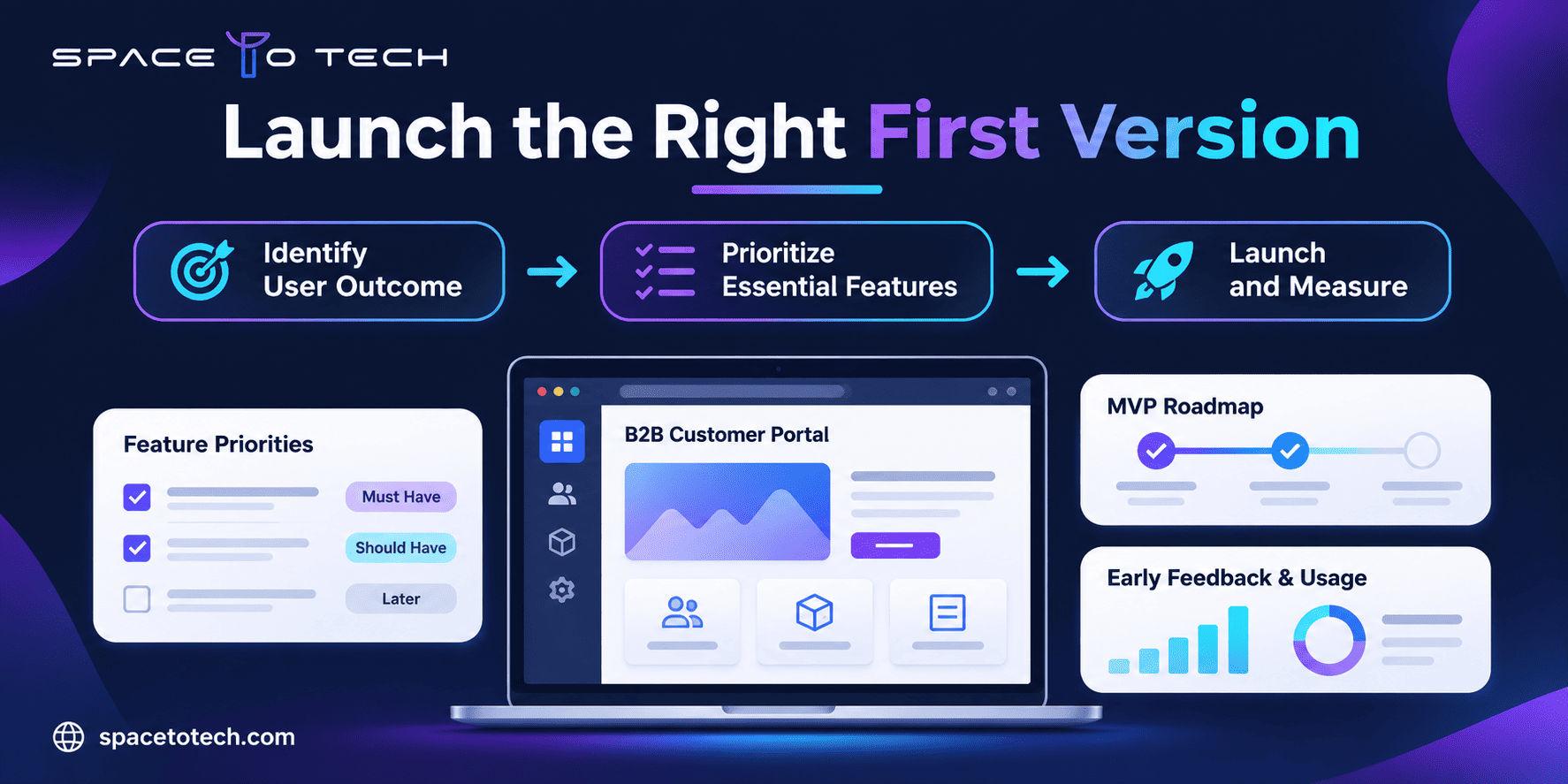
MVP web app development scope graphic showing the first user journey, feature priorities, launch planning and feedback loop
Blogs05/11/2026

MVP Web App Development: How to Scope Your First Version

A founder has a clear idea for a B2B customer portal. Customers should submit requests, track progress and download a final report. During planning, the idea expands into live chat, advanced analytics, custom permissions, mobile apps and AI-generated recommendations. The original problem is still unresolved, but the first-release estimate has doubled. That is the real challenge in MVP web app development: deciding what belongs in the first usable release and what should wait. A minimum viable product is not a deliberately unfinished application. It is the smallest reliable version that delivers a specific result and gives the team evidence about demand, usability or workflow value. The broader web development guide explains how web projects move from planning to delivery. This article goes deeper into MVP scope, priorities, cost drivers and the questions founders and CTOs should settle before requesting a proposal. What Is an MVP Web App? An MVP web app is an early production version of a browser-based application built to test a defined product hypothesis with real users. It contains enough functionality to complete a meaningful task and enough quality controls to operate safely within its intended context. It does not need every feature on the roadmap. The central test is simple: can the intended user obtain the promised result from beginning to end? For a purchasing portal, the result could be submitting and tracking an order. For an internal operations tool, it might be approving a request without forwarding spreadsheets and email chains. For a SaaS reporting product, it might be uploading data and receiving an actionable report. MVP vs. Prototype vs. Full Product Stage Main purpose What to expect Prototype Test design and workflow assumptions Clickable screens or mock data; not necessarily production-ready. MVP Test a complete, useful product outcome Working core workflow, essential security, basic operations, measurement and support. Full product Expand to validated segments and use cases Broader workflows, customization, automation and optimization based on evidence. An MVP can follow a prototype, but the two are not interchangeable. A clickable demonstration may validate navigation and perceived usefulness; it cannot validate whether a real integration works under production conditions. When Should You Build a Web Application Rather Than a Website? An app is justified when the user must sign in, work with personalized data, complete a transaction or manage a repeatable process. A marketing website with a contact form may be a better initial test when the primary uncertainty is simply whether customers want the service. The choice is explored in the website versus web application comparison. Start With the Business Outcome, Not the Feature List Before discussing frameworks or hiring developers, write down the assumption your product must test. “Build a modern customer portal” is a solution statement. “Allow customers to submit service requests and track status without emailing the account manager” describes a measurable problem. Identify one primary user Choose the person whose successful action makes the product worth testing. Some MVPs need a secondary operations or admin role, but adding five customer personas at launch usually multiplies permissions, screens and test cases. Write down the primary user’s context, trigger, constraints and desired result. Describe the smallest valuable outcome A good MVP outcome is observable: a request is submitted, an invoice is approved, an appointment is booked or a document is processed. “Increase engagement” is too broad until it is connected to a task and a measurement. Define the baseline, intended improvement and evidence you expect to collect during an agreed pilot period. Pick a validation signal before coding For an early SaaS product, activation may mean the first successful completed workflow. For an internal tool, it might be minutes saved per request or the percentage of requests handled without manual re-entry. For a paid B2B service, it could be the number of qualified pilot customers completing a meaningful transaction. Collect qualitative feedback alongside event data so the team understands why users succeed or leave. How to Scope an MVP Web App in Five Steps Step 1: Map one complete user journey Write the path from entry to result: the user opens the app, identifies themselves if necessary, supplies information, receives confirmation and can inspect the result. Include errors and cancellation, not just the ideal path. A short diagram or numbered sequence is more useful than a 40-item feature wishlist. Step 2: List the capabilities the journey requires Identify the screens, data fields, rules, permissions, integrations and notifications needed to complete that journey. Distinguish a genuine dependency from a convenience. The core process might require a status update by email but not a fully customizable notification center. Step 3: Prioritize by value, effort and risk Classify requirements as Must Have, Should Have, Later and Out of Scope. “Must” means the core outcome cannot be tested safely or meaningfully without it. A feature that executives like, but users can live without during the pilot, normally belongs in a later release. Step 4: Define acceptance criteria and exclusions Every launch feature needs a testable result. “Customers can track requests” is ambiguous. “An authenticated customer can see only their own requests, including creation date, current status and last update” is specific enough to implement and test. Name excluded features as clearly as included ones. That makes changes visible instead of silently expanding the contract. Step 5: Set the launch and learning plan Agree on deployment ownership, production support, event tracking, feedback collection and the date for reviewing evidence. An MVP without post-launch learning can become a permanent, underfunded application rather than a validation tool. Which MVP Features Should Be Built First? There is no universal “five features every MVP needs” list. The minimum depends on the user journey. Authentication may be critical for a portal handling private data and unnecessary for a public calculator. Payments may be central to a paid marketplace, but premature for a concierge pilot where invoices are handled manually. Capability Initial decision Reason Core workflow Must Tests whether the promised outcome is delivered. Login and roles Must if data is user-specific Controls access and protects users’ information. Basic admin tools Must if operations need them Allows staff to correct status or respond to requests. One essential integration Must only if the workflow depends on it Avoids building disconnected functionality. Basic analytics and logging Must Shows completion and detects technical failure. Multi-language support Later unless target users require it Adds translation, UX and QA scope. Advanced dashboards Usually later Start with basic measurement and exports. Native iOS / Android apps Usually later A responsive web app may validate demand first. AI recommendations Depends on core promise Include if essential to value; otherwise validate without them. A Worked B2B Example: Turning a Large Portal Idea Into an MVP Consider a fictional industrial equipment supplier whose customers currently email service requests and call account managers for updates. The founder proposes a portal with tickets, equipment history, video chat, auto-quoting, AI issue classification, mobile apps and multilingual support. The first question is not which framework can build it. It is which workflow customers need most urgently. Define the first release boundary The target outcome is to let one pilot customer submit a service request and check its status without emailing the account manager. The first version serves customers and an internal coordinator; technicians can continue using existing tools during the pilot. Feature V1 decision Why Customer sign-in Include Requests and equipment data belong to specific accounts. Create service request Include This is the primary customer outcome. Upload one supporting attachment Include if operationally necessary Helps coordinators diagnose issues. Coordinator status update Include Keeps the experience operational end-to-end. Email confirmation Include Closes the loop after submission. Advanced auto-quoting Later Complex business rules are not needed to validate request submission. AI issue classification Later Manual categorization can test demand first. Native mobile apps Later Responsive browser access supports the pilot. Multi-language and video chat Outside pilot scope Add only after real user evidence supports the cost. Define acceptance and success criteria For example, a customer must be able to submit a complete request from a supported desktop or mobile browser; the coordinator must see it in the work queue; each customer must see only their own requests; and the system must record submission failures. These are illustrative requirements. Actual thresholds should be established with the client during discovery. After launch, measure pilot account activation, successful request completion, failed submissions, support calls per request and user-reported friction. If customers still call the account manager despite using the portal, investigate whether the status information is timely enough. That learning is more useful than celebrating the number of features shipped. What Else Must a Production MVP Include? “Minimum” does not mean skipping the safeguards needed to run the product. A production MVP typically needs basic monitoring, appropriate access control, reliable backups or recovery arrangements, privacy notices, operational support and clear error handling. The exact standard depends on the data, market and use case. Security and privacy fundamentals Use appropriate authentication and authorization, protect sensitive data in transit and at rest, log important events, manage secrets securely and apply routine dependency updates. Document where data is stored and which team handles incidents. The OWASP Application Security Verification Standard provides a useful technical reference for planning application security requirements. Accessibility and QA belong in V1 A broken onboarding form or inaccessible primary button can invalidate a product test because users never reach the feature being tested. Include critical-path keyboard checks, form validation, browser and device coverage, error states and integration tests. Accessibility requirements should be aligned with the intended user base and relevant standards, including applicable W3C accessibility guidelines . Ownership, support and analytics Decide who owns the code, cloud accounts, repository, domain, designs and analytics property. Agree on issue triage and a route for urgent fixes after deployment. Instrument the key activation and completion events before launch; Google’s documentation on Google Analytics events is one possible reference if that platform is selected. MVP Web App Development Cost: What Actually Changes the Estimate? A useful cost estimate follows the scope, not a generic per-screen rate. Two applications with ten screens may have very different budgets if one needs straightforward forms and the other requires complex user permissions, legacy integrations and audit trails. Cost driver Why effort rises Scoping question User roles and permissions More rules, states and security tests Who can view, edit, approve and export each record? Third-party integrations Authentication, data mapping, failures and vendor limits Which integration is required for the first user outcome? Workflow complexity Exceptions and approvals multiply implementation paths How many states and human handoffs exist? Data migration Old records need cleaning, mapping and validation What history must be available on day one? Design and accessibility More custom patterns and testing scenarios Which components can safely be reused? Compliance and security Additional controls, documentation and testing Which obligations apply to the product and data? Infrastructure and operations Hosting, monitoring, backups and incident response Who will own production after release? SpaceToTech’s existing web application development services page presents $10,000–$25,000 as an illustrative “MVP Web App” tier, while another existing article describes larger MVP web apps in a higher range. Those figures are not directly interchangeable; this guide does not promise a price without an agreed scope. Buyers should request estimates with explicit assumptions, exclusions and ongoing costs. Build, Buy, No-Code or Hybrid? Custom development is not automatically the right answer. If the product mainly reproduces a standard process, an existing SaaS tool or a no-code workflow can validate demand faster. If the business advantage depends on proprietary workflow rules, unusual integrations, fine-grained access or a differentiated user experience, custom engineering may be justified. Approach Good fit Trade-off Off-the-shelf software Standardized processes and rapid deployment Limits on customization and vendor roadmap. No-code / low-code Simple workflow experiments with modest complexity Platform constraints, pricing and migration considerations. Custom web app Differentiated product logic and long-term ownership needs Higher upfront discovery, engineering and maintenance commitment. Hybrid Use packaged systems for common functions; custom-build the differentiator Integration and data-flow design still require care. The broader custom software development guide covers build-versus-buy decisions across the full software lifecycle. For an MVP, keep the decision tied to what needs validation now. How Long Does MVP Web App Development Take? MVP schedules cannot be calculated reliably from a feature count alone. A team needs time for discovery, design, implementation, integration, QA, launch preparation and customer feedback. Some tasks can overlap, but dependencies still matter. Phase Core deliverable Common delay Discovery and scoping User journey, assumptions, exclusions, estimate Unresolved stakeholders or unclear outcomes. UX and technical planning Wireframes, data model, architecture choices Late design approvals or unknown integrations. Development Working core workflow in tested increments Added features and changing business rules. QA and release readiness Validated acceptance criteria, monitoring, rollback plan Unstable third-party APIs or missing test data. Pilot and iteration Measured user behavior and prioritized changes No feedback owners or analytics events. SpaceToTech’s pillar discusses a general three-to-five-month timeline for many web-app MVPs. That is an indicative planning reference, not a guaranteed delivery window. Smaller controlled pilots may take less time; complex enterprise workflows can take longer. The delivery plan should identify owners, dependencies and decision deadlines. How to Prevent MVP Scope Creep Without Ignoring Feedback A good product team should welcome new information without automatically adding every suggestion to the launch backlog. For each request, ask whether the new feature is required to test the agreed primary outcome, whether it prevents a serious risk, or whether it can be tested after release. Keep one version-controlled scope document with explicit in-scope and excluded features. Record each new request with estimated impact on cost, timeline, dependencies and QA. Require one named decision-maker to approve scope changes. Place valuable but noncritical ideas in a post-launch backlog. Review the MVP hypothesis before expanding the delivery commitment. A simple scope-change log protects both the buyer and the development agency. It also prevents teams from debating whether a request was “always included” after implementation has already begun. What Should Your MVP Development Brief Contain? Before obtaining quotes, prepare a concise document describing the problem, users, core journey, essential workflows, integrations, data, operating environment, quality expectations, budget envelope, launch dependencies and acceptance tests. You can adapt the broader web development project brief to this narrower first-release problem. Brief field Example of useful detail Business hypothesis Customers will complete a service request without calling an account manager. Primary user Pilot customer account administrator. Core workflow Sign in → create request → receive confirmation → check status. Must-have features Authentication, request form, status page and coordinator queue. Exclusions Native apps, auto-quoting and AI recommendations. Integrations Email provider only in the pilot; ERP sync planned later. Acceptance criteria Permissions, form errors, confirmation and status updates tested. Measurement Completion rate, failures and follow-up calls. Ownership and support Code, cloud, incident owner, pilot period and response process. How to Choose an MVP Development Partner Compare agencies on their ability to challenge unnecessary features, describe technical trade-offs and take responsibility for a working release. A polished portfolio does not substitute for clear discovery notes, documented exclusions, QA plans or post-launch ownership. A useful vendor shortlist may include firms from your broader review of web development companies , but check each company’s actual experience with the product type you are building. A vendor strong in brochure websites may not be the right team for an authenticated SaaS platform. Questions founders and CTOs should ask What exact customer outcome will your proposed first release validate? Which requested features would you remove from V1, and why? What assumptions are excluded from your estimate? Who owns the code, repository, cloud accounts and deployment process? How are integrations, security, accessibility and failure states tested? How will you record change requests and measure the pilot after launch? MVP Scoping Checklist Before You Sign a Development Contract One target user and measurable product outcome are documented. The end-to-end journey works on paper, including errors and exceptions. Must-have features are separated from later releases and exclusions. Security, privacy, accessibility and QA expectations are included. Third-party dependencies, data access and approval owners are named. Acceptance criteria, milestones and change-control procedures are agreed. Hosting, software licenses, support and ownership are accounted for. Analytics and pilot feedback will inform the next roadmap decision. Build the First Version Around What You Need to Learn The smartest first release is not the one with the fewest lines of code. It is the smallest dependable product that gives you an answer about your business. Define the customer outcome, remove optional complexity, make the important workflow work, then use real feedback to decide where to invest next. For founders and B2B teams considering custom software development , a scoped MVP is also the foundation for a useful agency conversation. SpaceToTech develops web applications, SaaS products and business software for organizations with different levels of technical maturity. If you already have a product idea or a draft requirements document, contact SpaceToTech to discuss the core workflow, technical constraints and a realistic first-release scope.

We Build Digital Products That Drive Real Growth

From idea to launch, we help startups and enterprises build scalable apps, AI solutions & custom software.

View Our Work
Trusted byGlobal Clients

150+Projects Delivered

OngoingSupport
UAE

UAE

USA

USA

INDIA

INDIA

Book a Free Consultation

Your information is safe with us.