Background

AI-Powered Development Services

Build AI solutions with intelligent, scalable performance

You agree to our Privacy Policy

AI Development Services in UAE | Custom AI
Solutions by ExpertsLeaf

At Space to Tech Technology, we provide cutting-edge AI services in UAE, empowering businesses to leverage artificial intelligence for smarter decision-making, process automation, and enhanced customer experiences. As a leading AI development company, we specialize in building customized AI solutions, ranging from machine learning models and data analytics platforms to conversational AI and predictive analytics systems.

With the rapid advancement of AI technologies, businesses in the UAE can unlock new levels of efficiency, improve operations, and create innovative solutions for their customers. Whether you’re looking to integrate AI into your existing products, develop a new AI-powered solution, or explore AI-driven business strategies, we provide end-to-end AI development services that meet your unique needs.

Our expertise in AI spans multiple industries, including finance, healthcare, retail, manufacturing, and logistics. We provide AI services in Dubai and across the UAE, delivering AI-powered solutions that align with local market demands, compliance standards, and technological advancements.

What We Offer in Our AI Development Services

icon

Custom AI Software Development

We develop AI-powered software tailored to your business requirements, helping you optimize operations, enhance decision-making, and unlock new revenue opportunities. Our AI solutions are designed to solve real-world problems while providing actionable insights and improving productivity.

icon

Machine Learning (ML) Solutions

Our machine learning models are designed to analyze large datasets, recognize patterns, and make accurate predictions. We develop ML models for applications such as customer segmentation, predictive maintenance, fraud detection, and more.

icon

Natural Language Processing (NLP)

We create intelligent NLP solutions, including chatbots, virtual assistants, sentiment analysis systems, and language translation tools. Our AI-driven NLP solutions are designed to enhance customer interactions, automate content generation, and extract valuable insights from unstructured text.

icon

Computer Vision Applications

We specialize in building AI systems that enable computers to interpret and analyze visual data. From facial recognition to object detection, our computer vision solutions can automate tasks, improve security, and enhance operational efficiency in industries like retail, healthcare, and manufacturing.

icon

AI-Powered Analytics

Our AI-powered analytics solutions help businesses unlock actionable insights from their data. We develop predictive models, automated reporting tools, and real-time dashboards that provide your team with valuable information to drive better decision-making and improve business outcomes.

icon

AI Consulting and Strategy

We provide AI consulting services to help you identify opportunities for AI integration within your business. From creating an AI roadmap to selecting the right tools and platforms, we help you implement AI strategies that are tailored to your goals and objectives.

Advantages of AI Services in UAELeaf

Incorporating AI into your business processes offers numerous benefits, especially in the tech-savvy and rapidly evolving market of the UAE. Here’s how our AI services in Dubai and the broader UAE can help transform your business:

  • Enhanced Efficiency and Automation

    AI solutions automate repetitive tasks, streamline workflows, and improve efficiency. By reducing manual labor, businesses can focus on more strategic, high-value activities.
  • Improved Decision-Making

    AI systems analyze large volumes of data to provide actionable insights, helping businesses make faster and more informed decisions.
  • Personalized Customer Experience

    AI-powered tools, such as recommendation engines and personalized marketing, allow businesses to offer tailored experiences to users, increasing customer satisfaction and loyalty.
  • Cost Savings and ROI

    By automating processes, reducing errors, and improving operational efficiency, AI can significantly lower operational costs, resulting in a high return on investment.
  • Innovative Business Models

    AI enables businesses to create new products, services, and business models, opening up new revenue streams and growth opportunities.

Ready to transform your app idea into reality? Let’s talk!

Why Choose Space to Tech Technology for AI Development in UAELeaf

LeafExperienced AI Engineers

Our team of experienced AI engineers is skilled in developing advanced AI models, machine learning algorithms, and data-driven applications that solve real-world business problems. We ensure that our AI solutions are tailored to your unique needs and challenges.

LeafEnd-to-End AI Solutions

From initial consulting and strategy development to design, deployment, and ongoing support, we offer full-spectrum AI development services. We handle every aspect of the AI lifecycle, ensuring smooth implementation and long-term success.

LeafTailored AI Services for UAE Market

As an AI development company with deep knowledge of the UAE market, we offer AI services in Dubai that are specifically tailored to local business needs, regulatory requirements, and customer expectations.,

LeafInnovative and Scalable AI Solutions

Our AI solutions are designed for scalability, ensuring that they can grow with your business. Whether you're a startup or a large enterprise, we build AI systems that evolve with your company’s needs.

Find question
& Answers.

Don’t find the answer? We can help

Want to see our recent work?

Domino's logo

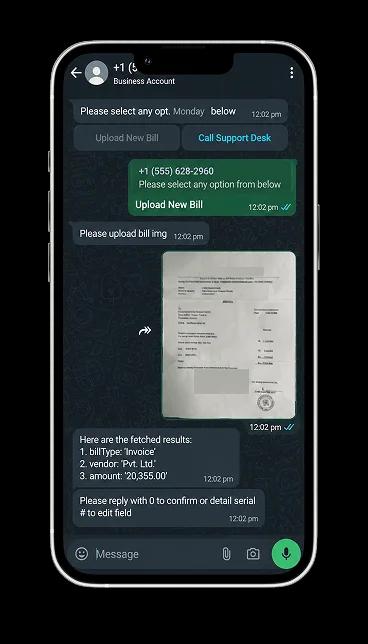
Domino's WhatsApp
Chatbot

Robust mobile ordering with live tracking, loyalty rewards, and seamless payment integration.

Domino's app preview
Vibasa logo

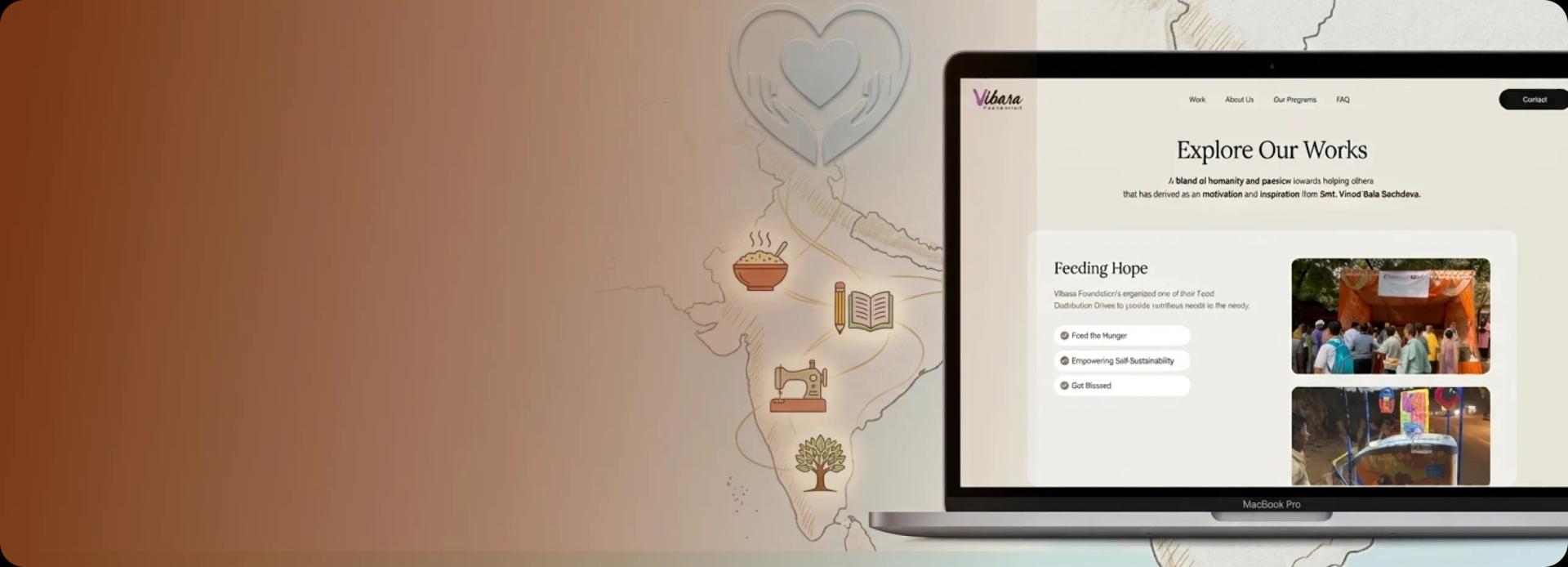
Vibasa Foundation

Building a kinder future through compassion, service, and collective action.

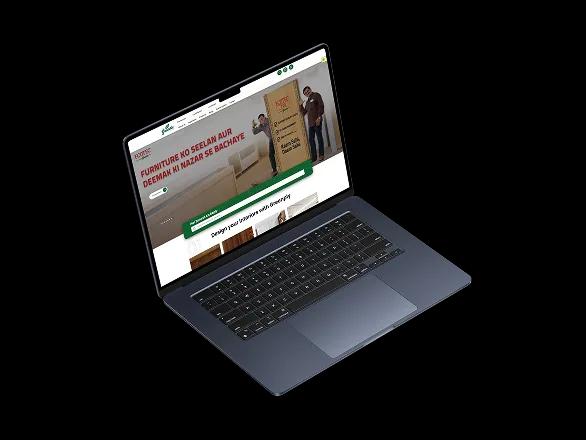
Greenply logo

Greenply

Digital product experience for a leading brand, designed to strengthen discovery and customer trust.

Greenply app preview
Clutch 5.0 rating

Recognized. Trusted. Preferred

Awards & Recognition

We are proud to be recognized by leading platforms and industry experts for our innovation, impact, and excellence

TopDevelopers

TopDevelopers

Top Mobile App Developers

Freelancer

Freelancer

Top Mobile App Developers

AppFutura

AppFutura

Top Mobile App Developers

GoodFirms

GoodFirms

Top Mobile App Development

Clutch

Clutch

Top Mobile App Developers

Excellence isn't claimed.It's recognized

These achievements reflect our commitment to
delivering world-class AI solutions that help
businesses grow and lead

Supporting Insights

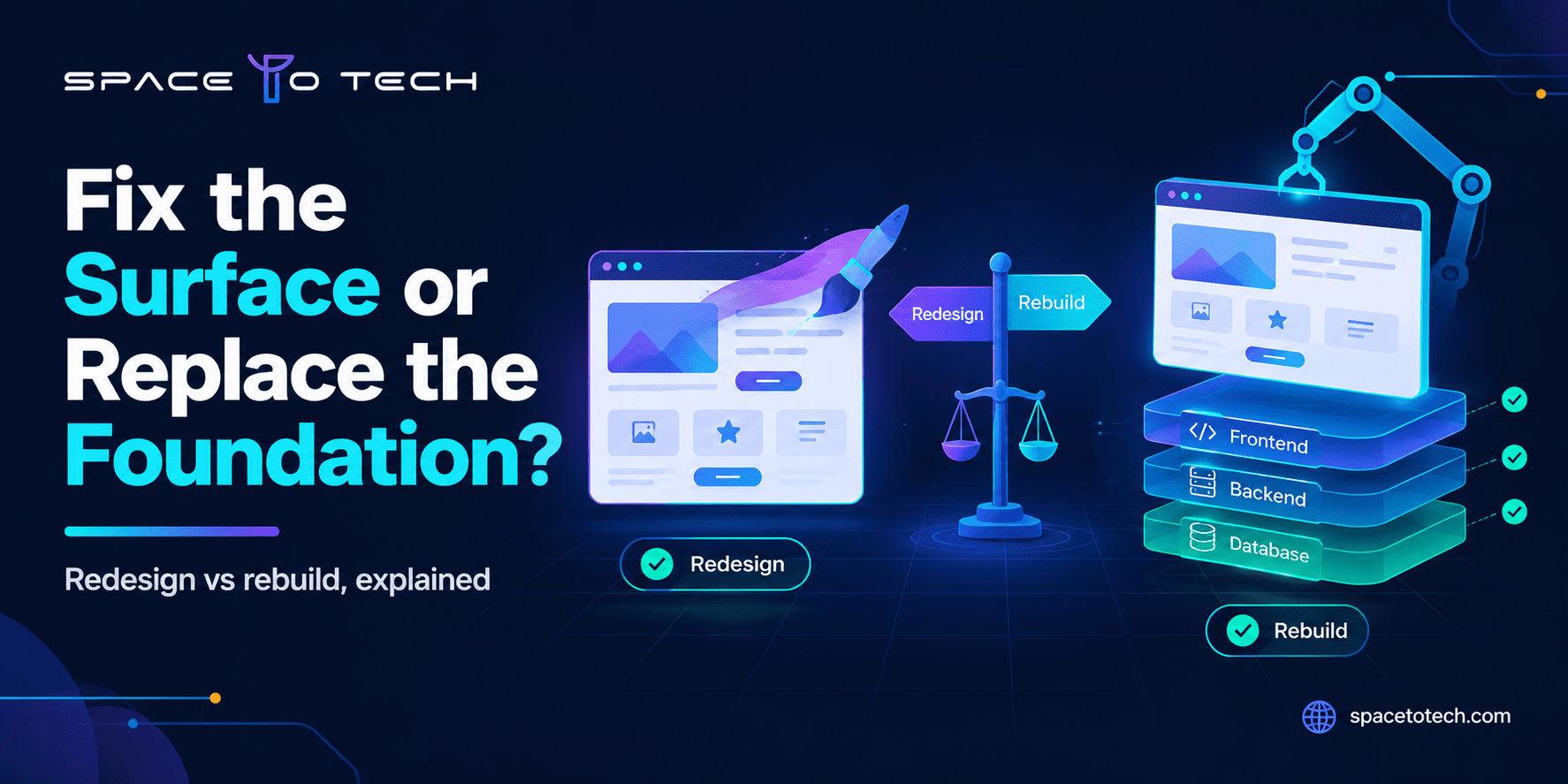
Illustration comparing a website redesign with a website rebuild, showing a refreshed interface layer above a replaceable code foundation
Blogs30/10/2026

Website Redesign vs Rebuild: How to Decide What Your Business Actually Needs

Your website is slow, the leads have dried up, and every small edit turns into a ticket. One person on the team says it just needs a fresh look. Another says it is time to start over. That disagreement is the heart of the website redesign vs rebuild question, and it gets much easier once you know where the problem actually lives. A redesign changes how the site looks, reads and guides people. A rebuild replaces what the site runs on: the code, the CMS, the database structure. Choose wrong and you either pay for polish on a shaky base or tear down a foundation that was perfectly fine. This article shows you how to diagnose the issue, compare cost and timelines, protect your search traffic and decide with a score instead of a hunch. What Is the Difference Between a Website Redesign and a Rebuild? A website redesign improves the front of the house. Layout, navigation, copy, visual style and user flows change, while the platform, hosting and core code stay in place. A website rebuild changes the structure behind it. The codebase, CMS, database or hosting stack gets replaced, and the design is usually rebuilt on top of the new base. The two overlap, which is why quotes get confusing. A redesign can touch templates and front-end code, and a rebuild often arrives with a new look. What separates them is the foundation. If the foundation stays, you are redesigning. If it goes, you are rebuilding. What a website redesign includes A redesign usually covers a refreshed visual identity, clearer navigation, rewritten or reorganized pages, stronger calls to action and better mobile layouts. The work sits closer to design and content strategy than to engineering, which is why many teams bring in UI/UX design services before anyone touches a template. Most redesigns keep the existing CMS and URL structure, so the SEO risk stays manageable. What a website rebuild includes A rebuild starts at the technical layer. That can mean moving from an aging custom build to a modern framework, replacing a CMS your team has outgrown, or restructuring the database so new features stop being painful. If you are unsure whether the next version should run on custom code or a CMS , settle that first, because it shapes cost, speed and who can edit content afterward. Rebuilds take longer and cost more, but they remove limits that no amount of redesign can touch. Redesign vs rebuild vs replatforming Replatforming is the middle case. You move the same content and a similar design onto a different platform, for example from an older CMS to a headless setup. Think of it as a rebuild where the design stays mostly intact. Three labels mean three different quotes, so make sure every proposal says which one it is pricing. When Should You Redesign Your Website? A redesign is the right call when the engine runs fine and the bodywork is what customers complain about. If the points below describe your site, you probably do not need to tear anything down. Your design and user experience feel dated Pages load without trouble, but visitors leave quickly. The layout feels cramped on phones, the brand has changed since launch, or forms look like they belong to a different decade. These are surface problems, and a redesign solves them at a fraction of rebuild cost. Your navigation and content no longer match what buyers need You added services, dropped others and kept stacking pages onto the menu. Now people cannot find the page that sells. Reorganizing the structure, rewriting key pages and sharpening calls to action usually lifts conversions more than any new technology. Your current platform still does its job Updates ship, security patches arrive, integrations work and editors publish without calling a developer. When all of that holds, rebuilding is expensive overkill. Redesign what visitors see and keep what works. When Should You Rebuild Your Website? A rebuild earns its price when the limits sit in the technology itself, not in the look. Three signs show up again and again. Your current technology blocks what the business needs next You want customer accounts, online booking, payments or a pricing calculator, and the platform only bends through stacks of plugins that fight each other. If what you need looks more like a logged-in product than a brochure, compare a website or a web application before you spend on a redesign. Once the requirement is a real product, teams that deliver custom web application development every week can scope it far more accurately than a design agency can. Technical debt makes every change slow and risky A simple text edit takes a week. Only one developer understands the code. A fix on one page breaks another. That is technical debt, and a new coat of paint does nothing for it. When maintenance eats the budget you would rather spend on growth, a rebuild pays for itself over time. Performance, security or integration needs go deeper than surface fixes Unsupported software versions, plugins that no longer get patches and speed problems rooted in how pages are generated all point downward. Run your site through a website security checklist . If the basics fail because the platform cannot support them, repairing the surface is wasted effort. Website Redesign vs Rebuild: Decision Matrix and Self-Check Start with the matrix. Find the row that sounds most like your site.  What you see  Likely path  Cost impact  Timeline  Main risk Dated look, healthy platform, mostly good content  Visual refresh  Lowest  2 to 4 weeks  Polish that hides structural problems  Confusing navigation, weak conversion, healthy platform  Structural redesign  Moderate  6 to 10 weeks  URL and content changes hurting rankings  Unsupported platform, constant breakage, slow to change  Full rebuild  High  10 to 20 weeks  Migration errors and scope growth  Design works, platform limits growth  Replatforming  Moderate to high  8 to 16 weeks  Broken redirects and data loss  Both problems, limited budget  Phased approach  Spread over quarters  Rolling  Scope drift between phases Now score your site. Answer yes or no to each question. Redesign signals The site works technically but looks outdated. Visitors struggle to find key pages even though pages load quickly. Your brand, offer or audience has changed since launch. Editors can publish and update without developer help. Security updates and integrations still work without workarounds. Rebuild signals The platform or framework is unsupported or close to end of life. Small changes routinely take days because the code is fragile. Planned features are impossible or very hard on the current platform. Speed or security problems trace back to the code, not the content. Only one person or vendor is able to maintain the site. If your yes answers cluster in the first group, redesign. If they cluster in the second, rebuild. If both groups score three or more, treat it as a phased project rather than forcing one answer. Website Redesign vs Rebuild Cost Cost depends on scope far more than on the word you choose. Published estimates run from a couple of thousand dollars for a basic refresh to well over a hundred thousand for enterprise rebuilds, and they are hard to compare because each vendor defines a redesign differently. Use the bands below as planning numbers for a small to mid-size business site, not as quotes.  Project type  Typical scope  Indicative budget (USD)  Timeline  Visual refresh  New styling on existing templates  $2,000 to $6,000  2 to 4 weeks  Structural redesign  New layouts, navigation and content on the same platform  $6,000 to $20,000  6 to 10 weeks  Full rebuild  New platform or codebase with content and data migration  $12,000 to $45,000  10 to 20 weeks  Rebuild with portals or integrations  User accounts, CRM, payments, custom features  $40,000 to $100,000+  16 to 30 weeks Page count moves these numbers quickly. If your site runs to dozens of pages, our breakdown of multi-page website cost shows how templates and page volume change the budget. Factors affecting redesign cost The number of unique page templates matters most, followed by how much copy needs rewriting, whether user research is included, and how many brand assets must be created. Accessibility fixes add effort too, though they are cheaper to build in than to bolt on later. Factors affecting rebuild cost Platform choice, the quality of the existing code, data migration, integrations and custom functionality drive the total. Integrations and data transfer are the line items most often underestimated, so ask every vendor to price them separately. Hidden costs, migration and ongoing maintenance Content cleanup, redirect mapping, regression testing and post-launch fixes rarely appear in the first quote. Hosting, licenses and updates continue after launch. A site that goes live without a care plan starts aging on day one, so budget for website maintenance cost from the beginning. Then compare three-year cost, not launch cost. A cheap redesign on a crumbling platform often gets repeated two years later. How to Plan a Website Redesign or Rebuild The website redesign process and the rebuild process share the same backbone. Rebuilds simply spend more time on the technical steps. Audit the existing website List every page with its traffic, rankings, backlinks and conversions. Add a technical review covering speed, security, code quality and plugin health. Mark each page as keep, improve, merge or remove. This audit is what turns the self-check score into a scoped plan. Define requirements and scope Write down goals, audiences, must-have features and success metrics. A written web development project brief keeps every vendor quoting the same thing and stops scope from drifting once work begins. Plan UX, content and technical changes Wireframe the key journeys, plan the content model and choose the stack. If the stack is still open, our overview of the technologies top web development companies use helps you ask better questions before you accept a recommendation. Develop, test and launch Build on a staging site and test forms, browsers, devices, speed and accessibility. Run the redirect map through a bulk test and agree a rollback plan before launch day. A good launch is boring because the surprises were found earlier. Measure results and maintain the website Compare traffic, rankings and conversions with your baseline at two, four and eight weeks. Schedule updates, backups and monitoring so the new site does not drift back into the state you just paid to fix. Timelines depend on content readiness, approval speed and integrations more than on coding. Late copy and slow feedback stretch schedules faster than any technical hurdle. How to Protect SEO During a Website Redesign or Rebuild Search traffic is the asset most often damaged at relaunch, and the damage is usually avoidable. Google's own site move guidance recommends preparing a URL map, setting up server-side redirects and monitoring traffic on both old and new URLs afterward. It also notes that permanent redirects do not cause a loss in PageRank and advises keeping them in place for at least a year. Audit existing URLs and organic performance Export pages from analytics and Search Console. Record which URLs earn clicks, rankings, backlinks and leads. These are the pages you protect first, and the numbers become the baseline you judge the launch against. Map redirects and preserve valuable content Redirect each old URL to its closest new equivalent with a single 301, not a chain. Keep titles, headings, structured data and internal links on pages that already rank. Update internal links to the new URLs instead of relying on redirects forever. Keep URLs stable unless a change has a clear reason, since AI answers and backlinks both point to specific addresses. Test crawling, indexing and tracking after launch Remove staging blocks, confirm robots rules, submit the new sitemap and check canonical tags. Verify that analytics fire on every template. Then watch crawl errors and index coverage for several weeks. Speed belongs on the checklist too. The thresholds in Core Web Vitals are a largest contentful paint under 2.5 seconds, an interaction to next paint under 200 milliseconds and a cumulative layout shift under 0.1. Can You Redesign and Rebuild a Website in Phases? Yes, and for many teams it is the safest route. In the first phase, fix what costs you leads today: key landing pages, navigation, forms and speed. In the second, replace the weakest technical components, such as hosting, checkout or the CMS. In the third, extend the product with new features. Each phase ships on its own, so you see results early, and a mistake costs one phase instead of the whole project. Phasing only works with guardrails. Freeze the URL structure unless there is a strong reason to change it, keep one shared backlog, and review results before approving the next phase. Without those rules, a phased project turns into three half-finished ones. How to Choose the Right Web Development Partner Ask for an audit before a quote. A partner who prices a rebuild without looking at your current site is guessing. Look for a clear scope, a written migration plan, named QA steps, code and account ownership on your side, and support terms after launch. If you are comparing proposals, our guide on how to choose a web development company explains how to score them side by side. SpaceToTech is a custom web and software development company working with teams in the US, UK, UAE, Australia and India. Whether the audit points to a redesign, a rebuild or a phased plan, we put the recommendation in writing with the reasoning behind it. If you want a second opinion on your current site, you can ask for a project assessment and compare it with what other vendors tell you.

Hire Dedicated App Developers in India
Blogs30/10/2026

How to Hire Dedicated App Developers in India for Your Startup

Building a mobile app is a major investment for a startup. You need more than someone who can write code: you need people who understand the product, make sensible technical decisions, communicate clearly and help you improve the app after launch. For many founders, hiring dedicated app developers in India is one way to access experienced engineering talent while keeping the team structure flexible. The right hiring decision depends on your product stage, technical requirements, budget and ability to manage development. A solo developer may be enough for a prototype, while a production-ready app may require mobile, backend, design, QA and DevOps expertise. This guide explains how dedicated developers work, what skills to assess, how to compare providers and how to plan the cost before signing an agreement. Why Should Startups Hire Dedicated App Developers in India? India is a major technology-services market with a broad pool of software engineers and companies working across mobile, web, cloud and emerging technologies. For a startup, the practical advantage is access to different skill sets without necessarily building a permanent in-house department from the beginning. However, the best reason to hire in India should be capability and delivery fit—not a belief that every Indian provider will automatically be cheaper or better. A dedicated engagement can help founders bring in developers who focus on one product, attend sprint meetings and work against an agreed backlog. It can be useful when the roadmap is evolving, when the startup needs to validate an MVP, or when an existing team needs additional mobile engineering capacity. The model can also reduce the recruitment and administration workload when the provider manages sourcing, payroll and resource continuity. Consider a startup building a booking platform. It may need a Flutter engineer for the mobile experience, a backend developer for availability and payments, and a QA specialist to test booking edge cases. Instead of recruiting every role permanently before the product has traction, the founder can begin with a lean team and adjust capacity as priorities become clearer. The trade-off is that the startup must still provide product direction, timely decisions and access to stakeholders. What Are Dedicated Mobile App Developers and How Do They Work? Dedicated mobile app developers are engineers assigned to work on a client's product for an agreed period and capacity. They may be employed by a development partner, but they work within the client's product priorities, tools and communication routines. Depending on the agreement, the client may manage day-to-day tasks directly while the provider handles recruitment, payroll, equipment, leave administration and replacement support. A typical engagement begins with a discovery discussion. The client explains the product, target users, platforms, existing systems and expected outcomes. The provider proposes developer profiles, a team structure and a commercial model. Once the people are selected and access is arranged, the team joins planning meetings, estimates tasks, develops features, reviews code, tests releases and demonstrates progress. The model is different from a fixed-price project. In a fixed-scope engagement, the provider is usually responsible for delivering an agreed set of outputs against milestones. In a dedicated model, the client generally pays for agreed capacity over time and can reprioritise work within the engagement. It is also different from hiring a freelancer: a provider may offer continuity, backup resources and access to complementary specialists. These benefits should be confirmed contractually rather than assumed. A healthy arrangement defines who owns the backlog, who approves releases, who reviews code, how performance is measured and how a developer can be replaced. Agree on working-hour overlap, communication channels, sprint length and escalation paths before the first sprint begins. What Are the Benefits of Hiring Dedicated App Developers for Startups? The first benefit is flexible capacity. Startups rarely have a perfectly stable roadmap. A team may need more backend support before an integration, additional QA before launch, or a designer during a major user-experience update. A dedicated arrangement can make it easier to add or reduce capacity, provided the contract includes clear notice periods and minimum commitments. The second benefit is continuity. Developers who remain involved over multiple releases build knowledge of the codebase, product decisions and customer feedback. This can reduce repeated explanations and make maintenance more efficient. Continuity matters particularly in apps with complex workflows, payment logic, third-party integrations or industry-specific requirements. The third benefit is access to a wider delivery skill set. A startup may not need a full-time QA engineer or DevOps specialist from day one, but it still needs testing and reliable deployment practices. A development partner can make specialist support available when the product requires it. Founders also retain the ability to review working software and reprioritise the backlog during regular sprint demonstrations. These benefits are not automatic. A dedicated team can become expensive if the product owner cannot provide decisions or a prioritised backlog. It can also underperform if the provider rotates people frequently or hides the actual engineers behind account management. Ask to meet the assigned team and define measurable expectations before committing. What Skills Should You Look for in Dedicated App Developers in India? Start with the platform strategy. For native iOS development , look for practical Swift and Apple-platform experience. For Android, assess Kotlin, Android architecture and device compatibility. If a shared codebase is appropriate, evaluate Flutter or React Native experience. The choice should follow product requirements: performance, device features, accessibility, team capability, release plans and long-term maintenance—not simply which framework has the lowest quote. Mobile skills alone are not enough for most production apps. Developers should understand API integration, authentication, data storage, error handling, app state, offline behaviour and secure communication with backend services. Ask how they would handle slow networks, token expiry, duplicate payment requests or interrupted uploads. These scenarios reveal whether a candidate thinks beyond the happy path. Quality and security should be part of the evaluation. Look for unit and integration testing, code reviews, automated build pipelines, crash reporting, dependency management and secure handling of credentials. Depending on the product, you may also need knowledge of encryption, role-based access, privacy requirements, audit logs and secure payment integrations. Ask candidates to explain a production issue they diagnosed and how they prevented it from recurring. Finally, assess communication and product thinking. A strong developer explains trade-offs in plain language, flags risks early, documents decisions and asks questions when requirements are unclear. Use a structured interview scorecard covering technical depth, problem-solving, code quality, communication, ownership and relevant domain experience. A short, paid, time-boxed exercise based on realistic work can be more informative than an abstract puzzle. How to Hire Dedicated App Developers in India: Step-by-Step Process 1. Define the product and the first release Write down the user problem, target audience, core user journeys and the smallest useful release. Separate must-have features from later enhancements. Include platform requirements, integrations, data sensitivity, expected user volume and measurable outcomes such as activation or successful transactions. 2. Decide the hiring model and team shape Choose between a direct employee, freelancer, staff augmentation, dedicated team or fixed-scope project. Decide whether you need one mobile engineer or a cross-functional group. A startup with an internal CTO may prefer individual augmentation; a founder without technical leadership may need a delivery lead and a more complete team. 3. Create a shortlist based on evidence Review relevant apps, live product links, case studies and references. Ask which work was completed by the proposed developers rather than assuming every portfolio project represents the same team. Check whether the provider has experience with your platform, integrations and industry constraints. 4. Interview the actual developers Meet the people who will do the work. Ask them to walk through an app architecture, explain a technical decision and discuss a production problem. Include a communication exercise: give a short product requirement and ask the candidate to identify assumptions, risks and clarifying questions. 5. Agree commercial, legal and delivery terms Document rates, working capacity, invoicing, leave coverage, replacement process, minimum term, notice period and change management. Include confidentiality, IP assignment, source-code ownership, repository access, data handling, subcontracting and termination obligations. Have qualified legal counsel review the agreement where appropriate. 6. Onboard and review the first sprint Give the team access to the issue tracker, repository, design files, documentation and test environments using least-privilege permissions. Agree sprint goals, definition of done, review cadence and release process. At the end of the first sprint, evaluate working software, code quality, communication and whether estimates were transparent. A practical hiring process should finish with a clear first milestone, not merely a signed contract. If the team cannot explain what it will demonstrate in the first two weeks, clarify scope and ownership before development starts. How to Choose App Developers for a Startup: Key Factors to Consider Compare providers against evidence rather than presentation quality. Relevant startup experience matters because early products involve uncertainty, changing priorities and incomplete requirements. Ask how the team handled scope changes, technical debt and user feedback in previous engagements. A company that only delivers fixed specifications may not be the right fit for a product that is still discovering its market. Review the portfolio in detail. Look for live applications, app-store presence where applicable, product complexity and the provider's exact contribution. Ask for a reference from a client with a similar project size. If a case study reports a business result, ask how it was measured and what the development team specifically influenced. Communication is a delivery capability. Confirm whether you can speak directly with engineers, how often you will see working software, which project tools are used and how blockers are escalated. Ask who will lead the technical work and whether that person will remain involved. A polished sales call is not a substitute for meeting the people assigned to your product. Finally, assess operational safeguards: secure development practices, access controls, backups, documentation, code ownership, transition support and post-launch maintenance. The contract should state that your organisation receives the agreed intellectual property and source code, and that access to cloud accounts, app-store accounts and repositories is controlled appropriately. What Is the Cost to Hire App Developers in India? There is no single reliable price for hiring app developers in India . Cost depends on experience, platform, specialist skills, engagement type, team composition, delivery responsibility and contract length. A direct employee's salary is not the same as the amount a client pays a development company: a vendor rate may also cover recruitment, administration, infrastructure, management, bench risk and business overhead. As one transparent salary reference, Adecco's India Salary Guide 2026 lists mobile app developer annual salary bands that vary by experience. Its published ranges include approximately ₹6–12 lakh for 0–3 years, ₹12–25 lakh for 3–7 years, ₹25–40 lakh for 7–10 years, and ₹40–60 lakh for 10–15 years. These are salary-guide figures, not guaranteed salaries, hourly freelance prices or agency quotations. Actual compensation varies by city, company type, skills and candidate. Cost factor What changes the price What to ask Experience and role Senior architecture or specialist capability generally costs more than routine implementation Which seniority is assigned, and who reviews the work? Technology and complexity Native features, real-time systems, AI, cloud and complex integrations may require specialist skills. Which technical requirements drive the estimate? Engagement model Direct hire, freelancer, dedicated resource and full delivery team include different responsibilities. What is included in the quoted rate? Team composition Design, QA, backend, DevOps and project leadership add capacity but reduce role gaps. Which roles are included and at what allocation? Ongoing operations Hosting, monitoring, maintenance, licences and support continue after launch. What recurring costs sit outside development? For a realistic budget, estimate the work by phase: discovery, UX/UI, development, testing, deployment and post-launch support. Add cloud infrastructure, third-party services, app-store accounts, analytics, security reviews and a contingency for unknowns. Ask providers to separate one-time setup costs from recurring charges and to state how change requests are priced. Do not select a provider solely because its quote is the lowest. An estimate that excludes testing, documentation or deployment can look attractive but create expensive rework. Compare the total cost of ownership and the likelihood that the team can maintain the product after launch. Should You Hire Individual Developers or a Dedicated App Development Team in India? An individual developer can be a sensible choice when the task is narrow, the architecture already exists, and your organisation has someone who can review code and manage delivery. Examples include adding a small feature, fixing a defined defect or extending an established app where design, backend and QA support are already available. A dedicated team is often more appropriate when the startup is building a new product or handling several connected workstreams. A lean MVP team might include a mobile developer, backend developer, UI/UX designer and part-time QA engineer, with a technical lead overseeing architecture and code quality. The exact structure should follow the feature set and risk profile; not every startup needs every role full-time. Consideration Individual developer Dedicated team Best fit Scope Narrow or clearly defined Multiple connected workstreams Team for product build Management Client manages closely Shared delivery structure Depends on internal leadership Coverage One skill set Mobile, backend, QA, design, lead Team for cross-functional needs Continuity risk Single-person dependency Can include backup and role coverage Check contract and named staffing Cost shape Lower initial commitment Higher monthly capacity Compare total delivery cost A staged approach can control risk: begin with a short discovery phase, build a lean MVP pod, review adoption and technical performance, then expand the team when the product has evidence of demand. Avoid hiring a large team before the startup has a prioritised backlog and a decision-maker available. Where Can You Find the Top App Developers in India for Your Startup? Start with specialist mobile app development companies when you need a coordinated team, delivery process and access to multiple disciplines. Ask for the proposed team structure, named technical lead, relevant work samples and a clear explanation of how delivery is managed. A provider's website is a starting point, not proof of capability. Founder referrals and professional networks can surface providers with a track record that is not obvious from search results. Ask peers who have completed a similar product what went well, what they would change and whether the same engineers remained involved. Verify references directly and ask about communication, estimation accuracy and post-launch support. Freelance marketplaces can work for specific tasks or short engagements, but the startup must check identity, availability, portfolio ownership, client references and backup arrangements. Review and comparison platforms such as Clutch and GoodFirms can help build an initial shortlist. Treat ratings as discovery signals; validate the work, team and claims independently. The phrase ' top app developers in India ' should not be treated as a universal ranking. The right provider is the one whose experience, team, delivery model and commercial terms fit your product. Shortlist a few candidates, give each the same brief and compare their questions and proposed approach—not just their final price. Top Mobile App Development Companies: What Should Startups Compare? Use a consistent scorecard so every company is evaluated on the same criteria. Start with portfolio relevance: has the company delivered products with comparable workflows, integrations, performance demands or regulatory requirements? Ask for a live demonstration and a reference, and identify the people who actually built the product. Next, compare engineering and delivery practices. A credible team should be able to explain architecture choices, code review, automated testing, release management, security and maintenance. Ask how often it demonstrates working software and how it handles a feature that turns out to be more complex than expected. Look for clear documentation and realistic risk communication. Compare pricing on an equal basis. One proposal may include QA and project management while another quotes only developer hours. Check minimum commitment, overtime, leave coverage, replacement terms, ramp-up and ramp-down, third-party costs and support after launch. A transparent proposal should make assumptions visible. Finally, meet the actual team. Confirm who owns technical decisions, who will communicate daily and whether the proposed developers are available for your timeline. Ensure the agreement defines intellectual property transfer, repository access, data handling, subcontracting and exit assistance. These details are as important as the framework or hourly rate. Common Mistakes to Avoid When Hiring App Developers for Your Startup The most common mistake is choosing only on price. A very low quote may reflect limited senior oversight, no dedicated QA, unrealistic delivery assumptions or important exclusions. Ask providers to explain the team composition and the assumptions behind the estimate. Compare the cost of a complete, maintainable release rather than the cost of the first coding month. Another mistake is beginning without a clear product goal. A long feature list is not a strategy. Define the user problem, priority journeys, acceptance criteria and the person who can make product decisions. Without a prioritised backlog, even capable developers can spend time building features that do not validate the business idea. Do not skip technical and reference checks. A polished portfolio may not represent the assigned team, and a technically strong developer may still be a poor fit if communication is unreliable. Interview the actual people, inspect relevant code or architecture where possible, and speak with previous clients. Finally, do not leave IP, documentation and exit arrangements until the relationship becomes difficult. Ensure your organisation controls its repositories and production accounts, receives documentation and credentials through secure processes, and has a defined transition plan. Confirm how data is returned or deleted when the engagement ends. Conclusion: How to Hire the Right Dedicated App Developers for Your Startup Hiring the right dedicated app developers in India starts with understanding what your startup needs now and what it may need next. Define the MVP, select the right engagement model, assess the actual developers, compare providers using evidence and plan for the full cost of building and maintaining the app. The best decision is not always the biggest team or the lowest quote; it is the arrangement that gives your product the right skills, continuity and accountability. Before you sign, make sure the scope, sprint process, communication, security responsibilities, IP ownership and exit terms are clear. Start with a focused first phase and review working software early. If you are evaluating a development partner, SpaceToTech can discuss your product goals, required skills and suitable engagement model so you can make an informed decision before committing to a build.

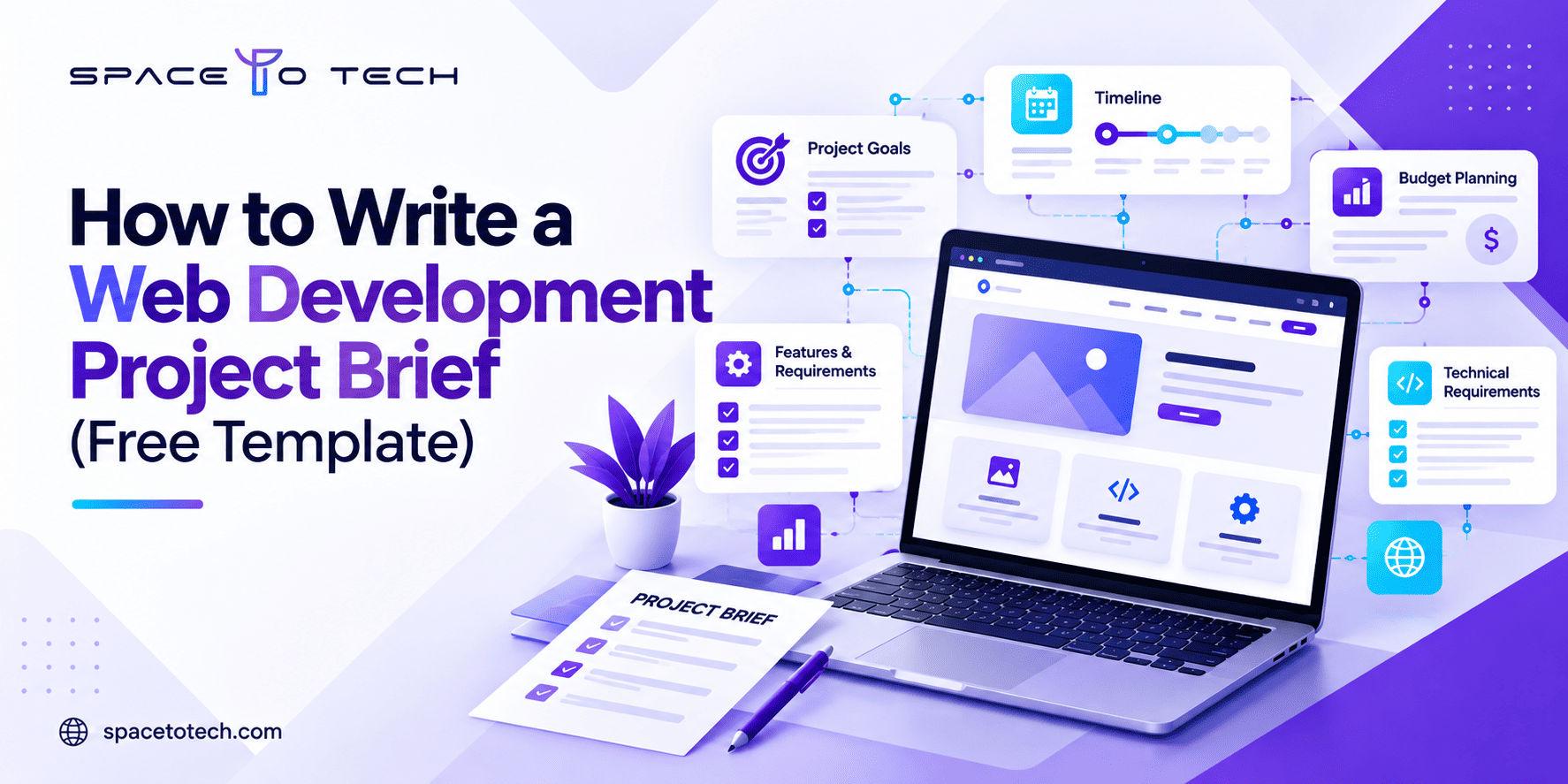
Web development project planning with a website wireframe and requirements checklist
Blogs29/10/2026

How to Write a Web Development Project Brief (Free Template)

A web development project brief turns “we need a new website” into a plan a team can estimate and build. A clear brief helps teams prepare more comparable estimates and identify unanswered questions before a contract is signed. A vague brief can leave important details unresolved until development has already started. This guide shows you how to write a web development project brief , with a copy-ready template, an illustrative web application example, a feature-priority table and a scorecard for comparing proposals. For the wider project lifecycle, read our web development process guide. This article focuses on the planning document you prepare before requesting estimates. What Is a Web Development Project Brief? A web development project brief is a written summary of what you want to build, why, for whom, within what budget and by when. It gives a development team enough context to ask useful questions and prepare an initial estimate. A brief for a straightforward project may fit into one to three pages; complex web applications may need supporting documents for workflows, integrations or technical requirements. It describes the problem, not the solution. You say "our sales team loses two days a week re-entering orders", and the team proposes how to fix it. That order matters, because a software development company can often suggest a simpler route than the one you had in mind, but only if you leave room for it. The first thing a brief settles is whether you need a website or a web application . A site that publishes information is priced and scheduled very differently from a product with logins, roles and payments, and quotes that ignore the difference are not worth comparing. Brief, requirements document, scope of work and RFP Document Purpose Detail Written by When Project brief Explain the problem, goals and limits Short, 1 to 3 pages You Before you ask for quotes Requirements document Describe exactly what each feature must do Long, feature by feature You with the agency After discovery Website project scope document List deliverables, exclusions and milestones Contract-level Agency, approved by you With the proposal RFP Invite formal bids with rules and scoring Formal, structured Procurement team Larger or regulated buying These four get mixed up constantly. They are different documents written at different moments. If you are comparing RFP vs project brief, the short answer is this. A brief starts a conversation, and an RFP runs a competition. For many small and mid-size projects, a concise brief is a practical starting point; more formal procurement processes may require an RFP as well. Why a Clear Web Development Project Brief Matters Three things improve straight away when the brief is solid. First, estimates become comparable. When every agency reads the same facts, a $12,000 quote and a $30,000 quote can be explained by their assumptions, not by guesswork. Second, surprises show up early. Missing content, an unclear approver or an old system nobody mentioned all surface while changing the plan is still free. Third, kickoff gets faster, because the team starts from your priorities instead of a blank page. There is also a quieter benefit. Writing the brief forces your own team to agree on what "done" looks like. Plenty of projects stall because two stakeholders wanted different things and nobody noticed until the first demo. What to Include in a Web Development Project Brief Use the eight sections below as your checklist. Each one answers a question the agency will otherwise ask you in week one. Together they form a practical web development requirements checklist you can reuse on future projects. 1. Business background and project goals Start with two or three sentences on your company and the problem behind the project. Then write goals you can measure. "Modernize the website" is a wish. "Raise qualified demo requests from 40 to 70 a month within six months of launch" is a goal. Good website project goals and objectives name a number, a time frame and the baseline you are starting from. 2. Target audience and user needs Name your main user groups and what each one needs to get done. A buyer comparing vendors, an existing customer checking an invoice and an internal admin updating prices have different needs, and each shapes different screens. Describe two or three key user journeys in a sentence each, such as "visitor reads a case study, then books a call". 3. Scope, pages and feature priorities List the pages and features you expect, and just as important, list what is out of scope for launch. Then rank everything so the first release stays honest. Priority Meaning Example Must Launch is blocked without it Contact form with CRM sync Should Important, but launch can proceed without it Blog with category filters Could Useful if time and budget allow Live chat widget Later Planned for a later phase Customer referral program This website feature prioritization table helps set expectations, keep the first release focused and give every agency the same priorities to estimate. It also gives the agency a clear way to propose a smaller first version if the numbers come in high. 4. Design, content and brand assets Share links to two or three sites you like and say what specifically works, for example "the pricing table is easy to scan", not just "clean design". Attach your brand guide if one exists. If you have wireframes, include them. If you do not, a team offering UI/UX design can produce them in the first phase. Then settle content requirements honestly. Who writes the copy? Who supplies photos? Who approves the final text? Late content is one of the most common reasons launches slip, so name an owner and a date. 5. Technical requirements and integrations Split this into two parts. Functional requirements describe what the product must do, such as accept payments, send booking confirmations or sync orders with your ERP. Non-functional requirements describe how well it must do it: expected traffic, uptime, response speed, security level and scalability. Name every third-party integration you already know about, such as CRM, payment gateway, analytics, email platform or booking tool, and say who holds the logins. Add your current hosting provider and who owns the domain and hosting accounts. A short website technical requirements checklist inside the brief saves a week of back and forth. 6. SEO, performance, security and accessibility Include these requirements early so agencies can account for them in their proposed scope, cost and timeline: Website content and SEO requirements: URL structure, 301 redirects, title and meta fields, XML sitemap, schema, analytics and conversion tracking. Performance: aim for Google's 'good' Core Web Vitals thresholds at the 75th percentile: Largest Contentful Paint (LCP) of 2.5 seconds or less, Interaction to Next Paint (INP) of 200 milliseconds or less, and Cumulative Layout Shift (CLS) of 0.1 or less. Security and privacy: the kind of data you collect, who can access it and any rules you already know apply. Do not guess at compliance. If you are unsure, say so and let the team ask. Our website security checklist lists the checks worth confirming before and after launch. Accessibility: the accessibility standard you intend to target, such as WCAG 2.2 Level AA, and any legal requirements that apply to your audience and jurisdictions. Confirm applicable obligations with a qualified adviser if needed. Replacing an existing site? Treat your website redesign brief as a migration project too. Export the current URL list, note which pages earn traffic and leads, and ask for a redirect plan. Skipping the website migration inventory is how rankings disappear after a relaunch. 7. Budget, timeline and dependencies Give a real budget range. A budget range helps an agency recommend a scope that fits your priorities. State whether the range includes design, testing, content migration, hosting, taxes and third-party licenses. If you want to sanity check numbers first, this breakdown of what a web developer costs in India shows how rates change with seniority and engagement model. For the website project budget and timeline, write your target launch date and the reason behind it, such as a trade show or a funding deadline. Then list dependencies with an owner and a date: content, brand assets, system access, legal review, approvals. A target date is more useful when the required content, access and approvals have named owners and deadlines. 8. Ownership, approvals and post-launch support Name the single person who gives final approval and the person who collects feedback. Write down who will own the source code, designs and accounts at the end. Then define website project acceptance criteria so everyone knows when a deliverable counts as finished. A testable criterion looks like this: "The checkout works on the latest two versions of Chrome, Safari and Edge, and a failed payment shows a clear retry message." Finally, ask what happens after launch. Warranty period, monitoring, updates and support terms all belong in this conversation, and a rule for handling change requests keeps new ideas from quietly doubling the cost. Free Web Development Project Brief Template Copy this into a document and replace each prompt with your own answers. Keep it to two or three pages. This web development project brief template works for both websites and web applications. Company and project overview What does your business do, and what triggered this project? Goals and success metrics What should change, by how much and by when? What is the current baseline? Target audience and key user journeys Who are the main users? What are the top three tasks each must complete? 4. Scope Pages and features required at launch. Items explicitly out of scope. 5. Feature priorities Must, Should, Could and Later list. Design and content Reference sites and what you like about them. Brand assets. Who writes copy, supplies images and approves text? Technical requirements Integrations, existing systems, hosting, domain ownership, performance, security, privacy and accessibility needs. 8. SEO and tracking Current URLs, redirect needs, analytics, conversion events. Budget Realistic range and what it should include. Timeline and dependencies Target launch date, reason for it, and owner plus due date for every dependency. Governance Final approver, feedback owner, meeting rhythm. Acceptance and support How each deliverable is approved. Warranty and maintenance expectations. Questions for the agency Anything you want the team to challenge or clarify. Example: A Short Brief for a Custom Web Application This is an illustrative example, not a real client. It shows the level of detail that can help an agency prepare an initial estimate. Actual preparation time depends on how much information is already available. Company and overview. A mid-size freight broker in Texas. Dispatchers re-enter customer orders into three tools by hand, and customers phone for shipment updates. Goal. Cut manual order entry by 60 percent and reduce status-check calls by half within six months of launch. Users and workflow. Customers place and track orders. Dispatchers assign carriers. Finance exports invoices. Admins manage roles and rates. Must have. Customer login, order form, live shipment status, dispatcher dashboard, role-based access, invoice export to the accounting system. Should have. Email and SMS alerts on delays. Later. Carrier mobile app, rate-quote calculator. Out of scope. Rebuilding the marketing site, data migration older than 24 months. Integrations. Existing TMS through its API, Stripe for payments, accounting software export, Google Analytics. MVP target. Launch with Must items in 16 weeks, then review usage before building the rest. This is the sort of phased plan that a web application project brief should make easy to propose. Budget. $40,000 to $60,000 for the MVP, excluding hosting and third-party licenses. Acceptance. Orders submitted by customers appear on the dispatcher dashboard within 10 seconds. Role permissions pass a documented test script. No critical or high-severity bugs open at launch. Ownership. Client owns source code, designs and cloud accounts. One named approver on the client side, with a three-business-day feedback window. A brief at this level of detail is what lets a team offering web application development services respond with a scoped plan instead of a vague range. For a project like this, a development team may ask follow-up questions about user roles, data volume, security and existing systems before confirming scope and estimates. Questions to Ask a Web Development Agency Before Requesting a Quote You do not need a long list. These questions tie directly to the quality of your brief and the estimate you will get back. They work as web development project discovery questions on your side of the table too. What information is missing from my brief that would change your estimate? Which assumptions have you made, and which of them carry the most risk? What would you cut from version one to protect the budget and date? Who will actually work on this, and how much of their time is dedicated? How do you test before each release, and who signs off on quality? Who owns the code, designs and hosting accounts when we finish? How are change requests priced and approved? What does support look like in the first 90 days after launch? Can I speak to a client whose project resembled mine? These are the questions to ask a web development company that has already read your brief. If you are still deciding who to approach, the guide to picking a web development consulting agency covers that earlier stage, and this article stays focused on the brief itself. Asking the same questions to a web development agency in every call also makes their answers easier to line up afterward. How to Compare Web Development Proposals Once replies arrive, resist the urge to sort by price. A cheaper proposal that excludes testing, content migration and post-launch support is not cheaper. Build a simple web development proposal comparison with the same rows for every vendor. Evaluation criterion What to check Example proposal A Example proposal B Example proposal C Scope match Every Must item is covered and named 5/5 — all Must items included 3/5 — two Must items deferred 4/5 — all Must items included; one assumption Assumptions Written down and reasonable; no hidden extra cost 4/5 — most assumptions listed 3/5 — several items need clarification 5/5 — assumptions and dependencies listed Exclusions Clear list of what is not included 4/5 — exclusions mostly clear 2/5 — exclusions are vague 5/5 — exclusions clearly itemized Milestones Dated, with demos and approval points 5/5 — dated milestones and demos 3/5 — phases listed, dates missing 4/5 — dates provided; approvals need detail Team Named roles and time commitment 4/5 — roles named; allocation partly clear 5/5 — team and allocation specified 3/5 — senior oversight not explained Quality and security Test plan, browsers, devices and security checks 4/5 — test plan included 3/5 — testing described briefly 5/5 — test and security checks documented Ownership Code, design and account ownership stated 5/5 — ownership clearly stated 4/5 — code ownership clear; accounts unclear 3/5 — design and account ownership unclear Support Warranty period and ongoing care terms 3/5 — warranty stated; support extra 4/5 — 60-day support included 5/5 — warranty and maintenance options clear Change process How new requests are priced and scheduled 4/5 — approval process explained 3/5 — hourly rates listed, approvals unclear 5/5 — written change-control process Illustrative comparison only: the three example proposals below are fictional and are included to show how to use the scorecard. Replace these ratings with evidence from the actual proposals you receive. Score each row from one to five and add a short note. The total matters less than the gaps. Blank or vague answers are a reason to ask follow-up questions before comparing the proposal with others. If you want a fuller method for weighing agencies against each other, this walkthrough on how to choose a web development company goes deeper into scoring. When you are still building the shortlist, you can browse web development companies side by side before you send the brief out. And if your project sits under strict rules for health, finance or accessibility, check how agencies prove their claims in this guide to regulated industries before you rely on a proposal. Common Project Brief Mistakes to Avoid Listing features with no goal. A page of features tells the team what to build but not why, so they cannot suggest anything better. Hiding the budget. Without a range, you get quotes for three different projects. No exclusions. If you do not say what is out of scope, the team will assume or you will. Forgetting integrations. The CRM, the payment provider and the old database are where estimates quietly grow. Dates with no dependencies. A launch date means little when content, access and approvals have no owners. Too many decision-makers. If five people can say no, the schedule belongs to the slowest of them. Treating the brief as final. It is a living starting point. Update it after discovery and keep a version history. Conclusion A strong web development project brief does not need clever writing. It needs honest answers to a short list of questions: what problem you are solving, for whom, within what limits, and how you will know it worked. Fill in the template above, rank your features, name your dependencies and send the same document to every agency you speak with. If you would like feedback on your draft, share your brief with our team before you start collecting quotes. You can also explore our portfolio of web projects delivered for businesses in different markets. When you are ready, contact SpaceToTech to discuss your project.



We Build Digital Products That Drive Real Growth

From idea to launch, we help startups and enterprises build scalable apps, AI solutions & custom software.

View Our Work
Trusted byGlobal Clients

150+Projects Delivered

OngoingSupport
UAE

UAE

USA

USA

INDIA

INDIA

Book a Free Consultation

Your information is safe with us.