Hire Ecommerce App Developers: What You Need to Know
If you're planning to hire ecommerce app developers, it helps to understand why this hire is different from a standard app developer role. Ecommerce apps carry business logic that general-purpose apps don't: cart and checkout flows, payment orchestration, catalog and inventory architecture, and integrations with ERPs, CRMs, and shipping providers. A developer who's never touched commerce logic will spend weeks relearning what a specialist already knows.
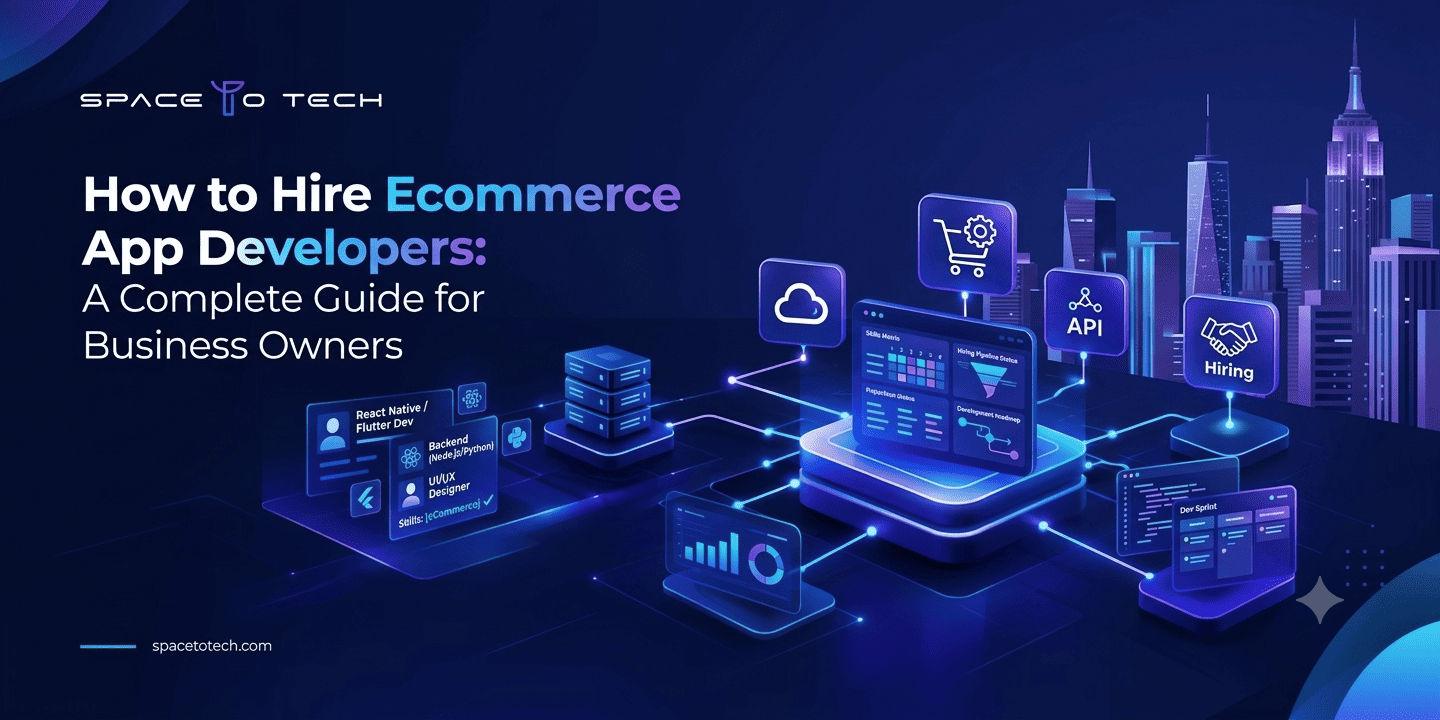
A capable ecommerce app team typically spans the full stack — mobile developers, backend engineers, QA specialists, and UX/UI designers — working together across frontend, backend, APIs, and third-party integrations.
The stakes are real. App performance and UX are directly tied to conversion rates; a slow checkout or clunky navigation can quietly bleed revenue every day it goes unfixed. Hiring the wrong developer often means missed deadlines, mounting technical debt, and security gaps that surface only after launch. That's the core case for specialists over generalists whenever commerce-specific features are involved.
Hire Ecommerce App Developers in 10 Days or Less
Urgency is common in this space — a competitor launches a feature, a seasonal sale is looming, or a platform migration can't wait. Rapid hiring is realistic when you use staff-augmentation models or a pre-vetted talent pool that skips the usual recruitment cycle.
A typical 10-day timeline looks like: discovery call → shortlist → technical vetting → contract → kickoff. A development partner like Space to Tech compresses this by maintaining vetted talent on standby rather than sourcing from scratch each time.
To move that fast, come prepared with a project brief, must-have features, and success metrics; your tech stack preferences or existing platform constraints (Shopify, Magento, custom-built); and access, credentials, brand assets, and stakeholder availability so kickoff isn't delayed by internal logistics.
What Can Ecommerce App Developers Build for You?
Once you decide to hire ecommerce developers, it's worth knowing the full range of what's buildable. Core app types include native shopping apps for iOS and Android, Progressive Web Apps (PWAs) for lighter-weight reach, multi-vendor marketplace apps, B2B ordering and wholesale platforms, and headless commerce storefronts for omnichannel flexibility.
Beyond the basics, revenue-driving features separate good apps from great ones: AI-powered product recommendations and personalization, AR/VR try-on and visual search, one-click checkout with saved payments and loyalty programs, and push notifications paired with abandoned-cart recovery flows.
A fashion brand might prioritize AR try-on and personalization; a grocery app leans on speed and hyperlocal delivery logistics; a B2B platform needs tiered pricing and bulk ordering. The right feature set follows the business model, not the other way around.
Top Skills & Technologies Ecommerce App Developers Must Master
Technical credibility matters when you're vetting talent. On the frontend and backend, look for fluency in cross-platform frameworks like React Native and Flutter, or native Swift/Kotlin when performance demands it. On the backend, headless commerce tools such as Node.js, Shopify Hydrogen, commercetools, and Medusa are increasingly standard, built around API-first architecture that supports scalability and clean third-party integrations.
Security and integrations are just as important as the visible features. That includes payment gateway integrations (Stripe, PayPal, Razorpay) with multi-currency support, PIM/ERP/CRM integrations for inventory and order sync, and PCI-DSS compliance alongside encryption and secure authentication. An ecommerce mobile app developer who can't speak to these isn't ready for a production-grade build.
Industries Leveraging Ecommerce App Developers
The demand for specialized ecommerce talent spans well beyond fashion retail. Fashion and D2C brands use apps to scale personalized shopping experiences. Grocery and quick-commerce platforms are built around speed and hyperlocal delivery. B2B wholesale and distribution businesses need apps that handle complex, tiered pricing. Healthcare and pharmacy retail apps carry compliance-heavy requirements that most generalist developers aren't equipped to navigate.
Each vertical brings its own SKU and inventory complexity, along with regulatory and data-privacy considerations — healthcare and finance-adjacent retail especially. The right developer understands not just the code, but the constraints of your specific industry.
Why Hire Ecommerce App Developers?
The business case for outsourcing or augmenting with specialized talent comes down to speed, scale, and cost. Pre-built commerce components mean faster time-to-market. A properly architected app scales through flash sales and seasonal traffic spikes without buckling. And total cost of ownership is often lower than building an in-house team from zero.
The risks of a DIY or in-house-only approach are equally real: talent gaps in niche commerce technologies, an ongoing maintenance burden without dedicated expertise, and slower iteration speed compared to a specialized partner who's solved these problems before. That said, in-house hiring still makes sense for businesses with long-term, high-volume development needs and the budget to sustain a full internal team.
How to Hire Ecommerce App Developers (Step-by-Step)
This is the core of the decision. Start by defining your scope and engagement model — fixed-price, dedicated team, or staff augmentation each carry different trade-offs — and decide whether you need an MVP or a full-feature roadmap out of the gate.
Next, vet for technical and domain expertise specifically. Review ecommerce-specific portfolio work and ask for live app demos, not just screenshots. Run technical assessments built around commerce logic — checkout flows, inventory sync — rather than generic coding tests. Always check client references and ask about post-launch support history.
Before committing, protect yourself with a few best practices: get NDAs and IP-ownership clauses signed before sharing sensitive business details, run a paid trial sprint before a long-term commitment, and set a clear communication cadence and reporting structure from day one. Watch for red flags like vague timelines, reluctance to share references, or resistance to IP-ownership terms.
Where to Hire Ecommerce App Developers
There are three main routes, each suited to different needs.
Dedicated ecommerce app development companies offer full-stack teams, clear accountability, and long-term support — best suited for complex, scalable, or enterprise-grade apps.
Freelance marketplaces (Toptal, Fiverr, Upwork) offer cost advantages for small, well-defined scopes, but come with trade-offs in reliability, coordination overhead, and limited long-term support.
In-house hiring makes sense when the higher fixed cost is justified by long-term ownership and the value of institutional knowledge staying inside the company.
How Much Does It Cost to Hire Ecommerce App Developers?
Cost varies by several factors: regional rate differences (US/UK vs. Eastern Europe vs. South Asia), the complexity of the app and number of features, integration needs, and the engagement model itself — hourly, fixed-price, or dedicated team all price out differently.
As a rough guide, an MVP ecommerce app typically costs less than a full-feature app, and both fall well below an enterprise-grade platform with custom integrations. Ongoing maintenance and support after launch should be budgeted separately — it's rarely a one-time cost. These figures are estimates; actual pricing depends on your specific scope, so request a custom quote before finalizing a budget.
Choosing the Right Ecommerce App Development Company
When comparing an ecommerce app development company, evaluate them on a proven portfolio specifically in ecommerce — not just general app work — post-launch support, SLAs, and maintenance packages, and how well their technology stack aligns with your existing systems.
Before signing anything, ask who owns the source code and IP after project completion, what the scalability and upgrade roadmap looks like, and how timelines, revisions, and communication will be handled throughout the engagement. Clear answers here upfront prevent costly disputes later.
Hire Ecommerce App Developers Who Deliver Real Results
To recap: define your scope and engagement model before you start searching for talent, vet specifically for ecommerce expertise rather than general development skill, and compare agencies, freelancers, and in-house options against your actual budget and timeline.
If you're ready to move forward, Space to Tech can help you hire ecommerce app developers in as little as 10 days, backed by a track record of reliable, results-driven builds. Book a free consultation or request a project quote to get started.