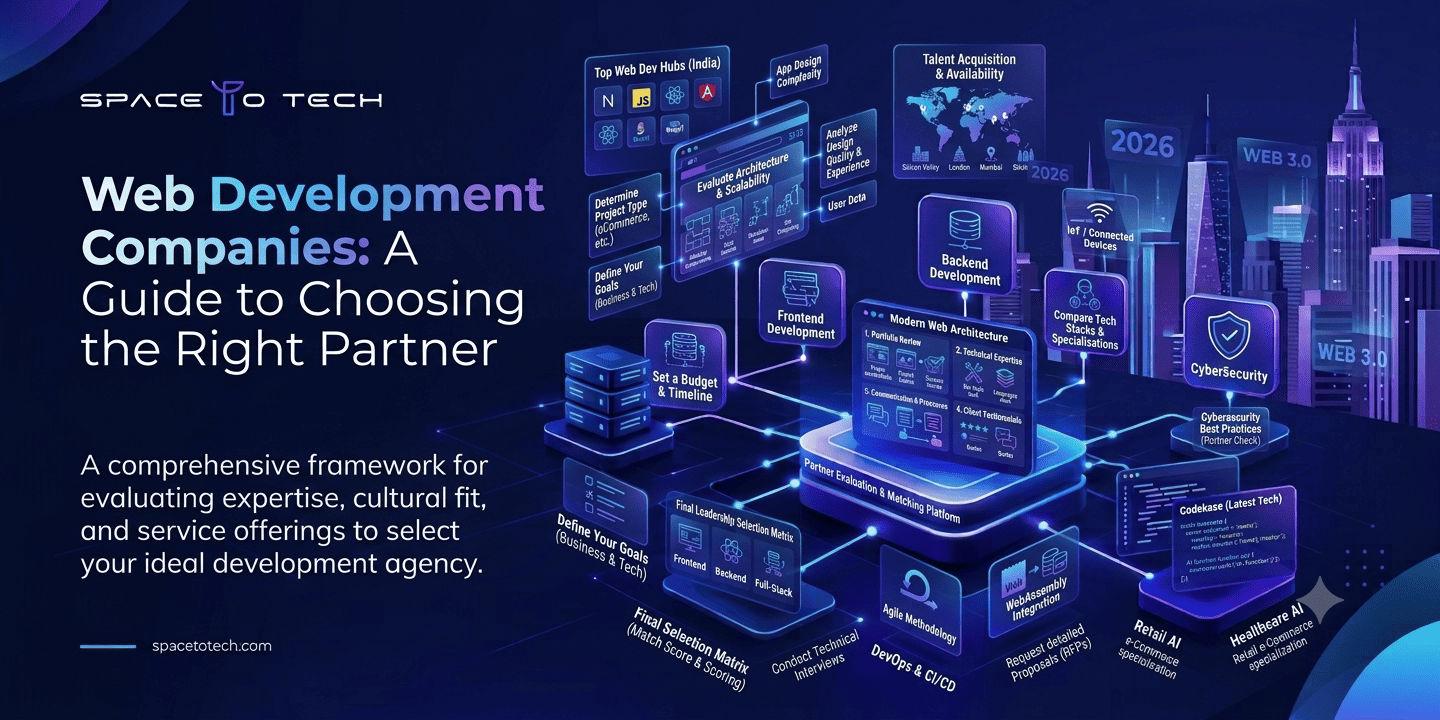
Which company is best for web development? The honest answer is the one whose technical expertise, industry experience, pricing model and support match your specific project. A famous name or the lowest quote rarely tells you that. With so many web development companies offering different technologies, pricing models and service packages, choosing a partner takes more than comparing portfolios. This guide shows how to compare the best web development companies, assess professional web development services, and shortlist a partner that fits your budget and goals, including what small businesses should prioritise. Use it as a practical filter before you request a single proposal.
Understanding What Makes a Web Development Company the Right Choice
A strong web development company combines technical depth with business understanding. Before comparing names, define what good looks like.
Key Qualities of Professional Web Development Services
Professional web development services share visible traits: a structured discovery process, clear scoping documents, named project managers and regular progress demos. Look for teams that ask about your users, revenue model and growth plans before quoting. Companies that jump straight to a price often skip the planning that prevents rework later. Responsive design, accessibility (WCAG) awareness and documented testing should be standard, not extras. Strong partners also document decisions, so you are never dependent on one developer's memory.
Essential Technical Skills and Industry Experience
Match skills to your project, not to trends. Front-end work typically involves React, Angular or Vue; back-end work uses Node.js, Python, PHP or .NET; ecommerce may call for Shopify, WooCommerce or headless setups. Ask about experience with APIs, cloud hosting, CI/CD and security practices aligned with OWASP guidelines. Industry experience matters too: a team that has built booking, fintech or marketplace platforms before will anticipate problems a generalist team discovers mid-build. Ask for examples of similar problems solved, not a list of logos.
Evaluating the Best Web Development Companies for Business Needs
Every agency's website claims to be the best. Verify it independently.
Comparing Portfolios, Client Reviews, and Case Studies
Review live projects, not just screenshots. Open the sites on mobile, test load speed and check whether the work resembles your scope. Read reviews on independent platforms such as Clutch and GoodFirms, and notice how companies respond to criticism. Strong case studies state the problem, the approach and measurable outcomes, such as improved conversion rate or page speed. Ask to speak with one or two past clients; reputable firms agree readily. A short call with a former client often reveals more about deadlines, honesty and after-launch behaviour than any case study.
Assessing Industry Expertise and Project Delivery Experience
Industry expertise shortens learning curves, but it is not the only factor. Ask how many similar projects the team has delivered, how they handled delays and who would work on yours. Delivery experience shows in details: realistic timelines, documented change-request processes and honest answers about past setbacks. A team that admits where a project struggled and explains the fix is usually more trustworthy than one claiming a flawless record.
If your needs go beyond a standard website, such as custom business applications, complex integrations or enterprise platforms, also review our guide to the Best Custom Software Development Companies.
Not sure whether you need a website or a custom platform? Talk to SpaceToTech's team for a free scoping conversation.
Comparing Top Web Development Companies and Their Services
Custom Web Development, Web Applications, and Ecommerce Solutions
Most companies fall into three service categories. Knowing which you need narrows the field quickly.
Technology Stack, Scalability, Security, and Ongoing Support
Ask why a company recommends a particular stack. Good answers reference your scale, budget and maintainability, not the team's habits. Confirm scalability planning (hosting, caching, database design), security practices (HTTPS, input validation, regular patching, backups) and what ongoing support includes: response times, monitoring and update schedules. Written service terms beat verbal promises. Also ask how the team handles performance: Core Web Vitals, image optimisation and caching directly affect both user experience and search visibility.
Choosing a Web Development Company for Small Businesses
Small businesses need a partner that respects limited budgets without cutting essential quality.
Budget-Friendly Development Solutions for Growing Businesses
Start with a minimum viable website: core pages, a clear conversion path and fast mobile performance. Phased delivery lets you launch sooner and add features as revenue grows. Template or CMS-based builds can suit simple needs, but confirm you can customise later without rebuilding. Be cautious of the cheapest quote; unclear scope usually returns as change requests. A clear brief, agreed priorities and a fixed list of launch-day must-haves keep costs predictable.
Essential Features, Flexible Engagement Models, and Maintenance
Prioritise responsive design, on-page SEO basics, analytics, contact or booking forms, SSL and a CMS you can edit yourself. Ask about flexible engagement, such as a fixed-price launch followed by a monthly retainer, and clarify what maintenance covers: backups, security patches, uptime monitoring and minor content updates. Small businesses benefit most from partners who explain trade-offs in plain language.
Evaluating the Cost and Value of Professional Web Development Services
Factors That Influence Website Development Costs
Cost varies because projects vary. Key drivers include complexity, number of pages or templates, custom design, third-party integrations, ecommerce or user-account features, content migration and ongoing maintenance. Team location and seniority also affect rates. Request itemised proposals so you can see where the money goes. Proposals that bundle everything into one figure make fair comparison nearly impossible.
Comparing Pricing Models, Project Timelines, and Long-Term Value
Judge value across the full lifecycle: hosting, maintenance, updates and redesign cycles often outweigh the build cost. Brochure sites typically take weeks and custom applications months; unrealistically short promises deserve questions. Ask what happens if the project overruns, and who pays for it, before you sign.
Want a transparent, itemised estimate for your project? Contact SpaceToTech to compare scope, timeline and cost.
How to Choose a Web Development Company That Fits Your Goals
Questions to Ask Before Hiring a Development Partner
- Who will work on my project, and can I meet them?
- How do you handle scope changes and delays?
- Who owns the source code, design files and accounts after launch?
- What does your testing and security process involve?
- How often will we communicate, and through which channels?
- What does post-launch support cost, and what response times apply?
Clear, specific answers matter more than polished ones. Vague replies at this stage usually predict vague delivery later.
Red Flags to Identify During the Selection Process
Walk away, or at least probe further, if you see any of these:
- Guaranteed search rankings or traffic
- Quotes issued without any discovery conversation
- Reluctance to share references or live work
- Vague contracts with no intellectual property clause
- Pressure to sign quickly
- No clear explanation of testing or security
Making the Final Decision on a Web Development Partner
Comparing Shortlisted Companies Using a Decision Checklist
Score each shortlisted company from 1 to 5 on technical fit, relevant portfolio, communication, pricing transparency, security practices and post-launch support. Weight the criteria that matter most to your project, then compare totals. Trust consistent gaps over a single impressive score. Involve the colleagues who will actually work with the website, such as marketing or operations, so the final choice reflects day-to-day needs.
Aligning Business Goals, Communication, and Post-Launch Support
Choose the partner who understands your goals, communicates clearly and commits to support after launch. A launch is a beginning; the relationship should last through updates and growth. Where possible, run a small paid discovery phase or pilot before committing to a large build. This reveals how the team communicates under real conditions, which no sales presentation can show.
Conclusion
Choosing among web development companies comes down to fit, not fame. Define your goals and budget, verify portfolios and reviews independently, compare pricing models on lifecycle value, and test every shortlisted partner against the same checklist. The right company will be transparent about scope and cost, honest about risk, and committed to supporting your website long after launch.
Ready to shortlist a partner? Book a consultation with SpaceToTech and get a clear plan for your web project.