The mobile app space has been shifting for a while, but it’s only recently that the change has felt… noticeable in practice, not just in reports or trends, but in how products behave after launch. A few years ago, building a mobile application was mostly about getting something functional out there. If users could install it, open it, and complete a task, that was already considered success.
Now, that expectation feels outdated. Businesses investing in mobile app development are thinking beyond launch. They’re thinking about scale, user behavior over time, integrations, and things that don’t always show up in the early stages. That’s where things get slightly complicated. Not dramatically, just… layered.
A lot of app development companies still approach projects in a fairly standard way. Requirements, development, delivery. It works, but only up to a point. Once real users start interacting with the product, patterns shift. Unexpected usage, performance dips, edge cases. That’s when experienced mobile app developers start to make a difference—not just in fixing issues, but in how those issues were anticipated earlier.
Choosing between different app development companies isn’t as straightforward as it used to be. On the surface, many look similar. Similar portfolios, similar tech stacks, similar promises. But those similarities fade once execution begins. Some teams adapt quickly, others struggle to adjust.
And that’s really what separates the top mobile app development companies. Not the launch, but what happens after.
What Are Super Apps & Mini-Apps? (Why They Matter in 2026)
Super apps didn’t arrive suddenly—they sort of evolved into relevance. One feature at a time, one integration at a time. Now they define how users expect mobile apps to behave. Instead of thinking, “Which app should I open?” users expect a single mobile application to handle multiple needs. Payments, bookings, messaging, and sometimes even services that don’t seem connected at first.
Mini-apps are part of this structure. They sit inside the main system, lightweight and easy to access. No installation, no commitment. You open them, use them, and move on. It sounds minor, but it noticeably changes user behavior. People try more features when the barrier is low. That’s why these ecosystems feel smoother as mobile solutions.
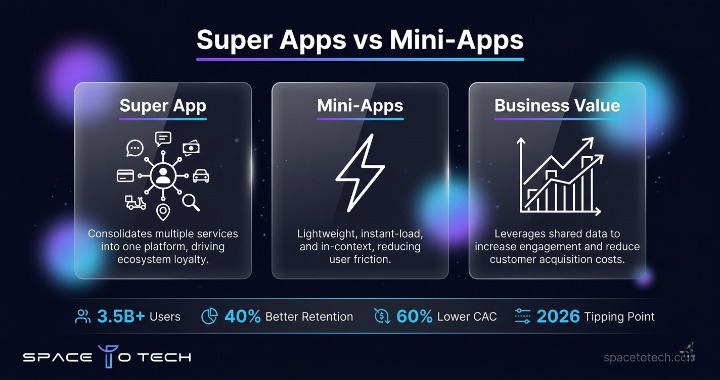
From a business perspective, the advantages are fairly clear—lower acquisition costs, better retention, and longer engagement time. But building this kind of system isn’t just about adding features. It requires thoughtful app development, especially in how components interact with each other.
The complexity increases when working across Android and iOS app platforms. These environments don’t behave identically. Performance expectations differ, system limitations vary, and aligning them under one experience takes effort.
That’s why companies building modern mobile apps are becoming more selective about who they work with. Not just for development, but for long-term stability.
What to Look for in Top App Development Agencies
If you spend time comparing top app development agencies, you’ll notice a pattern. Most of them present themselves in a very similar way—clean portfolios, structured case studies, confident messaging. It all looks right. But it doesn’t always reflect how projects actually unfold.
A strong app development company focuses less on presentation and more on execution. Their app development services should cover the full lifecycle, but also adapt when things shift. Because they will shift. Requirements change, priorities move, sometimes mid-way through development.
The development process becomes important here. Too rigid, and it breaks under pressure. Too flexible, and it loses direction. Good teams sit somewhere in between. Not perfectly balanced, but stable enough to keep progress consistent.
Then there’s the technical side. Solid software development isn’t about using every available tool. It’s about choosing the right ones and knowing when to avoid unnecessary complexity. Some app development companies overbuild systems, which feels impressive at first, but creates issues later.
And then there’s the idea of a development partner. It sounds simple, but it’s not always real. A true partner stays involved, questions assumptions, and helps guide decisions. That difference becomes clearer over time, not immediately.
Leading Mobile App Development Company in India
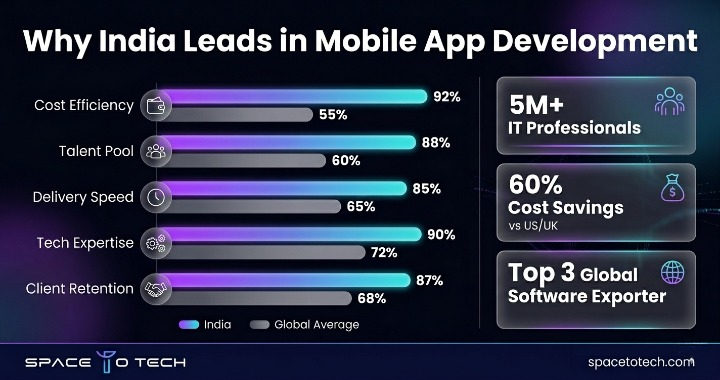
India has steadily become a major hub for mobile app development, and not just because of pricing. That’s still a factor, but it doesn’t explain why so many global companies continue to rely on teams here.
The bigger shift comes from experience.
Many mobile app developers in India have worked across industries and geographies, which changes how they approach projects. For projects that go beyond standard development into advanced AI product territory, working alongside a specialist AI Development Company ensures the intelligence layer is built with the right depth and domain understanding. Instead of solving problems from scratch every time, they’ve already seen variations of them before. That shows up in decisions — sometimes small ones — that prevent larger issues later.
If you look at some of the top indian app development companies, the difference isn’t just what they build. It’s how they handle complexity when things don’t go exactly as planned.
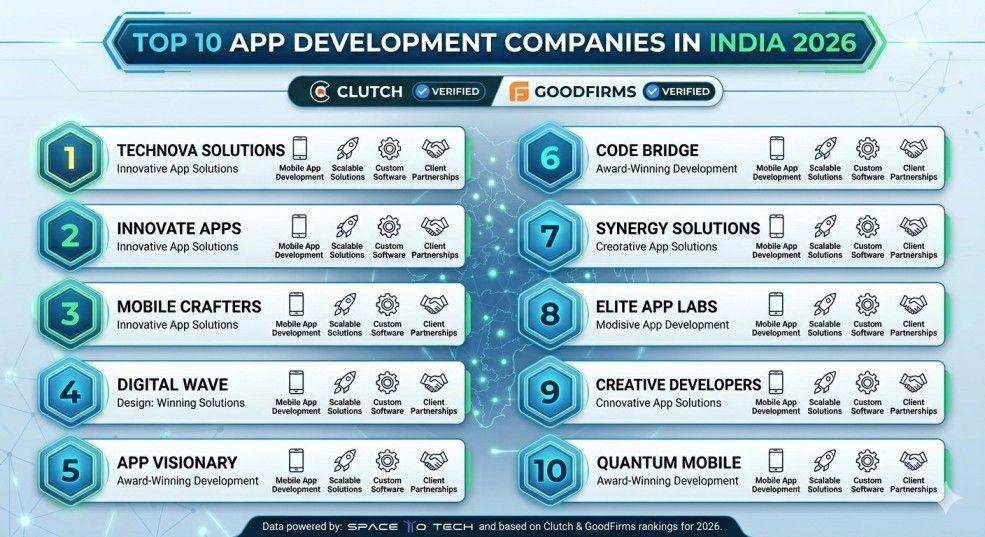
Leading companies and what they’re known for:
- SpaceToTech
SpaceToTech operates as a mobile app development company in India focused on building scalable and adaptable applications across industries like fintech, healthcare, logistics, and SaaS. The approach isn’t rigid — projects are shaped based on real requirements, not fixed templates. This flexibility helps when things change mid-development, which they usually do. Over time, the focus stays on building systems that continue to perform, not just apps that launch successfully.
Whether you're building a fintech platform or a healthcare solution, SpaceToTech stands out as a top app developer in India known for delivering systems that scale with your business.
- Appinventiv
Appinventiv is known for handling enterprise-scale projects and complex digital transformation work. They often work with large organizations where integrations, security, and scalability are critical. Their strength lies in structured execution and the ability to manage long-term projects with multiple moving parts. This makes them a strong choice for businesses looking for stability in large builds.
- Hyperlink InfoSystem
Hyperlink InfoSystem has delivered a high volume of mobile applications across different industries. Their approach leans toward speed and global delivery, which works well for companies looking to launch quickly. While the focus is on execution efficiency, they also bring experience from working with diverse project types and requirements.
- Fueled
Fueled takes a more product-focused approach, especially for startups and consumer-facing applications. They emphasize design, user experience, and usability alongside development. This makes them suitable for businesses that prioritize product experience as much as technical execution.
Across these app development companies in India, one thing stands out — tools and technologies alone don’t define quality.
Being considered a leading mobile app development company in India comes down to consistency over time. Not one successful build, but the ability to handle different types of projects without losing stability.
Because most problems don’t come from big decisions.
They come from the smaller ones that didn’t seem important at the time.
Mobile App Development Services
There’s a common assumption that mobile app development services begin with coding. In reality, they start earlier. Much earlier, sometimes.
Most effective development services begin with understanding the problem—what needs to be built, and just as importantly, what doesn’t. That second part is often overlooked. And later, it turns into unnecessary complexity.
A structured mobile application development approach includes discovery, design, development, testing, and deployment. But in real projects, these phases don’t stay separate. They overlap. Feedback loops happen. Adjustments are made mid-way.
A reliable app development company accounts for this. Their application development approach isn’t rigid—it evolves as the project progresses. That flexibility becomes important when dealing with integrations, APIs, and third-party systems.
Modern mobile app development isn’t isolated. It connects with multiple systems, and those connections don’t always behave predictably. That’s where experienced app development services make a difference.
Post-launch support also plays a bigger role than most expect. Many mobile apps continue evolving after release. Without ongoing updates, even well-built products can start to feel outdated.
Android App Development
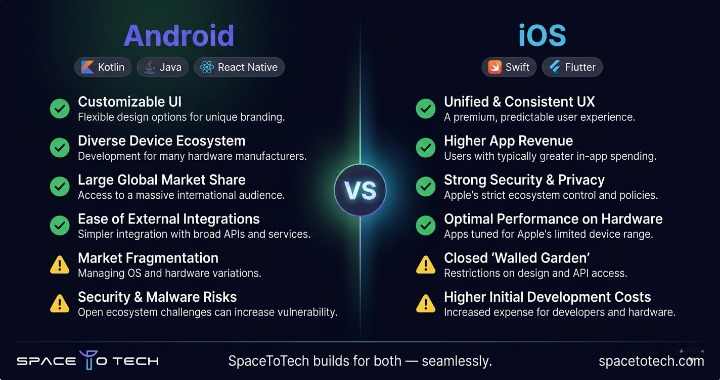
Android app development gives businesses access to a massive user base. That part is obvious, almost everyone knows it. But what’s less obvious—until you actually build something—is how inconsistent the environment can be. An Android app doesn’t run on one device type. It runs across dozens, sometimes hundreds, of variations. Different screen sizes, different hardware capabilities, different OS versions.
At first, this doesn’t seem like a big issue. Everything works fine during controlled testing. But once the app reaches real users, patterns start to shift. Performance may drop on older devices. Certain UI elements behave differently. These are not rare cases—they’re quite common.
This is where experienced mobile app developers approach things differently. They don’t just build for ideal conditions. They try to account for less ideal ones too. Not perfectly, but enough to reduce friction later. A skilled app developer pays attention to optimization early, instead of treating it as a final step.
Another factor is compliance. Google Play Store guidelines are not always straightforward. They change, sometimes subtly. A feature that worked before might need adjustments now. A reliable app development company usually keeps track of these changes during development, not after submission.
There’s also the choice between native and cross-platform. Native Android (Kotlin, Java) offers deeper control, while cross-platform frameworks can speed up delivery. Both approaches have trade-offs. Good teams don’t force one over the other—they decide based on the product.
Android development isn’t difficult in one clear way. It’s more like a collection of smaller challenges that build over time. And how those are handled early tends to define the long-term stability of the app.
iOS App Development
iOS app development feels more predictable compared to Android. Fewer devices, more consistency in hardware and software. But that predictability also raises expectations. Users expect things to just work—smoothly, quickly, without friction.
An ios app is judged differently. Even small delays or awkward transitions stand out. Not because users analyze them technically, but because they’re used to a certain level of polish. When something feels off, they notice it almost immediately.
That’s why experienced app developers treat iOS projects with a different level of attention. Design consistency becomes critical. Apple’s Human Interface Guidelines provide structure, but following them properly requires understanding—not just copying patterns.
Security is another area where things can’t be overlooked. Data handling, permissions, encryption—these aren’t optional considerations. A strong mobile app development company ensures these are built into the system from the beginning, not added later.
When working on android ios app development together, balance becomes important. The goal isn’t to make both platforms identical, but to make the experience feel consistent. That’s a subtle difference, but it matters.
There’s less room for experimentation in iOS compared to Android. But that limitation often results in better, more refined products when handled correctly.
Cross-Platform Application Development
Cross-platform application development is often seen as the practical approach. One codebase, multiple platforms—it sounds efficient, and in many cases, it is. It reduces duplication, speeds up mobile app development, and simplifies updates.
But the reality isn’t always as smooth as it sounds. While frameworks like React Native and Flutter have improved significantly, there are still cases where platform-specific adjustments are needed. Certain features behave differently on Android and iOS, even when built from the same codebase.
That’s where experience plays a role. Good teams understand where cross-platform works well and where it might create limitations. They don’t treat it as a one-size-fits-all solution.
For super apps, this approach is often preferred. It allows faster scaling and easier integration of features, which is important when building large mobile solutions. But even then, some components may still require native handling.
Adding a web app layer extends functionality further. Users can switch between mobile and web without losing continuity. But again, this adds complexity—more systems, more dependencies.
Cross-platform development works best when used thoughtfully. It’s not just about saving time or cost. It’s about knowing where flexibility matters and where precision is more important.
iPad App Development & Wearable App Development
iPad App Development
iPad app development is often overlooked, but it serves specific use cases really well. Larger screens change how users interact with content. For enterprise tools, dashboards, and analytics platforms, this makes a noticeable difference.
Working with complex data on a phone can feel cramped. On an iPad, it becomes easier to navigate, compare, and interact. That’s why many businesses extend their mobile applications to tablets—not as a replacement, but as an enhancement.
The challenge is not just scaling the interface. It’s redesigning the experience to suit the screen. Simply stretching a mobile layout rarely works well.
Wearable App Development
Wearable app development operates on the opposite end of the spectrum. Smaller screens, shorter interactions. These apps focus on quick actions—notifications, health tracking, and reminders.
They don’t aim to replace full mobile applications. Instead, they support them. For example, a fitness app might use wearables for real-time tracking while the main app handles detailed analytics.
In super app ecosystems, wearables add another layer to mobile solutions. They make interactions faster and more accessible, especially for everyday tasks.
Expand Your Reach to a Complete Suite of Devices
Users don’t stay on one device anymore. They switch between phones, tablets, and sometimes a web app without really thinking about it. It’s just how things work now.
That shift changes how products need to be designed. Web development and mobile strategies can’t operate in isolation. They need to connect, even if the connection isn’t perfect.
Top providers of mobile app development services focus on creating a unified experience. Not identical across devices, but consistent enough that users don’t feel a disconnect.
This is where full-spectrum development services become important. Instead of building separate systems, everything is planned as part of a larger ecosystem.
It requires more effort upfront, but it reduces complexity later. And as user expectations continue to grow, this kind of approach becomes less optional and more necessary.
Technologies We Use in Mobile App Development
Technology choices play a big role in mobile app development, but not always in the way people expect. It’s not about using the latest tools—it’s about using the right ones for the situation.
Modern software development often includes frameworks like React Native and Flutter for the frontend, with Node.js or Python on the backend. Databases like Firebase or MongoDB support scalable mobile applications.
But tools alone don’t guarantee results. The development process determines how effectively they’re used. Poor structure can turn even good technology into a problem.
Advanced capabilities like AI, IoT, and AR/VR add value when applied carefully. They shouldn’t complicate the system unnecessarily.
Strong app development services focus on balance—using enough technology to support growth, but not so much that it becomes difficult to manage.
How to Develop a Mobile App (Step-by-Step Process)
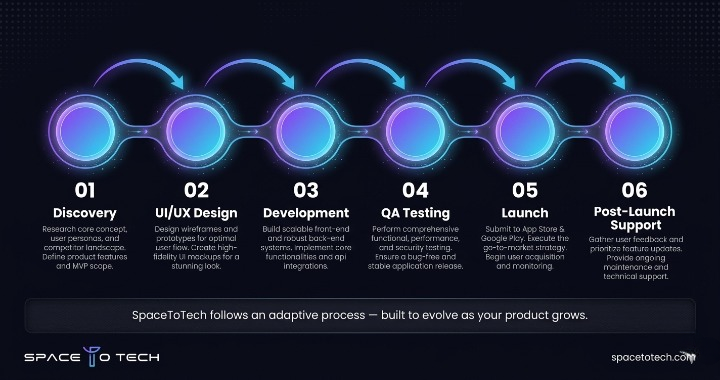
Understanding how to develop a mobile app helps set realistic expectations. The process looks structured, but in practice, it’s more flexible than it appears.
Step 1: Discovery & Market Research
Everything starts with understanding the idea properly—what problem the mobile application is solving, who the users are, and why they would actually use it. Skipping this often leads to confusion later during mobile app development, when changes become expensive.
Step 2: UI/UX Design
Once the direction is clear, wireframes and user flows are created to shape how the app will feel and function. Good design is not just visuals—it quietly decides how smoothly users move through the mobile app, even if they don’t notice it directly.
Step 3: Frontend + Backend Development
This is where real app development begins. The frontend handles what users see, while the backend manages logic, databases, and integrations. Both parts need to stay aligned, otherwise the mobile application development process starts to feel fragmented later.
Step 4: QA Testing (Manual + Automated)
Testing is where assumptions meet reality. Bugs, performance issues, and edge cases usually show up here. A proper development process includes both manual checks and automated testing to make sure the mobile app behaves consistently across conditions.
Step 5: App Store / Play Store Deployment
Once everything feels stable, the app is prepared for launch. This includes store listings, compliance checks, and final optimizations. A careful development partner usually handles this step smoothly to avoid last-minute rejections or delays.
Step 6: Post-Launch Support & Iterations
After launch, real users start interacting with the product in unpredictable ways. Feedback, usage patterns, and performance data all feed into continuous improvements. This ongoing mobile app development phase is what keeps the app relevant over time.
These steps often overlap. A reliable development partner helps keep things aligned even when changes happen mid-way.
Top Mobile App Development Companies in India
The top mobile app development companies in India don’t always stand out immediately. Their strengths become clearer over time—especially when systems scale and evolve.
Choosing the right mobile app development company in India involves looking beyond initial impressions. Experience, adaptability, and long-term support play a bigger role than expected.
Among various app development companies, SpaceToTech focuses on delivering scalable mobile app development services that evolve with business needs.
If you’re looking for expert digital solutions for businesses, it might be time to take the next step.
Looking for expert app development services for your super app idea? Connect with SpaceToTech today.