Background

Iot software development company

Crafting Scalable IoT Software to Drive Digital Transformation.

You agree to our Privacy Policy

Our IoT Software Development ServicesLeaf

At Space to Tech Technology, we deliver intelligent, secure, and scalable IoT software development services that connect devices, platforms, and people in real time. As a trusted IoT software development company, we specialize in building high-performance applications that bring the Internet of Things (IoT) to life—enabling smarter operations, predictive insights, and automation across industries.

We develop custom IoT software solutions that integrate seamlessly with your hardware ecosystem, enabling centralized data control, advanced analytics, and real-time responsiveness. From embedded device programming to full-stack cloud integration, we provide end-to-end IoT application development services designed for scalability and long-term business impact.

Our tailored IoT application development services in USA ensure regulatory compliance, high availability, and region-specific features for American businesses seeking reliable, intelligent, and secure IoT platforms.

icon

Custom IoT Software Development

We create bespoke software solutions for IoT devices that enable seamless data exchange, system integration, and real-time monitoring across industries such as manufacturing, healthcare, agriculture, energy, and logistics.

icon

Cloud-Based IoT Platform Development

We build scalable cloud platforms for IoT applications, allowing you to manage device fleets, store and analyze data, and implement remote control features via mobile and web dashboards.

icon

IoT Device Firmware Development

Our engineers write efficient, secure, and optimized firmware for sensors and edge devices, ensuring flawless interaction between hardware and the software layer.

icon

IoT Data Analytics and Visualization

We develop AI-powered analytics dashboards that provide insights from your IoT data, including predictive maintenance alerts, usage trends, and anomaly detection—turning raw data into actionable intelligence.

icon

Mobile and Web Apps for IoT Control

Our front-end applications enable users to control and monitor IoT systems remotely via smartphones or browsers. These apps are intuitive, secure, and built for real-time interaction with connected devices.

icon

End-to-End System Integration

We integrate your IoT software with CRMs, ERPs, APIs, and legacy systems to ensure centralized management, automated workflows, and seamless user experience across your tech ecosystem.

Advantages of IoT Software Development for Your BusinessLeaf

  • Real-Time Monitoring and Control
    Track performance, manage assets, and receive instant alerts from connected devices to stay ahead of issues and opportunities.
  • Operational Optimization
    IoT software automates manual processes, improves accuracy, and reduces downtime through real-time insights and remote management.
  • Improved Customer Engagement
    Provide users with smart services, interactive features, and personalized experiences driven by data collected from IoT-enabled products.
  • Data-Driven Innovation
    Analyze behavioral and operational data to improve products, forecast demand, and create new revenue models.
  • Scalable Architecture
    Our modular development approach ensures your IoT ecosystem can scale from a few connected devices to thousands—without performance loss.

IoT Innovation Begins with Software IntelligenceLeaf

IoT success depends not just on connected devices but on the intelligence of the software that powers them. At Space to Tech Technology, we go beyond basic connectivity—we build robust platforms that ensure security, usability, and performance across every layer of your IoT environment.

Whether you're building a smart factory, a healthcare monitoring system, or a home automation network, our IoT application development company in USA is equipped to help you lead in a connected world. We focus on secure data handling, seamless user interaction, and long-term maintainability—so your IoT system grows as your business evolves.

Ready to transform your app idea into reality? Let’s talk!

Why Choose Space to Tech as Your IoT Software Development CompanyLeaf

LeafDomain Expertise Across Devices and Industries

From smart agriculture and telemedicine to industrial automation, we bring deep technical and functional knowledge to deliver impactful IoT application development services.

LeafSecure, Standards-Compliant Development

We follow global best practices for IoT security, data encryption, OTA updates, and compliance—particularly for industries requiring HIPAA, GDPR, or ISO standards.

LeafAgile, Transparent Delivery Model

Our agile approach includes regular sprints, progress demos, and feedback loops, ensuring clarity, flexibility, and successful delivery—on time and within scope.

LeafFull Lifecycle Support

From PoC development and pilot deployment to continuous monitoring and feature expansion, we offer end-to-end support tailored to your project’s needs and evolution.

Find question
& Answers.

Don’t find the answer? We can help

Want to see our recent work?

Domino's logo

Domino's WhatsApp
Chatbot

Robust mobile ordering with live tracking, loyalty rewards, and seamless payment integration.

Domino's app preview
Vibasa logo

Vibasa Foundation

Building a kinder future through compassion, service, and collective action.

Greenply logo

Greenply

Digital product experience for a leading brand, designed to strengthen discovery and customer trust.

Greenply app preview
Clutch 5.0 rating

Recognized. Trusted. Preferred

Awards & Recognition

We are proud to be recognized by leading platforms and industry experts for our innovation, impact, and excellence

TopDevelopers

TopDevelopers

Top Mobile App Developers

Freelancer

Freelancer

Top Mobile App Developers

AppFutura

AppFutura

Top Mobile App Developers

GoodFirms

GoodFirms

Top Mobile App Development

Clutch

Clutch

Top Mobile App Developers

Excellence isn't claimed.It's recognized

These achievements reflect our commitment to
delivering world-class AI solutions that help
businesses grow and lead

Supporting Insights

offshore software development centers fintech startups
Blogs18/11/2026

Offshore Development Centers for Fintech Startups: Setup, Compliance and Cost

An offshore development center (ODC) for fintech startups is a dedicated engineering team, usually based in a cost-efficient country such as India, that works only on your product under your processes and security rules. In practice, it's an offshore development team that behaves like your own software engineering department rather than a typical software outsourcing vendor. Most startups can get one running in 6 to 12 weeks, as long as PCI DSS, SOC 2 and data-access decisions are made before the first sprint. Here's the honest version, though. Hiring locally in fintech is slow and expensive, and one compliance slip can cost you a banking partner. Offshore software development centers for fintech startups fix the first problem and, if you're careless, make the second one worse. This guide covers the models, team shape, compliance, cost and vendor checks, so you can build an offshore development center, and the offshore development team inside it, without learning it the hard way. Whether you need custom fintech software development, an MVP development push or full fintech app development, the same rules apply. What Is an Offshore Development Center for Fintech Startups? An ODC is a long-term engineering unit in another country that works like a remote branch of your company. The people are exclusive to you, join your standups, and sit inside your Jira, GitHub and Slack. That's what separates it from one-off project outsourcing. In fintech software development, that team typically builds payment APIs, ledgers, KYC and onboarding flows, lending engines, fraud rules and mobile banking apps, the core fintech solutions that financial services companies rely on. There are two common ownership models: Vendor-managed ODC: the partner hires, houses and manages the dedicated offshore talent. You direct the work. Build-operate-transfer (BOT): the partner sets up and runs the development center, then hands the whole unit, including staff and processes, to you. For a deeper look at the product side of financial software development, see our guide to custom fintech software . Why Are Fintech Startups Choosing Offshore Software Development Centers? Three reasons come up again and again among fintech startups and financial services companies: runway, talent and speed. Runway: blended engineering rates for offshore software development are often well below US or UK levels, which stretches a seed or Series A round for any fintech startup. Talent: backend, QA, mobile and DevOps engineers are easier to find at scale in hubs like India, so development talent isn't the bottleneck. Speed: with a few hours of overlap, offshore delivery keeps work moving while your home team sleeps, which shortens an MVP development cycle. It isn't right for everyone. If your product idea is still shifting every week, hire a small local core first. Offshore works best once you have a defined roadmap, a clear fintech project scope and someone in-house who can own product decisions. If you're weighing India specifically, our piece on outsourcing software development to India goes into the trade-offs. Offshore Development Center vs Dedicated Development Team: Which Model Is Better? Short answer: a dedicated development team for speed, an offshore development center for scale and control.  Factor  Dedicated Team  Offshore Development Center  Setup time  2 to 4 weeks  2 to 4 months (6 to 12 weeks if the vendor has a ready office)  Team size sweet spot  3 to 12 engineers  15 or more  Management  Vendor and you share  You lead, vendor handles HR and facilities  Upfront cost  Low  Higher (setup, security hardening)  Exit flexibility  High  Medium; BOT gives a clean handover  Best for  MVP, pilots, one product  Multiple products, long roadmap Most founders we talk to should start with a dedicated team, then convert it into an ODC once the roadmap proves itself. Either way, you're choosing a software development partner, so judge them on delivery, not slides. If you're also comparing freelancers, read dedicated developers vs freelancers and how IT staff augmentation works . How to Build an Offshore Development Center for a Fintech Startup? Here's the sequence that tends to work if you want to build an offshore development center without drama: Define scope and KPIs. Which products, what velocity, which compliance targets. Pick the location. Look at talent depth, time-zone overlap, data laws and political stability. Choose the legal setup. Partner-employed, your own entity, or BOT. Start with a pilot squad. Four to six people, one clear module, 6 to 8 weeks. Lock down the environment. SSO, MFA, VPN or virtual desktops, repo permissions, no production data. Scale in waves. Add people only after the pilot hits agreed metrics. The temptation is to hire 20 people at once. Don't. A pilot catches process gaps while they're still cheap, and shows whether your chosen offshore teams can handle fintech product development. To find reliable engineers, use our checklist on how to hire software developers from India . What Team Structure Does a Fintech Offshore Development Center Need? A fintech development team needs more than coders. Security and QA carry extra weight in software engineering for financial services. Role 5-person pod 10-person pod 20-person ODC  Tech lead / delivery manager 1  1 2 Backend engineers 2 4 8  Mobile / frontend 1 2 4  QA / test automation  1 2 3  DevOps / security 0 1 2 Compliance / business analyst 0 0 1  Keep a product owner on your side, in your time zone, with real decision rights. Offshore teams stall when nobody can answer "should refunds settle instantly?" at 10 a.m. their time. If you need specific skills for application development, look at our backend development , QA and React Native teams. Essential Compliance Requirements for Offshore Fintech Development Offshoring doesn't move your legal responsibility, whatever your fintech services vendor promises. Regulators and banking partners hold you accountable, so the contract has to carry the rules down to the vendor. Data protection: GDPR for EU users, CCPA/CPRA in California, and India's DPDP Act when data touches India. Financial regulation: KYC/AML obligations for fintech companies, PSD2 in Europe, DORA for EU financial entities (applicable since January 2025), and RBI payment-data storage rules if you serve Indian customers. Contract terms: a data processing agreement (DPA), audit rights, a subprocessor list and breach-notification windows. Sector rules differ, so also see our HIPAA and FINRA compliant app guide . Have your counsel review the final setup; this section is guidance, not legal advice. How PCI-DSS and SOC 2 Standards Impact Offshore Fintech Development These two frameworks change how the offshore team actually works day to day, especially on financial software that touches card data. PCI DSS (current version 4.0.x) applies if you store, process or transmit card data. The smartest move is shrinking scope: use a tokenizing payment provider so offshore engineers never touch raw card numbers, and segment networks so the cardholder environment stays small. SOC 2 checks how a company handles security, availability, confidentiality and related criteria. A Type I report shows controls exist at a point in time. Type II shows they worked over a period, usually 6 to 12 months. Ask your fintech software company for a Type II report, or at least a clear roadmap to one. Standard  What it means for the offshore team PCI DSS Restricted access to card data, network segmentation, logging, regular scans and pen tests SOC 2 Documented change management, access reviews, onboarding/offboarding records, incident process Budget time for evidence collection. Auditors want proof, not promises. Data Security Best Practices for Offshore Fintech Development Teams A practical baseline for any offshore delivery model: Least privilege and MFA on every system, with access reviewed monthly. No production data offshore. Use masked or synthetic data in dev and test. Secrets management: keys in a vault, never in repos. Secure SDLC: mandatory code review, SAST and DAST in CI, dependency scanning. Device controls: managed laptops or virtual desktops, disk encryption, USB blocking. Offboarding in hours, not days. Run a tabletop breach drill with the offshore team at least once a year. It's the cheapest way to solve fintech security gaps before an auditor or attacker finds them. More on this in our mobile app security and website security checklist guides. How Much Does It Cost to Set Up an Offshore Development Center for Fintech? These are indicative ranges for an India-based offshore software development company or ODC team in 2026. Actual quotes vary by seniority, vendor and compliance scope. Role Typical blended hourly rate (USD) Junior / mid engineer $20 to $35 Senior engineer / tech lead $35 to $55 QA engineer $18 to $30 DevOps / security engineer $35 to $60 For a 10-person pod, that usually lands in the range of $30,000 to $60,000 a month, plus: One-time: legal setup, security hardening, onboarding, tooling (often $10,000 to $40,000). Recurring: compliance audits, penetration tests, licences, your own management time. Hidden: attrition and re-training, which can quietly add 5 to 10 percent. Use these as a starting point and validate with quotes from two or three offshore software development services providers. Our guides on how to estimate software development cost and the cost to hire a software developer in India show the method. How to Choose the Right Fintech Software Development Company? Look past the pitch deck when you shortlist a fintech software development company. Domain proof: have they shipped a wallet, lending platform or payment gateway among their fintech products, and can you speak to that client? Security evidence: SOC 2 or ISO 27001 certificate, pen-test summaries, written policies. Flexibility: can you start with a dedicated team and move to BOT later? Exit terms: code ownership, documentation handover, reasonable notice. Watch for any software company or development company that dodges security questions or can't name the engineers they'd assign. Our red flags when hiring developers in India and guide to choosing a custom software company help here. How to Evaluate the Top Offshore Software Development Centers for Fintech Startups? Rankings of the top offshore software development centers for fintech startups are a starting list, not an answer. Build your own scorecard and rate each shortlisted vendor from 1 to 5: Criterion Weight Fintech and regulated-industry experience 25% Security and compliance evidence 25% Team quality and retention 15% Communication and time-zone overlap  15% Commercial terms and exit options 10%  Cost 10% Then run a paid 2 to 4 week trial sprint with each shortlisted offshore software development company. Nothing predicts the real relationship better. To build a shortlist, browse our curated lists of the top software development companies , top custom software development companies in India and top software developers in India , or compare with our top offshore software development companies breakdown. Also read nearshore vs offshore if time zones worry you. What Are the Key Challenges of Managing an Offshore Development Center? Time zones: fix a daily overlap window of 3 to 4 hours and protect it. Attrition: negotiate retention clauses, cross-train, and keep documentation current. Quality drift: track defect escape rate and review code samples every sprint. Compliance drift: repeat access reviews and policy checks quarterly. Culture gaps: treat the offshore team as colleagues, with the same context, goals and recognition. Most failures are management failures, not talent failures, so give your development teams clear ownership. Conclusion: Choosing the Right Offshore Development Center for Fintech Startups A good offshore development center gives a fintech startup speed and runway without lowering the security bar, whether you choose custom software development, a dedicated offshore pod or enterprise software delivery centers in more than one city. Start small with a dedicated pod, settle compliance and access early, score vendors honestly, and grow only when the pilot proves itself. If you'd like a second opinion, SpaceToTech, a custom software development company that works with fintech startups, can walk you through options for your stage and compliance needs.

Software project acceptance criteria illustration showing quality assurance, acceptance testing, milestone verification and final software approval.
Blogs17/11/2026

Software Project Acceptance Criteria: How to Define, Test and Approve Deliverables

Your development team has completed the application. The dashboard looks good, the main features work during the demonstration, and the project is approaching its final delivery date. But is the software actually ready for your business to use? Can employees complete their daily tasks without workarounds? Are financial records accurate? Do integrations work when an external service becomes unavailable? Will your business have access to the source code and infrastructure after handover? These questions are much easier to resolve when you establish software project acceptance criteria with your development partner before the first line of code is written. Acceptance criteria turn business expectations into verifiable conditions. They give clients and developers a shared understanding of what must work, how it will be tested, and what constitutes an acceptable deliverable. Whether you are building an ERP system, a customer portal, a SaaS product, or an internal business application, a structured acceptance process can help you protect your investment and avoid unnecessary disputes during project delivery. What Are Software Project Acceptance Criteria? Software project acceptance criteria are documented, measurable conditions that a software product, feature, milestone, or deliverable must satisfy before an authorised stakeholder accepts it. They establish what the development team needs to deliver and what evidence the client will use to determine whether the work meets the agreed requirements. For example, a business commissioning a customer relationship management system might request automated lead assignment. The requirement itself describes the feature. An acceptance criterion specifies that every eligible incoming lead must be assigned according to the approved territory and availability rules, with unassigned leads displayed in an exception queue. The second statement gives the development team a clear outcome to implement and the client a condition to verify. The NASA Software Engineering Handbook also treats acceptance criteria as an important part of software planning and evaluating delivered work against agreed conditions. Within the broader custom software development guide , acceptance criteria connect requirements discovery with quality assurance, deployment, and project completion. Feature-level vs project-level acceptance criteria Not all acceptance conditions apply at the same level. Acceptance level What it evaluates Example Feature Individual functionality A user can reset a forgotten password Module Complete business capability Purchase orders follow the correct approval workflow Milestone Defined project deliverables Agreed billing functions pass milestone testing Project Completed software and handover Business workflows, documentation and release conditions satisfy the agreement A software project can contain hundreds of feature-level acceptance criteria alongside a smaller set of milestone and project-level approval conditions. Who defines software acceptance criteria? Acceptance criteria should be developed collaboratively. Business stakeholders establish the expected outcomes, while technical teams determine whether the proposed conditions are feasible and testable. Stakeholder Responsibility Client or business owner Defines business expectations and contractual outcomes Product owner Prioritises requirements and clarifies expected behaviour Business analyst Documents workflows and measurable conditions Development team Confirms feasibility and implements functionality QA team Prepares test scenarios and records verification results Authorised approver Makes the formal acceptance decision The approving person should be identified early. Otherwise, a project may face delays when several stakeholders have different interpretations of completion. Types of Software Project Acceptance Criteria A feature can work exactly as demonstrated and still fail to meet the wider needs of a business. For instance, an employee portal might support document uploads but expose confidential files to unauthorised users. The functionality exists, but the security requirement has not been satisfied. A comprehensive acceptance plan should address the following categories. 1. Functional acceptance criteria Functional acceptance criteria define what the software must do and how it should behave in specific situations. For a custom inventory system, the conditions might specify how products are received, how stock quantities change, and what happens when an employee attempts to fulfil an order with insufficient inventory. Functional requirements are especially important in web application development , where user accounts, business logic, transactions and administrative workflows must work together. 2. Performance and scalability criteria Performance criteria establish how the application should behave under defined operating conditions. They may cover response times, concurrent users, transaction throughput, batch processing and resource usage. Instead of stating that an application must be fast, an illustrative acceptance condition might require the product search API to return 95% of responses within 500 milliseconds during a 30-minute test with 200 concurrent users and an agreed dataset. Those figures are examples, not universal standards. Your actual thresholds should reflect operational needs, infrastructure and budget. 3. Security and compliance criteria Security acceptance criteria define how the application must protect accounts, business information and sensitive operations. Common requirements include authentication, role-based access control, secure communication, activity logs, session management and vulnerability testing. For example, an employee with a sales role should not be able to access confidential payroll records, even by entering a restricted API address directly. Any applicable compliance requirements should also be identified during discovery and verified using appropriate evidence. 4. Usability and compatibility criteria The software should be usable by the people who will depend on it. Usability and compatibility requirements can cover supported browsers, mobile devices, keyboard navigation, accessibility and completion of frequent business tasks. For an internal order management application, a business might require representative employees to create, edit and submit an order without assistance during a scripted usability test. 5. Integration and data accuracy criteria Many businesses commission custom software because their existing systems do not communicate effectively. Integration acceptance criteria should cover successful data exchange, invalid records, duplicate messages, interrupted connections and recovery procedures. If an accounting integration receives the same invoice twice, for example, the application should recognise the duplicate rather than creating two financial records. 6. Deployment and handover criteria Software acceptance extends beyond the application itself. The project may also require source-code delivery, infrastructure access, deployment instructions, technical documentation, user training, backups and support arrangements. These deliverables should be agreed in advance rather than negotiated for the first time during the final handover. How to Write Acceptance Criteria for a Software Project Good acceptance criteria are specific enough to test but do not unnecessarily restrict the development team's implementation choices. A practical approach is to connect each business requirement to an observable outcome and a defined verification method. Step 1: Start with the business requirement Identify what the business is trying to achieve. Suppose a wholesale distributor wants to prevent unauthorised purchases. The underlying requirement is that orders above a specified value must receive management approval before fulfilment. Without an understanding of this workflow, developers may build an approval screen that does not actually prevent unapproved orders from progressing. The requirements discovery stage of the custom software development process is the appropriate point to document such rules, exceptions and stakeholder responsibilities. Step 2: Define measurable conditions Avoid subjective descriptions such as convenient, modern, intuitive, scalable or fast without explaining how they will be evaluated. Weak criterion Improved criterion Login should be secure Invalid credentials must not grant access to protected resources Reports should be accurate Monthly revenue must reconcile with approved transaction records Payments should work Verified successful payments must create one completed order The application should be fast Search responses must meet the agreed load-test threshold Users should receive notifications An approved order must trigger a notification to the assigned recipient Clear conditions reduce the likelihood of different interpretations during development. Step 3: Include normal and exceptional scenarios A successful demonstration is not enough if it only covers the most straightforward scenario. Consider what happens when information is missing, users make mistakes, external systems fail, or multiple employees update the same record. For a payment application, acceptance conditions should cover successful transactions alongside declined payments, duplicate callbacks, cancelled transactions and reconciliation. A feature should handle the relevant exceptions safely rather than relying on employees to correct problems manually. Step 4: Use the Given-When-Then format Given-When-Then is a useful way to describe expected behaviour without excessive technical detail. Given: The initial condition or business context. When: The action or event that takes place. Then: The expected, observable result. For example, consider a purchase approval workflow. Given: An employee has submitted a purchase order exceeding $5,000, and the order has not been approved. When: A warehouse employee attempts to release the order for fulfilment. Then: The application blocks fulfilment and displays the pending approval status. A second scenario can establish what happens after an authorised manager approves the order. This makes the business rule understandable to both the client and the development team. Step 5: Assign a verification method Each criterion should have a corresponding method for determining whether it has been satisfied. Functional requirements may be verified through manual or automated testing. Performance requirements may need load testing. Source-code delivery may require repository access and document review. A criterion without an identifiable verification method can create uncertainty during approval. Step 6: Agree on approval and change procedures Document the conditions that must pass, who can approve them, the review period, and how failed criteria will be handled. When requirements change during development, update both the scope and the corresponding acceptance criteria through the agreed change management process. This is particularly important when deciding between custom software vs off-the-shelf software . A custom implementation may accommodate more specialised business rules, but those additional rules still need clearly defined acceptance conditions. Software Project Acceptance Criteria Examples The following examples illustrate how businesses can define testable expectations for common custom software features. Feature Example acceptance criterion Verification User authentication Valid credentials grant access to the authorised account; invalid credentials do not Functional testing Password reset A reset token expires after the agreed interval and cannot be reused Security testing Payment gateway A verified successful transaction creates exactly one corresponding order Integration testing Dashboard Revenue figures match approved source records for the selected reporting period Data validation User permissions Restricted records cannot be accessed by unauthorised roles through UI or API Security testing Inventory Approved sales reduce available stock by the correct quantity Functional testing API integration Interrupted transfers can be retried without duplicating records Integration testing Performance Meets agreed response-time and workload thresholds Load testing Backup recovery Test restoration meets agreed recovery objectives Recovery testing Documentation Required user and technical documents are delivered and reviewed Document inspection These examples should be adapted to each project's requirements. A healthcare platform, an eCommerce application and an enterprise ERP system will not share identical security or operational conditions. Example: Payment gateway integration A business building an eCommerce platform should not accept a payment integration merely because it displays a successful checkout screen. The complete workflow should establish that verified successful payments create the correct order records, unsuccessful payments do not create completed orders, duplicate payment notifications do not trigger multiple fulfilments, and transaction details can be reconciled. Testing these scenarios before launch can reduce the risk of operational and financial errors. Example: Custom reporting dashboard Suppose a business commissions a sales dashboard showing revenue across multiple branches. One criterion might state that the total reported revenue must match approved accounting transactions for the same period, currency and branch filters. Additional criteria could address timezone boundaries, cancelled transactions, refunds and permission-based reporting. Without these details, the dashboard could appear complete while showing misleading business information. Acceptance Criteria vs Definition of Done vs User Acceptance Testing These terms are connected, but they describe different aspects of software quality and approval. Factor Acceptance criteria Definition of Done (DoD) UAT Purpose Define expected conditions Shared quality standards for an increment Validate real business usage Scope Feature, milestone or project Product increment Business workflows Timing Before relevant work During development When ready for business validation Responsibility Business and technical stakeholders Scrum Team, subject to organisational standards Business users or representatives Example Manager approval for high-value orders Code reviewed and required tests passed Purchasing team validates ordering process The official Scrum Guide explains the Definition of Done as the quality standard an increment must meet. A development team can satisfy its Definition of Done while a client still needs to carry out contractual acceptance activities. Similarly, successful user acceptance testing does not automatically establish that every handover obligation has been completed. These processes should complement one another. How Software Acceptance Testing Works Software acceptance testing evaluates whether the delivered application satisfies the agreed acceptance conditions. For businesses commissioning custom software, this involves more than checking whether individual buttons, forms and screens work. Testing should establish whether the application supports complete business processes and is suitable for its intended operating environment. Functional testing Functional testing verifies individual features, calculations, business rules and workflows. For example, an ERP system should apply the correct approval limits, update inventory records accurately, and generate the required purchase documentation. Integration testing Integration testing evaluates how different software components and external services exchange information. It should include unsuccessful transactions, unavailable services, invalid responses and duplicate records where relevant. Performance and security testing Performance testing determines whether the application satisfies the agreed operational thresholds. Security testing evaluates the effectiveness of relevant protective controls. The scope of these tests should reflect the sensitivity of the information being processed and the consequences of system failure. User acceptance testing User acceptance testing, commonly called UAT, allows business representatives to evaluate the application using realistic operational scenarios. Consider a logistics management platform. A dispatcher might create a delivery assignment, a driver might update its status, and an operations manager might review the completed delivery record. Testing the complete sequence provides better evidence of business readiness than reviewing each screen independently. Regression and retesting When developers fix a defect, the affected functionality should be retested. Regression testing also helps identify whether the correction has unintentionally affected other features or integrations. The results should be recorded against the relevant acceptance criteria before the associated deliverable is approved. Software Project Acceptance Checklist The following checklist can help business owners and project managers organise acceptance activities throughout the software development lifecycle. Before development begins Document business requirements and project scope. Identify mandatory features and business rules. Establish measurable performance and security requirements. Confirm third-party integration dependencies. Define project milestones and deliverables. Agree on acceptance, rejection and change request procedures. Identify stakeholders responsible for formal approval. During development and testing Review working software at agreed milestones. Verify features against documented acceptance criteria. Test important business workflows and exceptions. Record defects with appropriate severity classifications. Review integration and data validation results. Conduct user acceptance testing with relevant business representatives. Confirm that approved scope changes are documented. Before final project sign-off Verify that mandatory acceptance conditions have been satisfied. Review unresolved defects and agreed exceptions. Confirm source-code and intellectual property arrangements. Verify deployment and infrastructure access. Review technical and user documentation. Confirm backup and recovery procedures. Complete agreed employee training. Establish maintenance and post-launch support responsibilities. Obtain formal approval from the authorised stakeholders. Software acceptance tracking template Businesses can maintain a simple acceptance register to track progress and avoid relying on verbal approvals. ID Acceptance condition Verification method Example status AC-01 Login and access permissions work as agreed Functional and security testing Passed AC-02 Payment records reconcile correctly Integration testing Pending AC-03 Reports match approved transaction data Data validation Passed AC-04 Application meets performance thresholds Load testing Failed AC-05 Required source-code access is provided Repository inspection Pending AC-06 Technical documentation is delivered Document review Pending This illustrative register can be expanded with requirement references, responsible stakeholders, evidence links, defect IDs, target dates and approval records. What Should You Receive at Each Software Development Milestone? Waiting until final delivery to review the complete application can make misunderstandings more expensive to resolve. Milestone acceptance gives the business an opportunity to evaluate progress before the next implementation stage begins. Project milestone Expected deliverables Acceptance focus Discovery Business requirements and project scope Requirements reflect business needs Design Wireframes, prototypes and architecture plans Approved user journeys and technical approach Development Working features and modules Agreed functionality and business rules Quality assurance Test results and defect records Required functionality, performance and security UAT Business validation results Real operational workflows Deployment Released application and environment configuration Launch readiness Handover Source code, documentation and access Ownership and operational continuity The precise deliverables will depend on the development agreement. For Agile projects, similar acceptance activities can occur throughout incremental releases rather than only at fixed sequential stages. What Happens if Software Does Not Meet Acceptance Criteria? Failed acceptance criteria do not necessarily mean that the entire project has failed. The appropriate response depends on the severity of the issue, the agreed scope, contractual conditions and the impact on business operations. A spelling error in a dashboard label is different from an incorrect payment calculation or a security vulnerability. Classify the defect Severity Example Suggested response Critical Unauthorised access to confidential information Block affected release until resolved High Incorrect invoice calculations Resolve before accepting affected workflow Medium Non-critical reporting filter does not work Assess business impact and agree on resolution Low Minor visual inconsistency Document and schedule correction where appropriate These classifications are illustrative. The project agreement should establish actual severity definitions and release-blocking conditions. Document the issue and verify the correction A defect report should describe the affected requirement, expected behaviour, actual behaviour, reproduction steps and supporting evidence. After the development team implements a correction, repeat the relevant acceptance test and assess whether regression testing is necessary. Distinguish defects from change requests A defect occurs when the software fails to satisfy an agreed requirement. A change request introduces or modifies a requirement beyond the approved scope. For example, if a reporting system fails to calculate an agreed tax rule correctly, that is a defect. If the business later requests a new forecasting module, that is generally a scope change. Making this distinction early helps clients and developers manage responsibilities, costs and timelines. Consider conditional acceptance where appropriate Some projects permit conditional acceptance when outstanding issues do not prevent safe or intended use of the software. Such approval should document the unresolved issues, agreed correction dates, responsible parties and any applicable limitations. Critical security problems or defects that threaten financial accuracy should not be treated as routine cosmetic exceptions. What Should Be Included in a Software Project Sign-Off Document? A software project sign-off document records the formal decision to accept a defined version of the software or a contractual deliverable. It provides a shared reference for the client and the development company. A practical sign-off document should contain: Project name, software version and delivery date. Agreed scope and deliverable references. Acceptance testing summary and supporting evidence. User acceptance testing results. Outstanding defects and approved exceptions. Source-code and documentation handover status. Maintenance, warranty and support arrangements. Acceptance decision, authorised signatures and approval dates. Sample software project acceptance statement Following the review of the agreed project deliverables and documented acceptance testing results, the authorised client representative approves the specified software release, subject to any outstanding items and obligations recorded in the acceptance document. The wording should be adapted to the actual development contract. Formal acceptance may affect payment milestones, warranty periods or other contractual obligations. How to Evaluate a Software Development Partner Before Starting a Project The acceptance process is easier to manage when the development company establishes clear delivery practices from the beginning. During initial discussions, ask how the team documents requirements, demonstrates working software, manages scope changes and handles features that fail acceptance testing. A capable partner should explain how business expectations will become verifiable software deliverables. If you are evaluating offshore development, comparing custom software development companies in India can help you understand different engagement models, technical capabilities and delivery approaches. Businesses evaluating US-facing providers can also compare custom software development companies in the USA , paying particular attention to communication, project governance, technical expertise and post-launch responsibilities. Regardless of location, establish who approves deliverables and how disagreements will be resolved before signing a development agreement. A competitive proposal is valuable, but the ability to demonstrate completed work against agreed requirements is equally important. Common Mistakes When Defining Software Acceptance Criteria Writing criteria after development is complete When criteria are established too late, the client and development team may have different expectations about what the software should deliver. Define acceptance conditions alongside requirements and revise them through controlled changes when necessary. Using subjective language Statements such as “the software should be user-friendly” leave too much room for individual interpretation. Specify the relevant user task, test conditions and expected result. Testing only successful scenarios Real business operations involve incorrect information, system interruptions, declined transactions and human errors. Acceptance testing should account for relevant exceptional situations. Ignoring non-functional requirements An application might support every requested feature while failing under expected workload or exposing information to unauthorised users. Performance, reliability and security should receive appropriate attention. Confusing a demonstration with formal acceptance A development demonstration is useful for reviewing progress, but it does not necessarily provide sufficient evidence for complete milestone approval. Acceptance decisions should be based on agreed conditions and documented results. Failing to plan software ownership and handover A project may appear complete until the client discovers that repository access, infrastructure credentials or technical documentation have not been transferred as agreed. Handover requirements belong in the original project scope. Define Software Acceptance Criteria Before You Invest in Development A successful custom software project is not simply one that reaches its delivery date. It is one that satisfies the business requirements, supports the intended users and can be operated and maintained after launch. Clear acceptance criteria help establish that expectation from the beginning. At SpaceToTech, we believe software development should start with an understanding of the business problem, the people using the application, and the outcomes the software needs to deliver. As a software development company , we help businesses plan custom applications, enterprise systems, web platforms and software integrations around their operational requirements. If you are planning a software project, replacing an outdated system or struggling with disconnected applications, start by defining what a successful delivery would look like for your business. Discuss your software project requirements with SpaceToTech to establish a practical development scope, measurable deliverables and a clear implementation roadmap.

React Native app development cost guide 2026
Blogs15/06/2026

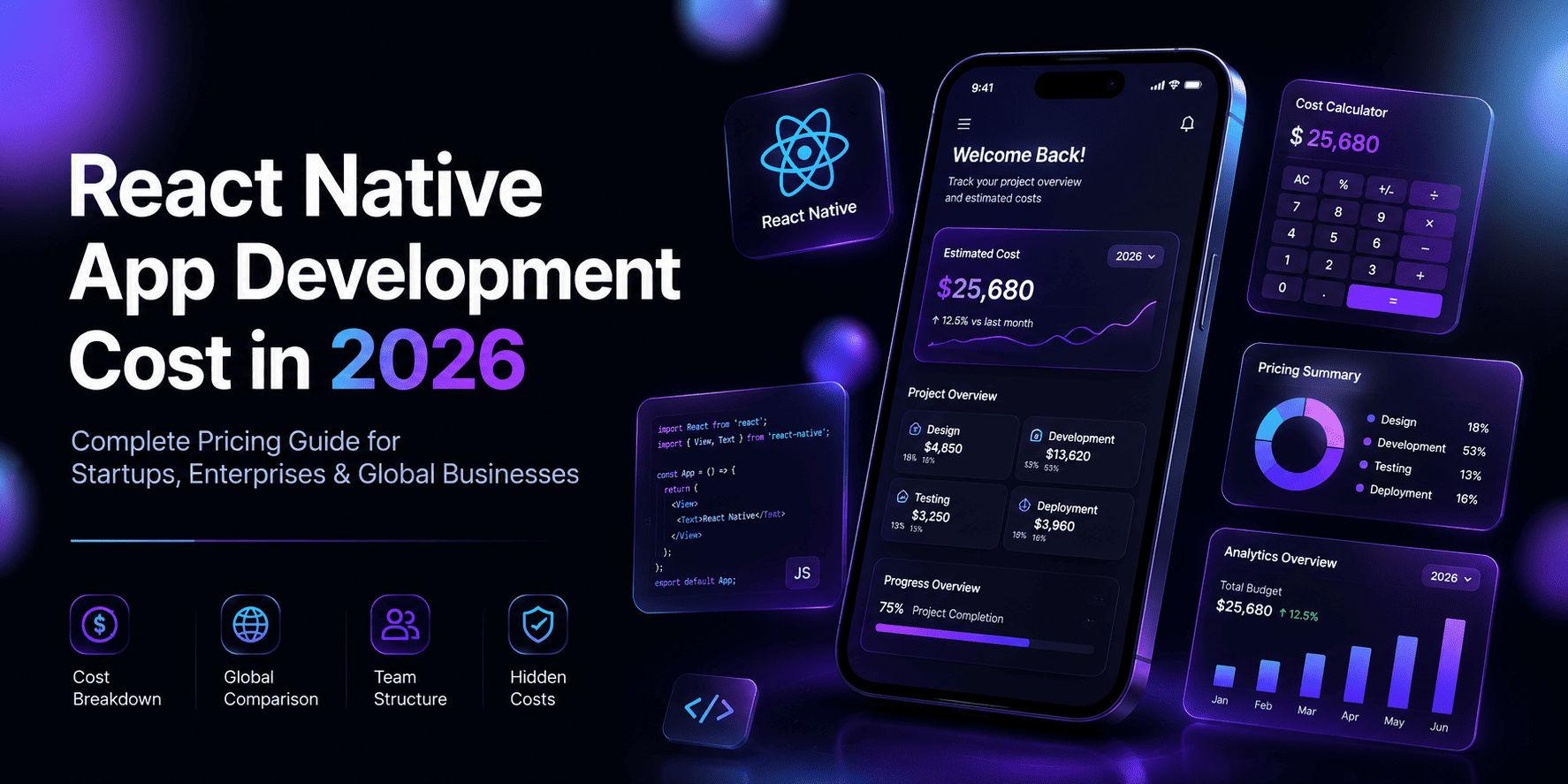
React Native App Development Cost in 2026: Complete Pricing Guide

You have a great app idea. Before anything else, one question always pops up how much is this going to cost? If you are exploring React Native app development , you are already making a smart choice. React Native lets you build one app that runs on both iOS and Android, which saves money right from day one. But here is the honest truth react native app development cost in 2026 is not a single number. It depends on what you are building, who builds it, and where in the world your team is based. A simple MVP built by an Indian agency might cost $8,000. The same app built by a US agency could run $40,000 or more. This guide breaks it all down clearly pricing by app type, region-wise cost comparison covering India vs USA vs UK, developer hiring costs, hidden expenses, and real-world examples. Whether you are a startup founder, a CTO, or someone exploring options for the first time, this is the only React Native cost guide you will need in 2026. You can also explore all our mobile and software development services to understand how we work. React Native App Development Cost Overview In 2026, building a React Native app typically costs anywhere between $5,000 and $200,000+. The range is wide because every app is different. A basic MVP with five screens is very different from a fintech platform with real-time transactions and KYC verification. Here is a quick snapshot before we go deeper:  App Type  Estimated Cost (India)  Estimated Cost (USA/UK)  Timeline  MVP / Prototype  $5,000 – $13,000  $20,000 – $50,000  4–8 weeks  Startup App  $12,000 – $30,000  $40,000 – $80,000  2–4 months  Mid-Complexity App  $25,000 – $60,000  $70,000 – $120,000  4–7 months  Enterprise App  $60,000 – $150,000  $120,000 – $250,000+  7–12 months 💡 The biggest cost lever is not your app's features it is where your development team is based. India-based agencies deliver the same quality at 60–70% lower cost than US or UK firms. Why Businesses Choose React Native Despite Development Costs React Native is not the cheapest option because it is average. It is cost-effective because it is genuinely efficient. Here is why thousands of businesses — including Microsoft, Shopify, and Facebook use it. If you want to explore what React Native can do for your specific project. Shared Codebase One Team, Two Platforms React Native uses a single JavaScript codebase for both iOS and Android. You do not need two separate dev teams. This alone cuts your staffing costs by 30–40% compared to building two native apps in parallel. Faster Time to Market With features like hot reloading and a rich library of pre-built components, React Native teams ship faster. A feature that takes two weeks natively can often take one week in React Native. Lower Long-Term Maintenance Cost Maintaining one codebase is significantly cheaper than maintaining separate iOS and Android codebases. Annual maintenance for a React Native app typically runs 15–20% of the original build cost often half what native maintenance costs. Smaller, Leaner Team A React Native project can be handled by JavaScript developers who manage both platforms. This reduces your monthly burn rate and keeps coordination simple.   Remember Read :  How Much Does It Cost to Build an Ecommerce App in 2026? Key Factors That Affect React Native App Development Cost This is the section most people skip and then wonder why their budget ran over. These are the 12 real drivers of React Native development cost in 2026: 1. App Complexity and Business Logic A simple informational app with five screens is very different from one with conditional workflows, multi-step forms, and complex business rules. Complexity is the biggest single driver of cost. 2. Number of Screens Every screen requires design, development, and testing effort. A 6-screen app and a 25-screen app do not cost the same. Always define your screen count before getting quotes. 3. UI/UX Design Requirements Custom animations, branded design systems, and polished micro-interactions cost more than standard template designs. Good design prevents expensive rework later. Our UI/UX design team works alongside every React Native project to deliver interfaces users actually love. 4. Third-Party Integrations Connecting to Google Maps, Stripe, Twilio, Firebase, or social login providers adds development time. Each integration can add $500–$3,000 to your budget depending on complexity. 5. Backend Development Most apps need a server, a database, and a set of APIs. Backend work often accounts for 30–40% of total project cost. Do not underestimate this. 6. Security and Compliance Apps handling payments or healthcare data need encryption, secure API design, and compliance work (GDPR, HIPAA). Security-focused development adds 15–25% to cost but is non-negotiable. 7. Real-Time Features Chat, live GPS tracking, or real-time dashboards require WebSockets or push services like Firebase. These add technical complexity and testing effort. 8. AI Features In 2026, AI features chatbots, recommendation engines, image recognition — are increasingly standard. Expect to budget $5,000–$25,000+ extra for AI integrations, depending on depth. 9. Payment Integrations Stripe, Razorpay, PayPal, or in-app purchases each require careful implementation, edge-case testing, and compliance checks. Payment flows alone can add 2–3 weeks to your timeline. 10. Offline Functionality Apps that work without internet need local data syncing and conflict resolution logic. This is technically demanding and typically adds $3,000–$8,000 to project cost. 11. Scalability Architecture If you plan to serve hundreds of thousands of users, your infrastructure needs to be designed for scale from day one — adding cloud setup, load balancing, and caching costs. 12. Admin Panel and CMS Many businesses need a web-based admin panel to manage content, users, and orders. A basic admin panel adds $3,000–$10,000. A feature-rich one can add $15,000–$25,000. React Native Cost by App Type Different industries have very different feature requirements. Here is what you can realistically expect to spend in 2026, broken down by app category:  App Type  Core Features  India Cost  USA/UK Cost  Ecommerce Cart, payments, product listings, tracking  $15,000–$40,000  $50,000–$100,000  Healthcare HIPAA compliance, telemedicine, EHR  $25,000–$80,000  $80,000–$200,000  Fintech KYC, fraud detection, bank APIs, encryption  $30,000–$100,000  $100,000–$250,000  Logistics GPS tracking, route optimization, dispatch  $20,000–$60,000  $60,000–$150,000  Food Delivery Multi-vendor, real-time tracking, reviews  $18,000–$45,000  $55,000–$110,000  Social Media Feeds, chat, media upload, notifications  $18,000–$50,000  $55,000–$130,000  SaaS App Subscriptions, dashboards, multi-tenant  $25,000–$75,000  $70,000–$200,000  Marketplace  Buyer/seller flows, escrow, admin  $22,000–$60,000  $65,000–$160,000 React Native MVP Development Cost An MVP (Minimum Viable Product) is where most smart startups begin. The goal is simple build the core of your product, get it in front of real users, and validate before spending big. What Features Should a React Native MVP Have? Focus on user authentication (email/social login), 5–8 core screens, basic push notifications, and one payment method. Skip the admin panel, AI features, and analytics for now. Add those in version 2, once you have real user feedback. MVP Cost Breakdown  Development Phase  India Cost  USA/UK Cost  UI/UX Design  $800–$2,500  $3,000–$8,000  Frontend (React Native)  $2,000–$5,000  $8,000–$20,000  Backend & API  $1,500–$4,000  $6,000–$15,000  QA & Testing  $500–$1,500  $2,000–$6,000  App Store Deployment  $200–$500  $500–$1,500  Total MVP Cost  $5,000–$13,500  $19,500–$50,500 MVP Timeline and Team A well-scoped React Native MVP takes 6–10 weeks to complete. Your minimum team: one React Native developer, one UI/UX designer, one backend developer, one QA tester, and a project manager. Rushing this phase creates technical debt that costs far more to fix later. 💡 Start with an MVP. Get user feedback. Then invest in advanced features. This approach saves 40–60% of your initial budget and dramatically reduces risk. React Native Development Cost by Region — India vs USA vs UK Where your development team is based is the single biggest cost lever in the entire project. Here is a clear, data-backed comparison for 2026:  Region  Junior Dev ($/hr)  Mid Dev ($/hr)  Senior Dev ($/hr)  Full App Cost Range India  $15–$25  $25–$45  $40–$70  $8,000–$60,000 UK  $50–$80  $80–$120  $100–$150  $50,000–$180,000 USA  $60–$90  $90–$130  $120–$160  $60,000–$200,000 Canada  $55–$85  $80–$120  $100–$150  $55,000–$180,000 Eastern Europe  $25–$45  $40–$70  $60–$90  $20,000–$80,000 Australia  $60–$90  $85–$130  $110–$160  $60,000–$200,000 India consistently offers the best cost-to-quality ratio for React Native development. Businesses working with experienced Indian agencies typically reduce development spend by 60–70% compared to US or UK firms without sacrificing quality. SpaceToTech, based in Noida, India, has delivered React Native projects for global clients across the USA, UK, and Australia with transparent pricing and no hidden costs. React Development Services Cost by Hiring & Engagement Model Once you know what region to hire from, the next question founders ask is simpler but just as important: what should you actually pay for react development services, and which hiring structure fits your project? React native app development cost is not just a function of geography — it also depends heavily on whether you hire hourly, part-time, full-time, or bring on a full dedicated development team. This section breaks down react development services cost by engagement model, so you can budget accurately no matter how you choose to staff your app development project. React Native Developer Hourly Rates by Experience Level Before comparing engagement models, it helps to know what individual app developers cost per hour. Whether you are hiring for a react native app, a broader mobile app development effort, or a native app development project on iOS and Android, experience level is the single biggest swing factor in hourly rate. Experience Level India ($/hr) USA/UK ($/hr) Best Fit Junior Developer (0–2 yrs) $15 – $25 $60 – $90 Simple screens, bug fixes, minor features Mid-Level Developer (2–5 yrs) $25 – $45 $90 – $130 Full app builds, API integrations Senior Developer (5+ yrs) $40 – $70 $120 – $160 Architecture, performance, complex logic 💡 Junior developers cost less per hour but often take longer per task — factor total delivery time, not just the hourly rate, into your real development cost. Engagement Models for React Native App Development How you structure the hire changes your total app development cost as much as where the developer is based. Here are the five most common engagement models businesses use for react native app development and mobile app development projects in 2026: Engagement Model Best For Typical Cost Range Hourly Hiring Short-term tasks, small fixes $15 – $70/hour Part-Time Hiring Ongoing but low-intensity work  $1,200 – $3,500/month Full-Time Hiring Active development on one product $2,500 – $8,000/month Project-Based Hiring Defined scope, fixed deliverable $5,000 – $60,000/project Dedicated Team Model Full-scale app development company support across design, backend, and QA $8,000 – $30,000/month 💡 Project-based (fixed-price) contracts protect your budget but need tight upfront scoping. Dedicated team models cost more per month but give you a full development team — developers, QA, and a project manager — under one roof, which is often the better structure for a complete react native app rather than a single feature. Hiring a Development Company vs Building an In-House Team Many businesses default to building an in-house team without comparing it against hiring a development company. For most React Native app and mobile app projects, partnering with an experienced React Native development agency can reduce both development costs and time-to-start while providing access to skilled developers and production-ready mobile apps.  Factor  Hire a Development Company  Build In-House Cost Lower overall — no salaries, benefits, or equipment Higher — full employment overhead Time to Start Days to weeks Weeks to months (recruiting, onboarding) Access to Skills Full team: iOS, Android, backend, QA, UI/UX Limited to whoever you hire Flexibility Scale the team up or down per sprint Fixed headcount regardless of workload Post-Launch Support Usually included in the engagement Requires separate ongoing hiring This is exactly why many startups and enterprises comparing React Native vs Flutter or weighing native app development costs against cross-platform options choose an outsourced development team. It reduces the fixed overhead of maintaining an in-house app development team while delivering production-ready mobile apps across iOS and Android. It can also make the cost of building with Flutter more manageable by using a single codebase for both platforms. Not sure which engagement model fits your app? Hire a dedicated React Native development team from SpaceToTech and get a transparent, itemized cost range for your project before any work begins React Native vs Native App Development Cost Many founders ask whether React Native is truly cheaper than building native apps for iOS and Android separately. The answer is yes consistently. Here is why:  Platform  Cost Range  Team Size Needed  Time to Market  iOS Native Only (Swift)  $30,000–$120,000  3–5 iOS devs  4–10 months  Android Native Only (Kotlin)  $30,000–$120,000  3–5 Android devs  4–10 months  Both Natively  $60,000–$240,000  6–10 devs  6–14 months  React Native (Both Platforms)  $20,000–$100,000  2–4 devs  3–9 months A property management app that received quotes of $115,000 for native development was built with React Native for $68,000 a savings of $47,000, or 41%. React Native delivers near-native performance for the vast majority of apps. If you are weighing your technology options, also consider reading about our Flutter development services — another excellent cross-platform alternative to make the right choice for your project. Hidden Costs of React Native App Development Most cost guides stop at development. But there are recurring expenses that catch founders off-guard after launch. Here is what you need to budget for: App Store Registration Fees Google Play Store charges a one-time fee of $25. Apple App Store charges $99 per year. Small numbers, but easy to forget in the budget. Cloud Hosting AWS, Google Cloud, or Azure will run $50–$500+ per month depending on your user base. Budget $50–$150/month for a new app at launch and expect this to grow with your user count. Third-Party Service Subscriptions Services like Twilio for SMS, SendGrid for email, Stripe for payments, and Firebase for push notifications all have monthly costs. Budget $100–$500/month for a typical mid-size app. Security Audits Any app handling payments or user data needs a professional security audit. Cost: $2,000–$15,000. This is not optional it is essential. Analytics Tools Understanding user behavior requires tools like Mixpanel, Amplitude, or Firebase Analytics. Free tiers exist but paid plans run $50–$300/month for growing apps. Push Notification Services Firebase Cloud Messaging handles basic notifications for free. Advanced targeting through OneSignal or Braze costs $9–$499/month depending on your user base. 💡 Rule of thumb: Budget an additional 20–30% on top of your development cost to cover first-year hidden costs. Most founders who ignore this get a nasty surprise within six months of launch. React Native App Maintenance Cost Your app does not stop costing money after launch. Maintenance is an ongoing investment that keeps your product stable, secure, and growing. Monthly Maintenance Cost For a medium-complexity React Native app, expect $500–$3,000 per month. This covers bug fixes, minor feature updates, server monitoring, and dependency updates. Annual Maintenance Budget The industry standard is 15–20% of your initial build cost per year. If your app cost $50,000 to build, budget $7,500–$10,000 per year in maintenance. Treat this as a line item in your annual budget, not a surprise expense. OS Compatibility Updates Apple and Google release major OS updates every year. Each update requires compatibility testing and often code changes. Budget $500–$2,000 per major OS release. Feature Enhancements Adding new features after launch typically costs $3,000–$20,000 per major feature. Planning a feature roadmap in advance helps you budget and prioritize effectively. Learn More :  React Native Architecture Explained: JSI, Fabric, TurboModules & the New Architecture (2026 Guide) How to Reduce React Native App Development Costs You do not have to choose between quality and budget. Here are five proven ways to reduce your React Native app development cost without cutting corners: 1. Start With an MVP Launch with the 20% of features that deliver 80% of value. Validate your product with real users before spending on advanced features. This approach can cut initial spend by 40–60%. 2. Prioritize Features Ruthlessly Create a must-have list and a nice-to-have list. Push everything from the second list to version 2. Every extra feature in version 1 adds cost and delays your launch. 3. Use Open-Source Libraries React Native has a rich ecosystem React Navigation, Redux, Axios, React Hook Form — all free and production-tested. Using these instead of building from scratch saves 20–30% in development time. 4. Choose the Right Development Partner An experienced India-based agency delivers the same quality as a US firm at 50–70% lower cost. Check portfolios, Clutch reviews, and ask for a detailed project breakdown before committing. You can explore SpaceToTech's portfolio and contact us for a free project consultation and transparent cost estimate. 5. Avoid Overengineering Early Do not build infrastructure for 10 million users when you are starting with 1,000. Keep the architecture simple and scalable on demand. Premature optimization wastes budget that could go toward features your users actually want. Real Cost Examples Numbers mean more when they are grounded in reality. Here are four real-world examples to give you a concrete sense of what React Native projects cost in 2026: Ecommerce App A mid-size fashion ecommerce app product catalog, cart, Stripe payments, order tracking was built by an Indian agency in 14 weeks for $22,000. An equivalent US agency quote came in at $75,000+. Food Delivery App A multi-restaurant food delivery platform with real-time GPS, separate customer and driver apps, and a restaurant dashboard took 20 weeks. India cost: $38,000. US estimate from the same brief: $115,000. Healthcare Telemedicine App A HIPAA-compliant telemedicine app with video consultations, patient records, and appointment scheduling took 6 months. Cost in India: $58,000. Equivalent US development: $180,000+. B2B SaaS App A B2B SaaS mobile app with multi-tenant architecture, role-based access control, and analytics dashboards — 7 months, India cost: $65,000. US equivalent: $200,000+. Is React Native Worth the Investment in 2026? Short answer: yes for most businesses. Here is the longer version: For Startups React Native is almost always the right call. You get both iOS and Android from a single team and a single budget. Build your MVP, validate it with real users, and scale. The cost savings vs native development give you more runway to grow. For Enterprises Large organizations increasingly use React Native for internal tools, customer apps, and product MVPs. Companies like Microsoft and Shopify have validated it at scale. It also integrates well with AI and chatbot layers something we specialize in through our AI chatbot development services . ROI Over Three to Five Years Over a 3–5 year horizon, a React Native app can save $50,000–$200,000 compared to maintaining two separate native codebases. That is money better invested in product features, marketing, and growth. Why Choose SpaceToTech for React Native Development? SpaceToTech is a software and mobile app development company based in Noida, India, delivering React Native solutions for startups and enterprises across the USA, UK, Canada, and Australia. Transparent pricing — detailed project quotes with no hidden fees, before work begins. Dedicated teams — your project gets developers who focus entirely on your product. Agile delivery — sprint-based development with weekly demos and clear milestones. Full-stack capability — React Native frontend, backend APIs, UI/UX design, and QA under one roof. Post-launch support — flexible maintenance plans so your app keeps performing after go-live. Ready to get a cost estimate for your app? Talk to our team today — we offer a free consultation and project scoping call with no obligations. Get a Free Cost Estimate for Your React Native App SpaceToTech delivers transparent, high-quality React Native development from India for global businesses. Whether you need a quick MVP or a full enterprise product, we will scope your project, give you a detailed breakdown, and build it right. Contact us today to start a free consultation. Explore our React Native services, Flutter development, and UI/UX design to see the full range of what we offer.

We Build Digital Products That Drive Real Growth

From idea to launch, we help startups and enterprises build scalable apps, AI solutions & custom software.

View Our Work
Trusted byGlobal Clients

150+Projects Delivered

OngoingSupport
UAE

UAE

USA

USA

INDIA

INDIA

Book a Free Consultation

Your information is safe with us.