Home > Technologies > React Native
The core concept driving the framework's creation was to streamline the process of developing cross-platform mobile applications.

Developed by Facebook, React Native is an open-source framework that has transformed the landscape of mobile application development since its introduction in 2015. By integrating React with JavaScript, it provides a unified development environment for both iOS and Android platforms. The core concept driving the framework’s creation was to streamline the process of developing cross-platform mobile applications.
Our React Native app development company uses it to write code in a single language, primarily JavaScript, and deploy it across multiple platforms. This “develop once, deploy everywhere” approach streamlines the development process, allowing for faster time-to-market and significant cost savings.
React Native utilizes native components and code optimizations. Due to this, apps developed using React Native achieve performance levels comparable to those developed using native languages. Thus, the platform guarantees a seamless and responsive user experience, a pivotal element contributing to the success of mobile applications.
Developers can build apps across multiple platforms through a single React Native codebase.
React Native codes and configurations can easily be maneuvered to swiftly deploy the application.
React Native comes in-built with various widgets on distinct features to enrich app functionality.
Various integrations of 3rd party services for certain specific functionalities can be easily deployed.
React Native allows developers to cross-check codes in real time and make corrections to specific lines.
Provided the live reload option in React Native, the cost for maintenance is lowered.

We provide comprehensive React Native solutions, from custom app development to seamless integration. Build cross-platform apps with high performance, user-friendly interfaces, and faster time to market. Trust us to bring your app ideas to life!
Not every company needs a full build from day one. Sometimes the problem is unclear architecture. Sometimes it's a broken product that needs fixing first.
That’s why these react native mobile app development services are structured in parts, not bundles.

A successful app starts with a tested idea. Our consulting phase focuses on feasibility, choosing the right architecture, and shaping development solutions around your timeline, budget, and expected scale to ensure stability from day one.
We build full products from scratch, ensuring they behave consistently across all devices. Whether you are a startup launching an MVP or a company rebuilding an unstable platform, we focus on code that handles real traffic without slowing down.
Good design is about usability over aesthetics. We focus on navigation, loading feedback, and interaction patterns that prevent user confusion. Our design team brings innovation to the forefront to trigger a seamless and visually engaging interface.
We ensure your app works perfectly with external systems, from payments like Stripe and Razorpay to CRMs and authentication layers. We build these integrations to work together without delays, ensuring your app functions as part of a larger ecosystem.
Maintaining separate iOS and Android apps is expensive. We unify your codebases into one structure, auditing your current system first to prevent data loss. We ensure a smooth transition and upgrade your existing apps to the latest React Native versions.
Enterprise builds require careful planning, access controls, and encryption layers. We specialize in integrating apps with internal systems like ERPs, prioritizing data security and efficiency for large-scale corporate operations.
Most issues appear when real users interact with the app. Our QA process focuses on behavior under stress, device compatibility, and edge-case scenarios. We employ a rugged testing framework to guarantee a stable and error-free experience.
Launch is just the beginning. We provide continuous support for OS changes, bug fixes, and performance tuning. Having a single codebase makes maintaining and updating your platform significantly more manageable compared to native apps.
Sometimes you just need skilled developers inside your existing workflow. We provide expert engineers who work directly within your sprint cycles and communication channels, shifting from standard outsourcing to a true team extension.
What You Can Expect at a Glance? Architectural precision meets ethereal mobile experiences.
FOCUS & MASTERY
SUCCESSFULLY LAUNCHED
EXPERT ARCHITECTS
GLOBAL FOOTPRINT
We leverage the power of Meta's open-source framework to build robust, scalable, and cross-platform mobile applications that feel indistinguishable from truly native solutions.
Expert guidance on strategy, architecture, and feasibility for your cross-platform vision.
End-to-end development of high-performance mobile apps for iOS and Android platforms.
Editorial-grade interfaces that prioritize user flow and brand identity across all screen sizes.
Seamlessly connecting your mobile application to third-party services and legacy backend systems.
Effortless migration of your existing native apps or other hybrid apps to React Native.
Building secure, scalable, and feature-rich applications tailored for corporate operations.
Rigorous automated and manual testing to ensure zero-defect deployments every time.
Continuous updates, monitoring, and performance optimization for long-term app health.
Integrate our world-class developers directly into your existing internal tech teams.

Different industries fail in different ways. That's why the same development approach doesn't work everywhere.
Applications help manage consultations and patient records. They also handle real-time interactions. This is done while keeping things stable and making sure data is handled in a way. This is really important, in places where things have to work all the time.
Reduce development costs by up to 40% using a shared codebase without compromising quality.
Access a global talent pool of expert developers regardless of your physical headquarters.
Simultaneous development for iOS and Android ensures your product reaches users faster.
Providing architectural weightlessness across borders. Our network empowers innovation in major global tech hubs.

Space To Tech operates from India with a team that focuses only on cross-platform mobile builds. The advantage isn’t just pricing. It’s repetition. Working across fintech, healthcare, logistics, and SaaS means patterns become familiar, and decisions get made faster. For companies exploring react native app development in India, that usually shows up as fewer delays and more stable delivery cycles.


Our achievements are driven by real results—high-performing apps that support growth and deliver lasting business impact. Discover projects where we created meaningful outcomes.
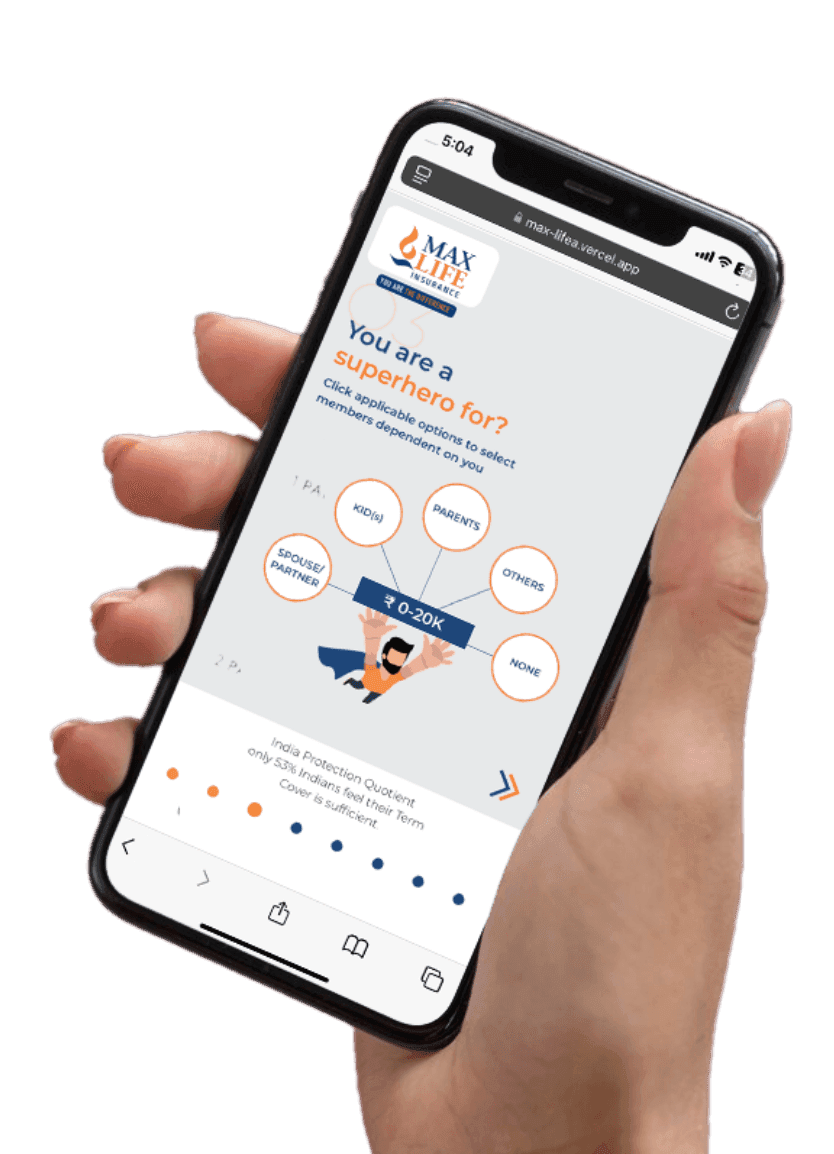
Transforming Digital Insurance Experience
Max Life Insurance aimed to modernize its digital platform to deliver a seamless and user-friendly experience. The existing system lacked intuitive navigation, real-time tracking, and personalized features.
Our team developed a high-performance, user-centric digital platform with intuitive UI/UX, secure architecture, real-time policy tracking, and seamless third-party integrations.

Choose the model that fits your project velocity.
A full-time senior resource focused solely on your project. Integrated into your team.
A multi-disciplinary team of engineers, designers, and QA experts to scale your roadmap fast.
Fixed scope and fixed timeline projects. Ideal for MVPs or specific feature builds.
Why Global Startups Hire Software Developers from India: The Key Advantages
Here's something that doesn't get said enough: most founders who decide to hire software developers from India don't do it because they read a blog post about it. They do it because someone they trust told them it worked. And then it works for them too. And then they tell someone else. That's not a marketing story. That's just how word spreads when something actually delivers. But if you're earlier in the process — still researching, still unsure — the "why India" question deserves a real answer. Not a list of bullet points, not a table of hourly rates pulled from thin air. An actual explanation of what's driving this, why it's held up for two decades, and what makes Indian software developers worth the coordination effort that comes with any distributed team. That's what this is. Why India's Developer Ecosystem Is Built to Serve Global Teams Start with the raw numbers, because they matter more than people realise. India produces over 1.5 million engineering graduates every year. Every single year. The active developer population is somewhere north of 5.8 million — NASSCOM put it there in 2024, and it's grown since. On GitHub, Indian developers are among the most active contributors on the platform. Stack Overflow's surveys have said the same thing for years running. Quick stats worth knowing: 1.5M+ engineering graduates annually 5.8M+ active software developers India (NASSCOM, 2024) Top 3 globally for GitHub contribution volume What that actually means when you're trying to hire software developers from India : you're not fishing in a small pond and hoping something bites. The talent is there — backend engineers, Android app developers , CRM developers , embedded software specialists, AI and NLP engineers, full-stack generalists. People with ten years of production experience who've shipped real things for international clients. The depth exists across the board, not just at the top end. The Real Reason Indian Dev Costs Are Lower — And Why Quality Stays High Everyone knows India is cheaper. Not everyone understands why that's not the same as saying India is worse. Region Avg. Hourly Rate Approx. Annual Cost (Senior Dev) United States $100–$150/hr $200,000–$300,000 United Kingdom $80–$120/hr $160,000–$240,000 India $25–$45/hr $50,000–$90,000 The gap is currency and cost of living. That's it. It's not a reflection of skill level — if it were, Google, Microsoft, Goldman Sachs, and JP Morgan wouldn't be running core engineering functions out of their India offices. They're not doing that for the novelty of it. They figured out a long time ago that the engineering talent is genuinely there. For a startup watching every dollar of burn, hiring offshore developers India means the savings don't just sit on a spreadsheet — they go back into the product. Into hiring another designer. Into a marketing push. Into runway. That's the real case for it, honestly. Not just "it's cheaper," but "cheaper lets you do more with what you have." What Actually Sets Indian Software Engineers Apart Technically There's a version of this conversation where someone says "but are they really as good?" and honestly, it's a fair question to ask once. Less fair to keep asking after you've seen the work. India's top engineering schools — IITs, NITs, BITs — compete globally. And beyond the institutions, thousands of certified developers have layered on certifications from AWS, Google, Microsoft, and specialized bootcamps that didn't exist ten years ago. The baseline has genuinely risen. When you hire software engineers in India today, you're finding people who are current on the frameworks your product actually uses. Custom software development, Dynamics CRM, mobile app development, embedded software for IoT, AI and machine learning — it's not theoretical familiarity. These are people who've shipped in these stacks. The skilled developers coming out of India's tech ecosystem aren't coasting on reputation. They're building it. Finding the Engagement Model That Actually Fits Your Startup One thing that catches people off guard: there's more than one way to structure this. A lot of founders assume it's one thing — "outsourcing" — and that assumption colors how they think about it. It's worth clearing up. Dedicated developers work on your product, inside your team, managed by you. If you need someone embedded for the long haul, this is closer to a remote hire than any traditional outsourcing arrangement. Companies that want to hire dedicated software developers India typically find this model gives them the most control and the most consistency. The developer actually learns the codebase. That matters more than people think. Contract developers are scoped to a project. Fast to start, clean to end. Works when you know exactly what you're building and you don't need someone to stick around after it ships. Offshore software development teams — a full squad, sometimes with a tech lead included — are for when a single developer won't move the needle fast enough. A dedicated software development team that operates as a unit, delivers as a unit. Most clients at SpaceToTech start with one dedicated developer and add from there as the product grows. Starting small isn't a weakness. It's just a sensible way to build trust before you scale it. How the Time Zone Gap Becomes a Competitive Advantage This is the thing people worry about most before they've tried it. It's rarely the thing they complain about after. IST overlaps with European mornings and US evenings. There's a real window every day where both sides are online at the same time. That handles the conversations that actually need to be live — sprint calls, design feedback, anything ambiguous enough that back-and-forth matters. Everything else? The remote developers keep working after your day ends. You come back the next morning and there's progress — not a message saying "waiting on your response from yesterday." For startups that are trying to hire remote talent and move faster than a traditional hiring cycle allows, that's a genuine operational advantage, not just a talking point. Why Communication With Indian Developers Is Rarely the Problem This one comes up less often as a concern, but it's worth addressing anyway. India is one of the largest English-speaking countries in the world by volume. The tech workforce specifically communicates in English — documentation, pull request comments, sprint notes, everything. It's not a secondary language being managed around. It's the working language. Beyond that, most Indian software developers working with international clients know Scrum. They know Agile. They've used Jira, Slack, Notion, GitHub. Sprint planning, retrospectives, backlog grooming — none of this is new to them. The adjustment period that people brace for usually doesn't materialise. And if you're on the fence, here's the simplest version: the companies that hire Indian software developers and then don't renew contracts are rare. The companies that expand those contracts are common. That tells you something about how the communication actually goes once the work starts. Every Specialist You Need, From Android Developers to AI Engineers The range here is genuinely wide. Wider than most people expect when they first start looking. Android app developers in India — Kotlin, Jetpack Compose, built for mobile-first products that need to perform across device types AI and NLP engineers — recommendation systems, conversational interfaces, intelligent features that actually accelerate app development rather than slow it down CRM and Dynamics CRM developers — CRM software, enterprise tools, sales infrastructure that doesn't fall apart under real usage Embedded developers — IoT products, hardware-connected apps, the low-level work that most generalists won't touch Backend engineers — scalable infrastructure, APIs, cloud architecture that holds up when traffic actually arrives The specialist you need is probably there. And probably available sooner than you'd expect. Software solutions at this level don't require a long search when the talent pool is this size. A Step-by-Step Roadmap to Hire Software Developers From India People overcomplicate this. It's actually not that many steps. Define your scope and tech stack first. Vague briefs produce vague results. Know what you're building, what it runs on, and what skills are actually required. Do this before any conversations start. Pick your model. Hire dedicated developer, go contract, or build an offshore software team . Each one fits a different stage. Don't default to whichever sounds most familiar. Vet properly. GitHub history, portfolio links, live apps you can actually download. A short paid technical assessment. Whether you're looking to hire a coder in India or a senior architect, this step doesn't change. Run a trial sprint. One to two weeks, paid. More useful than any interview. You'll know more from watching someone work than from anything they tell you about themselves. Set the communication infrastructure before you start. Standup cadence, sprint length, how you handle scope changes. Sort this upfront. Don't improvise it mid-project. Scale when it makes sense. One software developer to start is fine. Add when the output demands it, not before. It's not complicated. It just requires doing it in the right order. Red Flags to Watch Before You Hire — Don't Skip This Moving fast is good. Moving fast past obvious red flags is how projects go sideways. No GitHub profile, no portfolio, no shipped work you can actually look at Pricing that's vague — no milestones, no defined deliverables Won't offer a trial sprint or paid assessment before committing Communication during the sales process is slow or evasive — it doesn't improve once the contract is signed Timeline promises that don't hold up when you ask how they were calculated Before you hire developers or hire programmers in India , watch for these. A software expert or team that can't show you what they've built isn't hiding nothing. Any serious software development partner won't flinch at these questions. The ones who do are telling you something useful, even if they don't mean to. How SpaceToTech Connects Global Startups With Top Indian Developer Talent SpaceToTech is based in Noida. The clients are mostly in the USA, UK, UAE, and Australia — startups and growth-stage companies that needed engineering capacity without the overhead of local hiring. The vetting for dedicated software developers is thorough: technical assessments, portfolio review, trial sprints. The domains covered include custom software development , mobile app development , CRM software , and AI/NLP. Not claimed expertise — delivered work. Hiring dedicated developers through SpaceToTech is flexible in structure. Hire software developer India on a dedicated basis, run a contract engagement, or staff a full offshore team . When scope is clear, developers are ready to start within 72 hours. That's not a marketing line — it's just how the process runs when the brief is specific. Ready to Hire Software Developers from India? Talent, cost, flexibility, speed. India has all four. But the reason teams stay — the reason contracts get renewed and teams get expanded — isn't really about any of those things individually. It's that the work holds up. The communication is real. The developers care about what they're shipping. That's harder to put in a table than an hourly rate. But it's the part that actually matters six months in. Whether you need to hire software development team for a full product build or bring in one dedicated developer to move a stalled project forward — the path is the same. Start with something real, communicate clearly, and scale from there.
How Much Does Custom Mobile App Development Cost for Ecommerce Startups with a Limited Budget?
You have a great ecommerce idea — but the moment you start asking what building a mobile app will actually cost you, everyone goes quiet. Or worse, they hit you with "it depends" and call it a day. Here's the thing — app development cost is the number one thing that keeps ecommerce startup founders up at night. Not the product. Not the competition. The mobile app . Because until you know what you're spending, you can't plan anything else. And most of the content out there isn't helping — it's written to impress Google, not to actually answer your question. So that's what this is. A straight conversation about custom mobile app development — what it actually costs, what drives that number up or down, and where you can be smart about it without cutting corners that matter. Your budget doesn't have to be massive to build a mobile app worth using. It just has to be spent right. Let's get into it. What Is Custom App Development? Let's clear something up first — because this question trips up a lot of first-time founders. A custom app isn't a template you buy, slap your logo on, and call done. That's a SaaS platform or a white-label solution — and while those have their place, they come with a ceiling. You're working within someone else's system, someone else's limitations, and someone else's roadmap. Custom app development is when a mobile application is built from scratch, specifically for your business. Your flows, your features, your brand — nothing borrowed, nothing compromised. For ecommerce startups , that difference matters more than most people realize. A custom build means you control the user experience end to end. It scales as you grow. It reflects your brand in ways no template ever could. On the technical side, you've got three paths — an iOS app , an Android app , or a cross-platform build using something like React Native , which covers both without doubling your budget. Your choice there is one of the first things that shapes your software development cost — but we'll get into that shortly. Bottom line? If you're building for the long game, native apps or a solid cross-platform solution will always outperform a plug-and-play tool. Custom is the investment that actually compounds. Custom App vs. Template: Why It Even Matters Let's get the obvious out of the way. Custom mobile app development means someone is writing code specifically for your product — your flows, your logic, your brand. Nobody else has this app. It's not a Shopify mobile skin or a white-label SaaS tool with your logo dropped in. Templates and off-the-shelf platforms have their place. If you need to validate an idea quickly, a Shopify store or a no-code tool gets you there in days. But the ceiling is low. You can't control the checkout user experience end to end. You can't own your customer data the way you want. And when you try to add something the platform wasn't built for, you hit a wall. Custom mobile application development sidesteps all that. Your iOS app , your Android app , or a cross-platform build using React Native — built from scratch, built for scale, built the way your business actually works. That's the trade-off: more upfront investment, but none of the constraints. What Does Custom Mobile App Development Actually Cost? Okay, numbers. Here's the realistic breakdown for ecommerce mobile apps at different levels of complexity: App Type Estimated Cost (USD) Basic MVP (ecommerce) $5,000 – $15,000 Mid-level ecommerce app $15,000 – $40,000 Advanced feature-rich app $40,000 – $100,000+ A few things to note about these development costs . They cover design, frontend, backend, QA, and deployment — the full development process . What they don't include is app store fees, third-party subscriptions, post-launch app maintenance , or marketing. Those are real costs too, and we'll get to them. Geography plays a bigger role here than most people expect. An app development company in San Francisco is going to quote you $150 to $200 per hour. Eastern Europe typically runs $50 to $100. India-based mobile app development companies — SpaceToTech being one — sit in the $20 to $50 range. Same technical output. Very different invoice. For a startup watching every rupee or dollar, that gap doesn't just matter — it's often the difference between launching and not launching. What Actually Drives the Cost Up (Or Keeps It Down) Six things. These six things explain almost every quote you'll ever get from a development company . 1. Feature complexity. A basic product listing, cart, and checkout is one scope. Add AI-driven recommendations, real-time inventory sync, augmented reality product previews, or a multi-vendor structure — and you're in a different tier entirely. The feature set is the single biggest cost driver. Be honest about what you actually need at launch versus what sounds cool in a pitch deck. 2. Platform choice. Native iOS app + native Android app = two separate builds. Two codebases, two timelines, roughly double the development time . React Native gives you one codebase that runs on both operating systems . For most ecommerce startups this is a no-brainer cost decision — cross-platform saves 30 to 40% immediately. 3. UI/UX & App design. App design isn't decoration. A well-designed app converts better, gets rated higher, and loses fewer users in checkout. But polished UI/UX takes real time — and time costs money. Cutting corners here is a false economy. You'll spend more fixing it later after users start dropping off. 4. Backend development. The part users never see: databases, APIs, payment gateway integration, admin panels, server logic. This is where hidden complexity lives. A project that looks simple on the frontend can be enormously complex on the backend development side. If scope isn't nailed down, this is where budgets quietly balloon. 5. Location of the development team. Already covered the numbers above. Indian mobile app development companies have spent 20+ years building a reputation precisely because the quality is there. Location affects your invoice, not the code quality. 6. Development timeline. Longer development time means more hours. Vague requirements cause longer timelines. The clearer you are upfront about what you need, the faster (and cheaper) the app development process goes. Ambiguity is genuinely expensive. Features: What You Need Now vs. What Can Wait This section matters more than most people give it credit for. Scope creep — adding app features mid-build — is the fastest way to wreck a development budget . Getting clear on what your MVP actually needs to include is one of the most valuable things you can do before you talk to any app development company . For a basic ecommerce mobile app , the must-haves are: User registration and login (include social login if possible — users hate forms) Product catalog with search and filtering Shopping cart and a checkout flow that actually works Payment gateway integration — Stripe, Razorpay, PayPal, whatever fits your market Push notifications for orders and promotions Order tracking so customers aren't messaging support constantly Things that can come in Phase 2, after you've validated the market: Augmented reality product preview (useful for fashion, furniture, accessories) AI-based product recommendations Loyalty programs and referral systems Multi-vendor marketplace support In-app analytics dashboard The startups that launch Phase 1 lean and iterate fast tend to do better than the ones who try to ship everything. Version one is about getting real users. Version two is about keeping them. How to Estimate Your App Cost Before Talking to Anyone The formula is simple: Hours × Hourly Rate = App Cost . The hard part is knowing how many hours a thing actually takes. Here's a real-world breakdown for a basic ecommerce MVP, built with an India-based app development team at around $25/hr: Task Hours Cost @ $25/hr UI/UX Design 80 hrs ~$2,000 Frontend Development 120 hrs ~$3,000 Backend Development 100 hrs ~$2,500 QA & Testing 60 hrs ~$1,500 Deployment 20 hrs ~$500 Total ~380 hrs ~$9,500 Call it $9,500 for a functional MVP. That's not a promise — your specific feature set will shift that number. But it gives you a real anchor point. A development company like SpaceToTech can give you an accurate estimate based on your actual requirements, usually within a day or two of the first conversation. The main thing that blows up estimates is adding advanced features mid-project without adjusting the contract. If you've agreed on scope, stick to it for v1. Add the rest in the roadmap. The Location Factor (It's Not What You Think) Region Hourly Rate Quality Level United States $100–$200/hr High Eastern Europe $50–$100/hr High India (e.g. SpaceToTech) $20–$50/hr High People sometimes assume lower rates mean lower quality. It's an understandable instinct but it's not how it works in practice. Indian software development — mobile applications especially — has been the backbone of global tech projects for decades. Fortune 500 companies outsource to Indian development teams . Startups that have since IPO'd built their early products with Indian app developers . What you're paying extra for in the US isn't better code. It's physical proximity and sometimes just familiarity. If your app development company communicates well, delivers on time, and knows ecommerce — the timezone difference is a minor inconvenience, not a dealbreaker. SpaceToTech is India-based and has shipped mobile apps for ecommerce brands, healthcare app platforms, on-demand businesses, and enterprise mobile app clients across multiple continents. Competitive pricing. No quality gap. Native vs. Cross-Platform: The Decision That Changes Your Budget If you build native mobile , you're building twice. One iOS app , one Android app , two development efforts running in parallel or sequentially. The advantage is performance and full access to device features. The disadvantage is development cost — typically 30 to 40% more than cross-platform for the same functionality. React Native and Flutter give you one shared codebase that compiles to both operating systems . For ecommerce, the performance difference is negligible. Product listings, filters, carts, checkout flows, push notifications — all of that works beautifully on React Native . You're not building a 3D game. You're building a shopping experience. When does native make sense? Heavy augmented reality features, enterprise mobile app builds with complex hardware integration, or apps where millisecond performance matters. If that's not you — and for most early-stage ecommerce startups it isn't — React Native saves you a significant chunk of your mobile app development budget without any real trade-off. How to Build a Good App Without Spending a Fortune Budget constraints aren't just a problem. Honestly, they force discipline — and discipline often leads to better products. Here's what actually works for keeping app development costs down without ending up with something unusable: Ship an MVP first. Not "kind of an MVP" — an actual minimum viable product with just the core app features . Validate, then build. Go cross-platform with React Native . The 30–40% savings is real money. Work with an India-based app development company . SpaceToTech's rates let you get more scope for the same app budget . Define your features before you sign anything. Every addition mid-project costs 2–3x what it would have cost at the start. Use open-source libraries for standard functions — authentication, notifications, maps. Don't pay to rebuild things that already exist. Use an agile development process in short sprints. You catch scope creep early, before it gets expensive. Budget for app maintenance from day one. Ignoring this leads to a nasty surprise around month 6. Fixed-price contracts over pure time-and-materials billing. Predictability matters when your runway is limited. The common thread in every startup that runs over budget: they didn't define scope tightly enough. That's fixable, and usually free to fix, if you do it before development starts. The Costs People Forget to Budget For These aren't edge cases. They catch almost every first-time founder off guard: App Store and Google Play fees. Apple charges $99/year for a developer account. Google is a one-time $25 fee. Minor, but not zero. Third-party tool subscriptions. Payment gateway fees, push notification app development services , analytics platforms, cloud storage. These add up monthly. Post-launch app maintenance . Industry standard is 15–20% of your build cost annually. On a $10k app, that's $1,500–2,000 per year just to keep things running and updated. Security and compliance work. If you're storing payment data or user information, this isn't optional. PCI compliance has real requirements. Hosting and server costs. These scale with your user base. Low at the start, but something to plan for as you grow. A $10,000 build cost can realistically land at $12,000–13,000 in year one when all of this is factored in. Still very manageable. Just plan for it rather than discovering it after launch. Picking the Right App Development Company There are a lot of mobile app development companies out there, and the quality spread is wide. The difference between a good partnership and a bad one usually comes down to five things: Ecommerce experience specifically — not just "we've built apps." Have they built shopping apps? Do they know what conversion looks like on mobile applications ? Transparent pricing — can they give you a fixed-price quote, or is everything open-ended time-and-materials? Post-launch app maintenance support — what's the plan when something breaks three months after you go live? Real portfolio work — ask to see live apps in the App Store , not just mockups. Communication quality — do they ask smart questions, push back on bad ideas, and respond within a reasonable window? SpaceToTech has worked across ecommerce, healthcare app development, on-demand delivery, and enterprise mobile app development. The development team asks the right questions early, which is usually how you know a project will go well. Their mobile app development services page has more detail on what they build and for who. So, Can You Build a Good Ecommerce App on a Limited Budget? Short answer: yes. Longer answer: yes, but it requires making the right decisions early — what to build in v1, which platform to choose, who to build it with. Custom mobile app development cost is shaped by app features , platform, development team location, and how clearly the scope is defined before anyone writes a line of code. Control those four things and you control the development budget . The startups that overspend usually got loose on one of those four. A limited budget isn't a limitation on quality. It's a constraint that forces good decisions. Build lean, validate early, and work with a mobile app development company that gets startups — one that doesn't charge San Francisco rates for Indian mobile app development quality. If you've got an app idea and want an actual number — not a range, not a vague estimate, but a real quote based on your specific requirements — SpaceToTech can turn that around in 24 hours.
How to Build an On-Demand App Like Uber in 2026: Features, Tech Stack & Cost
The on-demand economy isn’t slowing down — not even close. A PwC report pegged the global market at over $335 billion, and that was before the post-pandemic wave of app-based services really hit its stride. If you’re figuring out how to build an on-demand app like Uber , you’re not late. The category keeps expanding into new verticals, new geographies, new problems worth solving. The Uber model — connecting users to service providers through a mobile app, in real time — has become something of a default blueprint. It started with rides, obviously. But the same framework now powers food delivery, at-home healthcare, same-day logistics, even beauty services. It turns out that “tap a button, someone shows up” is a pretty compelling value proposition regardless of industry. This guide covers what you actually need to build an app like Uber : the features that matter, the tech stack that makes it work, what it costs (specifically the on demand app cost India founders ask about most), and a realistic step-by-step path from idea to launch. At Space To Tech, we’ve helped startups and enterprises build on-demand platforms that actually scale — so what’s here comes from real projects, not hypotheticals. What Is an On-Demand App, Really? At its core, an on-demand app connects users with service providers in real time, usually through a mobile interface. Someone taps, and something happens — a car arrives, a package moves, a doctor joins a call. Simple concept, but the underlying architecture is almost always three-sided. There’s the user app — the person booking a ride, ordering groceries, or scheduling a plumber. There’s the service provider app — the driver, courier, or vendor on the other side. And then there’s the admin panel , the business owner’s control room: managing bookings, handling disputes, tracking commissions, watching analytics. You see this structure everywhere. Uber and Ola for rides. Swiggy and Zomato for food. Urban Company for home services. Practo for doctor consultations. The on demand app business model works because it strips out friction — users get what they need faster, providers get a steadier stream of work, and the platform earns a cut of every transaction without owning cars, kitchens, or anything else. That last part is what makes it so capital-efficient and so repeatable across verticals. Uber Like App Features List: What Your App Actually Needs Before anyone writes a line of code, you need a clear picture of what goes into the product. Not a wish list — an honest breakdown of what’s load-bearing versus what can wait. Here’s how it falls across the three panels. User App Social login and registration. Nobody wants to fill out a form. Google, Apple, and phone OTP sign-ins cut drop-off at the very first step — and that drop-off is higher than most founders expect. Real-time GPS tracking. Live location of the driver or delivery person is one of those features that seems obvious until it’s missing. It reduces “where is my order?” support volume more than almost anything else. Booking and scheduling. Instant booking works well for rides. But in healthcare or home services, users often want to schedule 24 hours ahead. Your app needs to handle both without awkward workarounds. In-app payments. UPI, cards, wallets — all of it. Multiple payment gateways aren’t optional in 2026; they’re expected. A user who can’t pay their preferred way will just leave. Ratings and reviews. This one does double duty. It builds accountability on both sides, and it’s the most organic way to filter out low-quality providers over time. Push notifications. Useful when used carefully. Booking confirmations, ETA updates, the occasional promotion. Overdo it and users turn them off entirely — which defeats the point. Service Provider App This panel gets less design attention than the user app in most projects, which is a mistake. Providers are running their livelihood through your app. The experience has to be efficient, fast, and transparent. Profile and document upload. Drivers and vendors need to submit credentials during onboarding. You’ll want a verification queue on the admin side — don’t let this become a manual inbox nightmare. Accept / reject booking. Providers need control over what they take on, especially in services where job complexity varies. No control here means provider churn. Live navigation. Deep-linked maps — Google Maps, Waze — cut arrival times and reduce missed bookings. Any serious driver on demand app development services build treats this as a core feature, not an add-on. Earnings dashboard. Providers want visibility into what they’re making: daily, weekly, monthly. Transparency here directly affects retention. When people don’t trust the numbers, they leave. Availability toggle. A simple on/off switch. Obvious, but it needs to be done well — providers shouldn’t have to log out to stop receiving requests. Admin Panel The admin panel is the part nobody talks about until they need it badly. It’s the back-office engine of the platform, and without a good one, growth becomes chaos. User and driver management. Booking history with full audit trails. Commission and pricing controls that a non-developer can actually use. Analytics — revenue by day, top providers, peak hours, drop-off points. And a real dispute resolution workflow, not a shared inbox where complaints go to die. How to Build an On-Demand App Like Uber — Step by Step Here’s the process we follow at Space To Tech when a client comes in with an on-demand idea. It works whether you’re building ride-hailing, last-mile delivery, or something more niche. Step 1 — Pick a Niche and Commit to It The most common mistake founders make is trying to build a “general” on-demand app. It doesn’t work. Uber started in San Francisco with black cars. Swiggy started in Bengaluru. Dunzo launched in one neighborhood. They expanded once they had real traction — not before. Before spending anything on development, answer the basics: Which vertical are you in? Who exactly is your user? Have you talked to 20 or 30 real potential users, or are you working from assumptions? What’s your revenue model — commission per booking, provider subscription, surge pricing, something else? That last question especially shapes backend architecture, so it needs an answer before you write a spec. Step 2 — Choose the Right On-Demand App Business Model Aggregator model (Uber, Swiggy) — You connect users with independent providers. You don’t employ anyone or own the underlying supply. Revenue is a commission on every transaction. Lower operational risk, but quality control depends on your rating system and onboarding standards. Service provider model (Urban Company in some categories) — You manage the workforce more directly. Higher quality control, higher overhead. Makes sense in categories where consistent quality is hard to guarantee through aggregation alone. Hybrid — You aggregate in some verticals, employ directly in others. This can work at scale, but early-stage it’s operationally complex. Most startups should avoid it until they have real momentum. For early-stage, the aggregator model is almost always the right starting point. It’s capital-efficient and lets you grow supply and demand at the same time. Step 3 — Plan Your On-Demand App MVP Development With Discipline MVP planning is where a lot of projects go sideways. People hear “minimum viable product” and design a smaller version of everything they wanted to build. That’s not what it is. An MVP is a focused test of one specific hypothesis. For a ride-hailing app, that might mean user booking, driver acceptance, GPS tracking, and cash payment. No ratings. No promo codes. No referral system. Just the core loop, working reliably. A well-scoped on demand app MVP development — user app with booking, tracking, and payment; provider app with accept/reject, navigation, and earnings view; admin panel with booking history and basic management — can go from design to launch in three to five months. Founders who try to launch with everything tend to launch with nothing. Scope creep kills timelines, and timelines kill startups. Step 4 — On-Demand App Tech Stack 2026: What Actually Works Frontend: React Native or Flutter. Both give you iOS and Android from a single codebase. React Native has a larger ecosystem; Flutter tends to have smoother UI performance. Either works — the choice often comes down to team familiarity. Backend: Node.js for real-time, event-driven features like live tracking and instant notifications. Python if you’re building ML features down the road — demand prediction, dynamic pricing, that kind of thing. Database: PostgreSQL for structured transactional data (bookings, payments). MongoDB if your data model is still evolving and you’re iterating fast on schema. Real-time tracking: Google Maps API for maps and routing; Socket.io for live bidirectional updates between apps. Payments: Stripe for international. Razorpay for India. Both have solid SDKs and fraud protection built in. Infrastructure: AWS or Google Cloud. Both scale horizontally. Both have managed services for databases, CDN, and serverless. Pick the one your team knows. Step 5 — Design for Pressure, Not Ideal Conditions On-demand apps get used while people are crossing streets, between meetings, one-handed at the grocery store. The design has to be fast, obvious, and forgiving. A few things that specifically matter in this category: Map-first interfaces work better for ride and delivery apps — the map effectively is the homepage. The provider app and user app serve completely different mental models and should be designed separately, not as variations of the same screen. Booking flows should be three taps or fewer wherever possible. At Space To Tech, we start every on-demand project with user journey mapping before anyone opens Figma. It sounds slow. It saves weeks of rework. Step 6 — Build, Test, Ship (and Repeat) We work in two-week Agile sprints. Each sprint ends with a working, testable build — no big-bang releases where six months of work ships at once. This catches problems early and lets you adjust scope without wrecking the budget. QA for on-demand apps isn’t just clicking through screens on a desk. You need GPS accuracy testing in real-world conditions. Load testing — what happens when 500 users book simultaneously? Payment flow testing across multiple gateways and failure scenarios. Device fragmentation testing, especially on Android where the active device configurations number in the hundreds. After internal QA, a beta with a small group of real users is worth more than any amount of lab testing. Real users find edge cases no QA engineer would think to create. On-Demand App Cost India — What You’re Actually Looking At The cost to develop an app like Uber in India typically runs between ₹15 lakhs and ₹60 lakhs — roughly $18,000 to $75,000 USD — depending on scope, number of platforms, and team structure. That’s a wide range because the scope varies enormously. US and UK agencies often quote six figures for equivalent work. The on demand app cost India advantage is real: you’re getting the same caliber of development talent at 60–70% lower hourly rates. That difference compounds significantly over a five-month project. On-Demand App Development Cost Breakdown Component Estimated Cost (India) Timeline UI/UX Design $1,500 – $4,000 2–4 weeks User App (iOS + Android) $8,000 – $20,000 8–12 weeks Driver / Provider App $6,000 – $15,000 6–10 weeks Admin Panel $4,000 – $10,000 4–6 weeks Backend & APIs $5,000 – $12,000 6–10 weeks QA & Testing $2,000 – $5,000 3–4 weeks Total (MVP) $18,000 – $55,000 4–6 months A few things that move the number up or down: Number of platforms. iOS only is cheaper than iOS + Android. A single-platform MVP can validate your idea faster and at lower cost. Real-time features. Live GPS tracking and in-app chat add meaningful backend complexity. Socket-based infrastructure requires more server resources and careful load management. Payment gateway complexity. A single gateway is straightforward. Multi-currency or multi-gateway setups add both development time and compliance overhead. Third-party API integrations. Every external API — maps, SMS, KYC, analytics — adds integration and testing time. They add up faster than people expect. Team location. Senior developers in the US or UK run $100–$200/hr. Equivalent profiles in India are $25–$50/hr. Over a five-month project, that gap is substantial. On-Demand Delivery App Development — Which Type Are You Building? On demand delivery app development isn’t one-size-fits-all. The category you’re building in changes the feature set, the matching logic, sometimes the whole architecture. The five major types: Ride-hailing (Uber, Ola model). Real-time GPS, dynamic pricing, fast matching. The driver app matters as much as the user app. This is the purest form of on-demand. Food and grocery delivery. Three-way logistics — user, restaurant or store, delivery partner. Order batching, estimated prep times, and multi-stop delivery add backend complexity that ride-hailing doesn’t have. Home services (cleaning, plumbing, beauty). Scheduling is the critical challenge. Users typically book 24–48 hours out, so provider availability calendars and cancellation management become core features, not afterthoughts. Healthcare on-demand. Doctor consultations, medicine delivery, diagnostics. Compliance requirements — HIPAA in the US, data localisation rules in India — add a legal layer that most other categories don’t face. This one requires more planning upfront. Logistics and fleet management. B2B-focused. Route optimisation, multi-package tracking, proof-of-delivery. The user experience is less consumer-friendly and more operationally dense. Why Build Your On-Demand App With Space To Tech? When you work with Space To Tech, you’re working with a team that’s spent over a decade building mobile and software products for clients across the US, UK, UAE, and India. We’ve built across all five categories described above — which means we’ve already hit the edge cases, and we know where they tend to appear. Our on demand app development solutions cover ride-hailing, logistics, healthcare, food delivery, and home services. And for founders based in the US specifically, our on demand app development solutions in USA engagements are structured to match your timezone, communication style, and quality expectations — without the domestic agency price tag. The process: We spend the first week on discovery — understanding your business model, your users, your constraints — before we estimate anything. We build cross-platform apps in React Native and Flutter. Our design and QA teams work in parallel with development, not sequentially, which is how timelines stay manageable. And we don’t disappear after go-live; ongoing support and iteration are part of how we work. Ready to Build Your On-Demand App? If you’ve been researching how to build an on-demand app like Uber , you already know the path: pick a niche, validate the idea, choose the right business model, plan a disciplined MVP with proper on demand app MVP development thinking, select a proven tech stack, and build with a team that actually knows the domain. The cost advantage of building with an India-based team is real and it compounds. Senior talent at rates that make your runway go further matters a lot at the stage where most on-demand startups are operating. If you’re planning a build or scaling something that’s already live, let’s talk. The earlier we understand your constraints and goals, the more useful we can actually be. Talk to our experts at Space To Tech today.
React Native is a tool that Meta made to help people build apps for iPhones and Android phones. The good thing about React Native is that you can use the JavaScript code to make apps for both iPhones and Android phones. This means you can make apps faster. It will not cost as much money.
Costs typically range from $8,000 to $100,000+, depending on complexity. Compared to Western markets, react native development India reduces costs by around 50–70%.
Basic apps take 6–10 weeks. Mid-level builds take 12–20 weeks. Complex systems can take 20–36 weeks with structured sprint delivery.
React Native works well if your team uses JavaScript or needs web integration. Flutter offers tighter UI control. The choice depends on long-term goals, not trends.
Yes. Developers can work directly with your team under dedicated or augmentation models with full transparency.
Yes. We include a 30-day period to fix any bugs. After that, you can choose to get support for updates and improvements.
Yes. Migration from native iOS or Android apps is handled in phases after a detailed audit.
It provides access to experienced developers at lower costs. The outcome depends on structured communication and delivery.
So how does it work?
Check for yourself by their feedback.

UAE
INDIA
USA

Coming Soon
Trusted development partner across USA, UK, Australia, UAE, and India