In the year 2026 every successful company will consistently utilize cross platform mobile app development. Companies from financed startups to business brands want one codebase for iOS and Android.
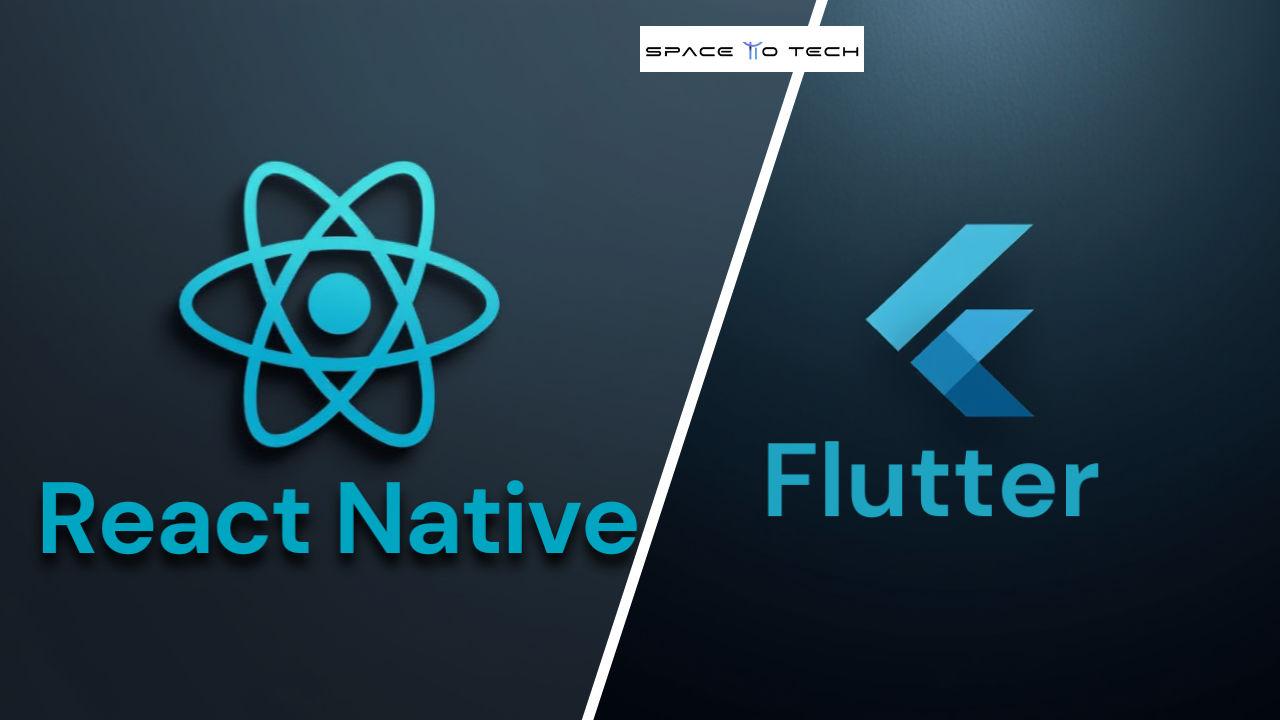
Two frameworks, Flutter and React Native, now control the field. Cross-platform frameworks have largely replaced native development in many newly built mobile apps during the past two years.
However, the main problem is this:
Could a native app development agency with a focus on react be more beneficial than Flutter specialists?
This blog may help CTOs, project managers, and founders pick the best mobile application development agency for their next project by evaluating technical and business options.
Services Offered by Our React Native Agency
SpaceToTech is a full-cycle react native agency serving startups, growth-stage companies, and enterprises across the USA, UK, UAE, and Australia. Here is what our team delivers.
1. Custom React Native app development
We build cross-platform iOS and Android apps from scratch using React Native. From architecture design and API integration to UI development and App Store submission, our react native agency manages the entire product build. Every app is built with scalability, performance, and maintainability in mind — not just to ship fast.
2. React Native consulting
Already have a React Native project but facing performance issues, technical debt, or architectural challenges? Our senior engineers audit your existing codebase, identify bottlenecks, and deliver a clear action plan. This is also the starting point for businesses evaluating whether React Native is the right choice for their product.
3. React Native UI/UX design
Our in-house design team creates mobile UI/UX optimised for both iOS and Android interaction patterns. We deliver wireframes, interactive prototypes, and production-ready design systems. Good design is not a cost; it is how apps retain users.
4. App migration to React Native
If you have an existing native iOS or Android app and want to consolidate into a single React Native codebase, our team handles the migration without disrupting your live user base. We have migrated apps from Swift, Kotlin, Objective-C, and Cordova to React Native, maintaining feature parity throughout.
5. API integration and backend development
React Native apps need reliable, performant backends. Our engineers integrate third-party APIs — payment gateways, CRMs, analytics platforms, mapping services — and build custom Node.js or Python backends when needed. We also handle cloud infrastructure setup on AWS, GCP, or Azure.
6. Post-launch maintenance and support
Launching the app is the beginning, not the end. Our react native agency offers ongoing maintenance plans covering React Native version upgrades, OS compatibility updates, performance monitoring, crash reporting, and feature additions. We provide SLA-backed response times so you are never left with a broken app and no one to call.
Cross-Platform Situation in 2026
The discussion between Flutter and React Native has gone on. React Native, which Meta supports, is still the backbone of many large-scale apps, like Instagram and Facebook.
For what reasons do companies go for cross-platform app development rather than native?
- Development costs are reduced
- Quicker time to market
- Collaboration codebase for iOS and Android
- Simple maintenance
Cross-platform development can save 30–40% while retaining performance compared to native mobile app development.
On the other hand, a native app development company's function has changed throughout time.
If your cross-platform app also needs AI-powered features like smart search or personalization, partnering with an AI Development Company early ensures these capabilities are scoped and built correctly from the start.
Industries We Serve as a React Native Agency
Our react native agency has built production apps across 28+ industries. Below are the sectors where we have the deepest experience and the most relevant case context.
E-commerce and retail
We build React Native shopping apps with product catalogues, cart and checkout flows, payment gateway integration (Stripe, Razorpay, PayPal), push notifications for offers, and real-time inventory sync. E-commerce apps we have built handle hundreds of daily transactions without performance degradation.
Healthcare and wellness
From patient-facing appointment booking apps to internal clinical tools, our react native agency builds HIPAA-aware mobile solutions for healthcare providers, telemedicine startups, and wellness platforms. We handle integrations with EHR systems, wearable APIs, and video consultation infrastructure.
FinTech and payments
We build secure, high-performance React Native apps for digital banking, lending platforms, investment trackers, and payment wallets. Our team has experience implementing biometric authentication, real-time transaction feeds, KYC document verification flows, and end-to-end encryption for financial data.
Logistics and on-demand services
Real-time tracking, driver apps, dispatcher dashboards, and customer-facing delivery tracking — our react native agency has built the full stack of logistics mobile products. We integrate with Google Maps, HERE, and custom mapping solutions, and handle the offline-first architecture that field apps require.
SaaS and B2B tools
Many SaaS companies extend their web platforms into mobile with React Native. We build companion apps, field sales tools, data entry apps, and internal enterprise tools that sync seamlessly with your existing SaaS backend. If you have a web product and need a mobile layer, this is a natural fit for our react native agency.
React Native: Benefits & Features
1. JavaScript Environment and Developer Accessibility
The foundation of React Native is JavaScript, a language that has reached broad adoption on a global scale. What this implies is:
- Wide availability for developers
- Accelerated process for onboarding web React developers
- Engineering teams can be easily scaled
In comparison to Flutter, the talent ecosystem available to you when you hire a React native app development agency is far larger. Project deadlines are sometimes shortened by react native app development companies that take advantage of their current experience in React.
2. Native Feel and Performance
Modern React Native App Development is facilitated by architectural advancements like:
- Rendering system for fabrics
- TurboModules
- Bridge architecture for optimal performance
The performance disparity between native and react native mobile apps is much diminished as a result of these enhancements.
Nowadays, most commercial use cases can't tell the difference between apps built with React Native and those built with pure native.
3. Community & Third-Party Libraries
- React Native has reached a stable and mature environment.
- Massive npm package
- Instantly usable native modules
- Active community of open-source developers
A react native development company can implement payment gateways, analytics tools, chat systems, and enterprise APIs quickly.
4. Advantages to Industry
What react native app development services provide for businesses is:
- 70% to 90% of the code is reused
- Simplified MVP development
- Reduced budget for development
- Simpler upkeep in the long run
Startups and product teams may launch faster without sacrificing quality by partnering with a react native development agency.
Flutter: Benefits & Features
The performance and design flexibility of Flutter have been highly respected and have played a role in its significant growth.
1. Dart Language & Performance
Flutter makes use of Dart, which is compiled into native code natively. This allows for:
Animations that run smoothly at 60 or 120 frames per second and
Optimal rendering performance
Optimized time for execution
Flutter is superior to many native app development services when it comes to products that rely heavily on animation.
2. UI Customization and Consistency
Consistent design down to the last pixel is possible using Flutter's widget-based architecture.
Materials and Cupertino component parts
Customization of user interface features
Unified rendering platform
There is less of an emphasis on platform-specific UI components in Flutter compared to conventional native app development.
3. Google Backing and Ecosystem
Flutter has tight integrations with Google services like Firebase. Enterprise usage is on the upswing, and it has solid tooling support.
4. Frequency of Development
Tools like hot reload and a single codebase make Flutter a potential time and effort saver for developers.
Flutter is an excellent cross-platform development option for new teams who do not have React expertise.
Head-to-Head Comparison
Performance
The enhanced design and efficient rendering systems of React Native allow it to achieve near-native speed. Business-oriented apps with intricate procedures and connections are its strong point.
Although it compiles directly to native code, Flutter's rendering speed is consistently excellent. Visually immersive or applications heavy on animation likely to benefit more from it.
Speed of Development
Team competence is a major factor in determining development speed. A seasoned react native development company can move rapidly if the business uses JavaScript or React. Onboarding and MVP delivery are both enhanced because of the preexisting familiarity with the ecosystem.
The large widget library and hot reload capabilities of Flutter further facilitate rapid development. However, teams without Dart experience may need some time to build up.
Developer Expenses and Availability
Global developer talent for React Native is growing. This has an immediate effect on the cost and flexibility of employment. Because there is a greater availability of talent, it is typically simpler to employ a native app development agency that uses React.
Although it is growing, Flutter's development ecosystem is still very tiny. Many companies find that React Native offers more realistic hiring advantages when it comes to scaling technical teams.
Code Reusability
The use of traditional native app development companies is greatly reduced by both frameworks. Because of its unified rendering engine, Flutter is able to achieve code reuse rates of 90–95%, in contrast to React Native's 70–90% cross-platform code sharing.
Integrations with Third Parties
A better developed ecosystem of plugins and modules is beneficial to React Native. Implementing enterprise applications with payment gateways, analytics platforms, CRM connectors, or legacy system connections is easier with a react native app development company.
In terms of third-party integrations and community-tested modules, React Native still has the upper hand over Flutter, even if the former's ecosystem is growing at a quick pace.
Platform Support
These two frameworks are compatible with Android, iOS, and PCs. React Native really comes into its own when it comes to collaborating with native modules and systems that have already been developed. Flutter guarantees uniform behavior across all platforms using its universal rendering engine, which does not heavily depend on platform-specific UI elements.
When to Choose React Native
Using a react native agency could be a good idea if:
- You have an existing staff of React web developers
- You need broad integrations with third parties
- Your budget is limited.
- You need to adapt quickly.
- Your app concentrates on business logic over animations
Ideal sectors:
- E-commerce websites
- Social Media Apps
- SaaS tools for productivity
- Content-based platforms
Hire a react native app development agency only if they can guarantee they have worked with complicated corporate apps before.
How to Decide on Flutter
Flutter is ideal when:
- Visually appealing animations are essential.
- Consistency in the company is important to business.
- You are creating systems for educational or gaming purposes.
- Equally crucial is desktop deployment
The rendering model of Flutter is often useful for consumer apps that focus heavily on design.
A Factor in Agency Selection
While deciding on a framework is critical, finding the ideal collaborator is of paramount importance.
Finding the Right React Native App Development Company
- React Native App Development Portfolio
- Native Mobile App Development Experience
- Reputation as a mobile app development agency veteran
- If your project requires native Android performance rather than cross-platform, a dedicated guide on evaluating an Android app development company helps you make that framework decision with confidence.
- Detailed knowledge of the industry
- Assistance and upkeep following launch
How to Hire a React Native Agency: What to Look For in 2026
Finding the right react native agency is one of the most consequential decisions you will make for your mobile product. The wrong choice costs time, budget, and momentum. The right react native agency becomes a long-term engineering partner. Here is a practical framework for making that decision confidently.
1. Evaluate portfolio depth, not just portfolio size
Ask to see live apps built with React Native — not mockups, not screenshots. Open the apps. Check loading speed, navigation smoothness, and offline behaviour. A credible react native agency can point you to apps in the App Store or Google Play that they built from scratch. Ask which parts of the codebase they owned, and which were handed off.
2. Assess the development process end-to-end
A top react native development agency should have a documented process: discovery and scoping, UI/UX design, sprint-based development, QA, deployment, and post-launch support. Ask how they handle scope changes. Ask what happens if a release breaks in production. Agencies that cannot clearly explain their process will improvise yours.
3. Verify team structure and seniority
Many agencies sell senior developers and deliver juniors. When you hire a react native agency, ask for the CV or LinkedIn profile of the lead developer assigned to your project. Confirm they have worked on production apps with 10,000+ users. Ask who handles architecture decisions.
4. Demand pricing transparency before signing
The best native application making agency will give you a detailed scope document with itemised costs before any contract. Watch for vague estimates like 'starting from'. Ask what is included in the quoted price: UI/UX design, backend API development, QA testing, app store submission, and post-launch bug fixes should all be scoped and priced separately.
5. Check post-launch commitment
Your app will need updates. React Native versions evolve. Operating system releases break things. When you hire a react native agency, confirm they offer a maintenance plan with documented SLA response times. An agency that disappears after launch is a liability, not a partner.
Key questions to ask before you hire a react native agency
- How many React Native apps have you built and shipped in the last 12 months?
- Can I speak to a client whose app you built?
- Who specifically will be working on my project — name and seniority?
- What does your QA process look like for cross-platform compatibility?
- How do you handle version upgrades when React Native releases a major update?
- What is included in your post-launch support, and what costs extra?
Engagement Models When You Hire a React Native Agency
Every business has a different stage, budget, and internal capability. A credible react native agency should offer flexible engagement models rather than forcing you into a one-size-fits-all contract. At SpaceToTech, we offer three primary models depending on your situation.
Dedicated react native team
Best for: funded startups, scale-ups, and enterprises with an ongoing mobile roadmap.
You get a fixed team — typically a react native developer or a pair, a UI/UX designer, a QA engineer, and a project manager — embedded into your product cycle. The team works exclusively on your project, follows your sprint cadence, and communicates daily. This is the model to choose when you need a long-term react native agency partner, not a one-off vendor. Typical engagement: 3-month minimum, monthly billing, team scales up or down with 30 days notice.
Fixed-price project
Best for: startups launching an MVP, businesses with a clearly defined scope, or one-off product builds.
You receive a detailed scope document, a fixed price, and a delivery milestone schedule before signing. The best native application making agency will insist on a thorough discovery phase before committing to a fixed price — if an agency quotes fixed price without scoping, treat that as a red flag. Typical engagement: 3 to 6 months, milestone-based payments.
Time and material (T&M)
Best for: evolving products, ongoing feature additions, or businesses that want to stay lean and iterate fast.
You pay for hours delivered, with a monthly cap if needed. This model works well when your roadmap is dynamic and you need a react native agency that can pivot quickly. SpaceToTech provides weekly time logs and a sprint board accessible to your team at all times. Typical engagement: month-to-month, no lock-in, 2-week notice period.
Red Flags to Avoid
- Various agencies promoting a single framework without considering
- Lack of native competency
- Missing help with maintenance
- Lack of openness during development
SpaceToTech's Recommendation and Method
Our approach at SpaceToTech is not framework specific. We assess these factors as a top native app development agency for react users:
- Business model
- Budget
- Criteria for performance
- UI complexity
- A road map for scalability
Our recommendation for react native app development in most business tasks is based on:
- Broader ecosystem
- Talent availability
- Cost efficiency
- Integration for enterprises flexibility
Our native React development services include the following:
- Product marketing plan
- UI/UX design
- Full-cycle mobile app development
- Integration of the backend
- Optimization after the launch
We've helped e-commerce and enterprise SaaS companies establish scalable apps as a trusted react native development company.
Our native app development services are available for performance or hardware integration.
Transparency evaluation and roadmap planning are services our company provides to react native app development clients.
Our React Native Agency Development Process
A react native agency is only as good as its process. Here is exactly how SpaceToTech takes a product from concept to a live, maintained app in six stages.
Step 1: Discovery and planning
Duration: 1-2 weeks. Before writing a single line of code, our team conducts a structured discovery: business goals, target users, technical constraints, integration requirements, and go-to-market timeline. We deliver a product requirements document (PRD), a technical architecture proposal, and a project plan with milestones. You will know exactly what you are getting and when before signing off on development.
Step 2: UI/UX design
Duration: 1-3 weeks depending on complexity. Our design team produces wireframes, user flow maps, and high-fidelity mockups in Figma. We design for both iOS and Android interaction conventions simultaneously, so your React Native app feels native on each platform. You review and approve designs before development begins.
Step 3: Agile React Native development
Duration: 8-20 weeks for an MVP. Development runs in two-week sprints. At the end of each sprint, you receive a working build to test on your device. Our engineers write clean, documented code following React Native best practices — proper state management, modular component architecture, and performance-first patterns like lazy loading and efficient re-render control.
Step 4: QA and cross-platform testing
Duration: ongoing throughout development, plus a dedicated pre-launch QA sprint. Our QA engineers test on real devices across iOS and Android, covering functional testing, performance testing, offline behaviour, edge cases, and accessibility. We use automated testing frameworks alongside manual testing for regression coverage.
Step 5: App store submission and launch
Our team handles the full App Store (Apple) and Google Play submission process: app signing, metadata, screenshots, age ratings, and compliance review preparation. We have submitted hundreds of apps and know how to avoid common rejection reasons. We monitor the review process and respond to reviewer queries on your behalf.
Step 6: Post-launch support and iteration
Launch is when the real work begins. Our react native agency provides post-launch monitoring, crash reporting via Sentry or Firebase Crashlytics, performance tracking, and a dedicated support SLA. We plan the next release sprint within two weeks of launch, incorporating user feedback and analytics data into the roadmap.
Why Hire a React Native Agency in India — and Why Noida Specifically
For businesses in the USA, UK, UAE, and Australia, partnering with a react native agency in India has become the dominant model for one clear reason: you get the same engineering quality as a Western agency at 40 to 60 percent of the cost, with a team that operates in a timezone that overlaps your working day.
Cost efficiency without quality compromise
A senior React Native developer in the USA or UK costs $120 to $200 per hour. The same seniority at a top react native development agency in India costs $25 to $55 per hour. For a six-month MVP build, this difference is not marginal — it is the difference between a $300,000 engagement and a $70,000 one. That budget difference is often reinvested into marketing, product iteration, or hiring a founding team.
Access to deep React Native talent
India produces over 1.5 million engineering graduates annually. The React Native ecosystem in India is mature — developers here have been building with the framework since its early versions in 2015. When you hire a react native agency in India, you are getting engineers who have shipped dozens of production apps, contributed to open-source libraries, and worked on codebases with hundreds of thousands of users.
Time zone overlap with global clients
India Standard Time (IST, UTC+5:30) gives 4 to 6 hours of working overlap with UK and European clients, and 9 to 11 hours of turnaround time for US East Coast clients. In practice, you send feedback at the end of your working day and receive updates by the time you are back at your desk the next morning. Our react native agency has optimised its sprint communication for exactly this workflow.
Why Noida is India's emerging react native development hub
SpaceToTech is headquartered in Noida — one of India's fastest-growing technology corridors. Noida's proximity to Delhi, lower operating costs compared to Bengaluru and Mumbai, and access to engineering talent from top universities give Noida-based agencies a structural advantage. Global clients from the USA, UK, UAE, and Australia choose Noida-based teams for the combination of cost efficiency, talent quality, and reliable infrastructure.
English-first communication as standard
All project communication at SpaceToTech is conducted in English — sprint reviews, daily standups, documentation, and Slack updates. Our project managers are trained in Western business communication norms and understand the expectations of international clients around transparency, documentation, and delivery accountability.
Conclusion
React Native and Flutter, two cross-platform frameworks, have matured into strong contenders by 2026.
Where Flutter truly excels is in creating design-driven, animation-heavy app apps.
What React Native offers:
- Developer community
- Excellent integration skills
- Improved hiring speed
- Improved company adaptability
Most startups and growth-stage companies find the optimum cost-performance-scalability balance with a reputed react native app development agency.
Your mobile app development agency's expertise is more important than the framework in the end.Get in touch with SpaceToTech right away if you need professional advice while you assess potential mobile app projects.We provide a free discovery consultation to help you choose React Native or Flutter for your product.
Ready to build?
Let's collaborate to build something that can handle future demands, is fast, and scalable.